


Scales Repair Service
Accurate weighing equipment is often tied directly to production quality, inventory control, shipping accuracy, and compliance workflows. When a scale becomes unstable, drifts out of tolerance, or stops responding reliably, the impact can spread quickly across receiving, batching, packaging, and laboratory operations. This is why a dedicated Scales Repair Service is an important part of maintenance planning for industrial, commercial, and laboratory users.
This category covers repair support for a wide range of weighing systems, from compact bench units to heavy-duty truck scales and moisture analyzers. It is intended for businesses that need practical service options for malfunctioning or performance-degraded weighing equipment, including brand-specific repair requests for widely used platforms from manufacturers such as CAS, KERN, OHAUS, PCE, AND, Kett, and Mettler Toledo.
Why timely scale repair matters
Weighing devices are used in many different environments, but the core expectation is always the same: repeatable and dependable measurement. In practice, scales can be affected by load cell damage, display or keypad faults, connector issues, power instability, environmental contamination, overload events, or gradual mechanical wear. Even a small deviation can create larger downstream errors in counting, formulation, stock reconciliation, or transaction-based weighing.
Repair work is often needed not only when a unit fails completely, but also when it shows warning signs such as unstable readings, slow response, zero drift, incorrect counting results, or communication problems with external systems. In these cases, service helps restore measurement reliability and reduce the risk of avoidable rework or operational delays.
Typical scale types covered in this category
This category is broad enough to support different weighing technologies and use cases. It can include repair needs for bench scales, table scales, counting scales, precision balances, analyzer scales, moisture analyzers, floor scales, crane scales, and truck scales. Each type has its own operating conditions, load ranges, and sensitivity to installation or handling problems.
For example, a bench or table scale used in warehousing may be more exposed to shock loading and dust, while a precision balance or moisture analyzer in a lab setting requires closer attention to sensors, heating elements, stability, and electronics. Heavy-duty platforms such as truck scales can involve larger structural and signal-chain issues, especially when exposed to outdoor conditions and repeated vehicle loading cycles.
Examples of repair services available
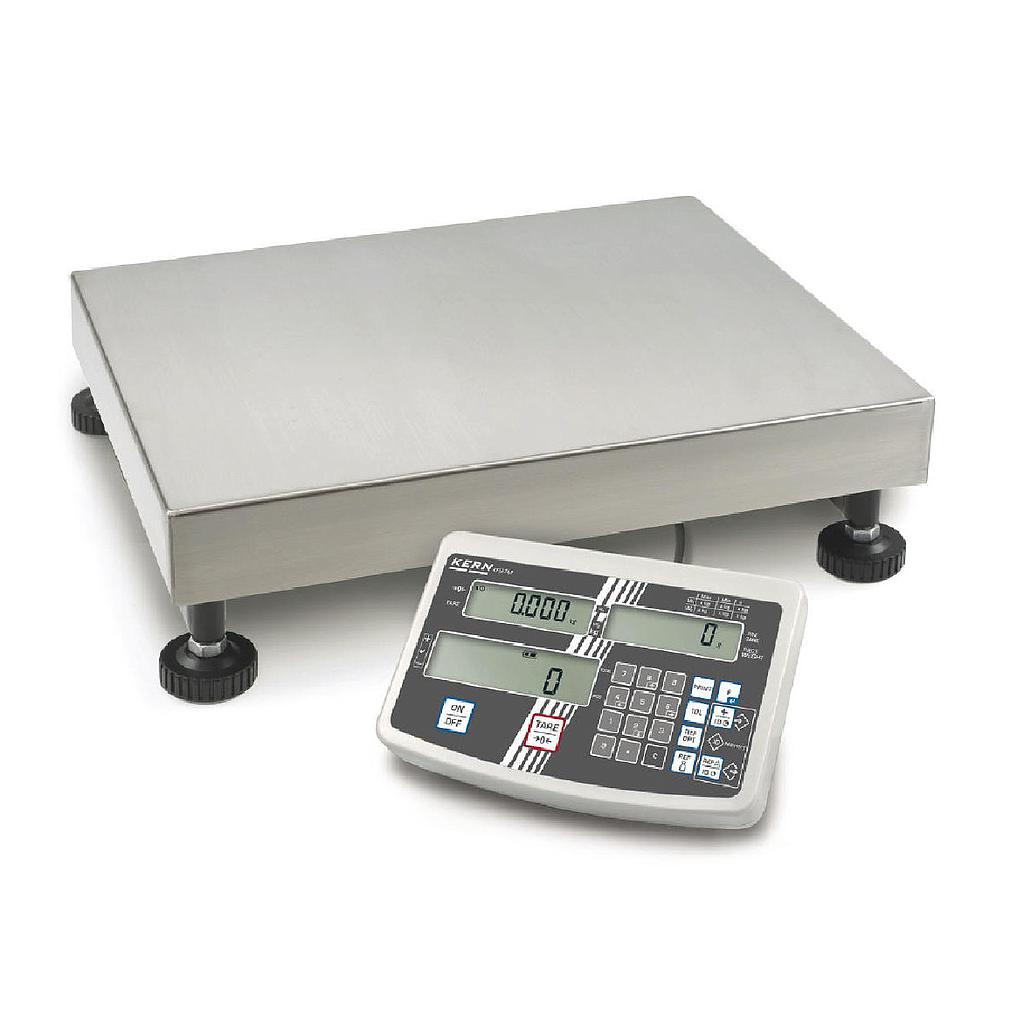
The products highlighted in this category show the range of equipment commonly sent for repair. Typical examples include the CAS Electronic Truck Scale Repair Service, PCE Benchtop Scale Repair Service, KERN Bench Scale Repair Service, OHAUS Bench Scale Repair Service, and CAS Bench Scale Repair Service. These examples illustrate support for both industrial and compact weighing equipment rather than a single device class.
For operations focused on parts counting and inventory accuracy, repair services are also available for platforms such as the PCE Counting Scale Repair Service, OHAUS Ranger Count Repair Service, CAS Counting Scale Repair Service, and Kern Counting Scale Repair Service. Where low-level mass measurement or material analysis is involved, services like the AND Multi-functional Precision Balance Repair Service, Kett Infrared Moisture Analyzer Repair Service, and Mettler Toledo Halogen Moisture Analyzer Repair Service reflect the more specialized end of the weighing equipment spectrum.
Common problems businesses face with weighing equipment
Many service requests begin with symptoms rather than a confirmed diagnosis. A scale may power on but fail to stabilize, produce inconsistent readings under the same load, reject calibration, or display segment and keypad errors. In counting applications, the issue may appear as inaccurate piece totals caused by poor sample reference stability or sensor drift. In moisture analysis, heating and timing performance can also affect final test consistency.
Mechanical issues are another frequent cause of poor performance. Off-center loading, damaged platforms, worn feet, impact damage, cable stress, and mounting problems can all influence weighing results. In larger systems such as floor or truck scales, junction boxes, summing errors, and environmental exposure may become part of the repair scope. If your maintenance needs extend beyond weighing equipment, related service categories such as mechanical measuring instrument repair may also be relevant in mixed-instrument facilities.
How to choose the right repair service
A useful starting point is to identify the type of instrument, its application, and the nature of the fault. A bench scale used for shipping control is different from a precision balance used for formulation or a moisture analyzer used for material testing. The more clearly the operating issue is described, the easier it becomes to align the repair request with the correct service path.
It also helps to consider manufacturer compatibility and the measurement role of the equipment. Businesses running platforms from OHAUS, KERN, PCE, CAS, AND, Kett, or Mettler Toledo often prefer service that reflects familiarity with the brand’s weighing architecture and intended use. If the fault involves connected electronics, indicators, or power-related instability, some users may also need support from related categories such as electrical and electronic meter repair.
Applications across industrial, warehouse, and laboratory environments
Repair demand for scales comes from a wide range of sectors. In logistics and warehouse operations, bench scales, counting scales, and truck scales support receiving, dispatch, and inventory tasks. In manufacturing, weighing systems can be tied to batching, in-process verification, and packaging control. In laboratories and quality environments, precision balances and moisture analyzers contribute to testing consistency and documentation accuracy.
Because the operating context varies so much, the repair approach also needs to reflect real usage conditions. A scale exposed to washdown, vibration, mobile use, or frequent overload events may present different failure patterns than one used in a controlled laboratory room. This category is therefore useful not only for emergency faults, but also for restoring performance in equipment that still operates but no longer meets expected repeatability or responsiveness.
Brands commonly associated with scale repair requests
Several manufacturers appear frequently in service workflows for weighing equipment. Within this category, examples include AND, CAS, KERN, Kett, Mettler Toledo, OHAUS, and PCE. These brands are associated with different parts of the weighing landscape, from industrial platforms and counting scales to precision balances and moisture analysis systems.
It is not always necessary to replace a device when issues appear. In many cases, targeted repair is a practical option for restoring function, especially when the equipment remains suitable for the process and only specific components or performance issues need attention. That makes a structured repair service for scales especially valuable for organizations trying to balance uptime, budget, and process continuity.
Finding the right support for your weighing equipment
Choosing the right service starts with understanding how the instrument is used and what kind of fault has emerged. A truck scale, counting scale, bench scale, precision balance, or moisture analyzer may all fall under the same broad category, but the repair priorities are different in each case. Clear identification of the scale type, symptoms, and manufacturer can help narrow the most suitable service route.
For businesses that rely on weighing accuracy every day, this category provides a practical starting point for restoring equipment performance across multiple scale classes and brands. Whether the issue affects a compact benchtop unit or a larger industrial weighing system, the goal is the same: bring the instrument back to stable, dependable operation so the wider process can continue with confidence.
Types of Scales Repair Service (47)
-
-
-
-
-
-
-
-
-
-
-
-
-
-
-
-
-
-
-
-
-
-
-
-