


Mechanical device
Hands-on apparatus remains essential wherever physics, engineering fundamentals, and measurement principles need to be taught in a visible, repeatable way. In laboratories, classrooms, and training environments, a well-selected mechanical device helps learners move from theory to observation by turning force, motion, balance, and measurement into practical experiments.
This category brings together instruments used in education and research-oriented setups where mechanical behavior is measured, demonstrated, or compared. Many of these devices also connect naturally with weighing, timing, electrical measurement, and magnetism, making them useful in broader experimental workflows rather than only in isolated mechanics exercises.
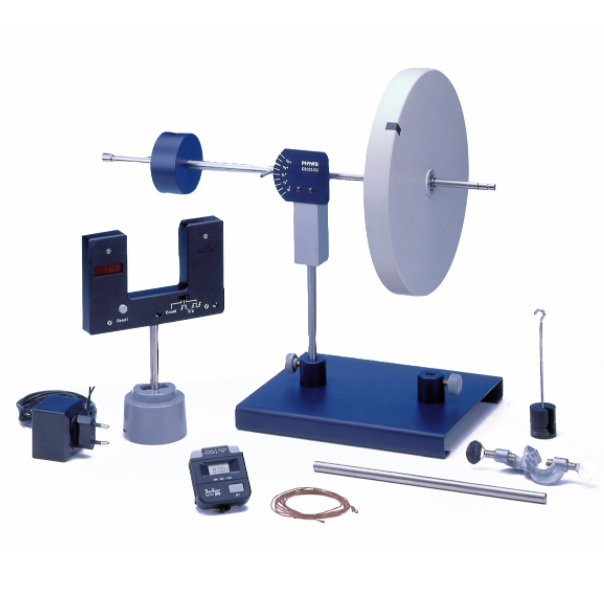
Where mechanical devices fit in teaching and lab work
Mechanical experiment equipment is commonly used to demonstrate core physical relationships such as force versus displacement, mass and balance, motion timing, and the interaction between mechanical and electromagnetic effects. In technical education, these devices support structured experiments, while in research training they help users verify measurement methods and understand instrument behavior.
Because many experiments do not stay within a single discipline, this category is often used alongside electrical and magnetic testing equipment when motion, current, magnetic force, or signal counting must be observed together. That cross-disciplinary role is especially important in STEM education, where students need to see how different physical variables interact in a real setup.
Typical device roles within this category
Not every product in a mechanical-device range serves the same purpose. Some instruments are designed for direct force or mass measurement, while others act as supporting tools for timed experiments, counting events, or comparing how physical systems respond under controlled conditions. The practical value of the category lies in how these tools work together in a complete experiment bench.
A good example is the PHYWE portfolio, which is widely associated with education and scientific training equipment. Within that ecosystem, users can combine balances, counters, and experiment-specific apparatus to build repeatable lab exercises for mechanics, electromagnetism, and general physics measurement.
Representative products and how they are used
For direct demonstration of force in a magnetic field, the PHYWE 11081-01 Balance is a relevant example. It is intended to determine the force acting on a current-carrying conductor in a homogeneous magnetic field, which makes it useful for experiments that connect mechanical force with electrical current and magnetic flux. In practice, this kind of apparatus helps learners understand that mechanics is often part of a wider physical system, not a standalone topic.
Balances in this category can also support mass comparison, sample handling, and precision measurement in laboratory routines. Models such as the PHYWE 49282-99 Precision Balance, PHYWE 49311-99 Precision Balance, and PHYWE 49304-99 Precision Balance illustrate the range from fine readability to higher weighing capacity. These are suitable when an experiment requires reliable quantitative results rather than only a qualitative demonstration.
For more flexible bench or field use, portable models such as the PHYWE ADA-HCB-602H Highland™ Portable Precision and PHYWE ADA-HCB-1002 Highland™ Portable Precision can be useful where compact size, internal calibration options, and communication interfaces matter. These devices are not simply accessories; in many educational and test setups, they form the measurement backbone for tracking mass changes, comparing specimens, or documenting repeatability.
Selection criteria for mechanical devices
Choosing the right equipment starts with the experiment objective. If the goal is concept demonstration, the priority may be visibility, ease of setup, and robustness for repeated student use. If the goal is data collection, then resolution, stability, measuring range, and interface options become more important.
For balance-related applications, users typically compare capacity and readability first. A model intended for milligram-level lab work will serve a very different purpose than a portable balance built for gram-level tasks in general instruction. Environmental factors also matter: vibration, airflow, available bench space, and whether the instrument will be moved between rooms can all influence which device is the better fit.
It is also worth considering how the device will connect with the rest of the setup. Some experiments require event counting, timing, or signal-based triggering in addition to mechanical measurement. In those cases, related categories such as energy testing equipment may help expand the experiment into a broader system-level evaluation.
Mechanical devices in combined experiment setups
Modern teaching labs often combine weighing, timing, and counting in a single experiment workflow. A universal counter such as the PHYWE 13601-99 Universal Counter can be used for measuring time, pulse rates, frequency, and related variables, which makes it useful when a mechanical process must be synchronized with sensor output or event detection. This is especially relevant in physics labs where motion or radiation events are tracked together with other measured quantities.
Similarly, the PHYWE 13609-99 Geiger-Müller Counter shows how some devices serve a highly specific experiment role while still fitting into a broader educational instrument platform. Although primarily intended for radioactivity experiments, it reflects an important principle in lab planning: mechanical, electrical, and counting functions often need to coexist within the same training environment.
Where heat transfer or thermal effects are part of the test scenario, related tools from thermodynamic equipment may complement mechanical devices. This is common in interdisciplinary teaching, where students must compare how force, mass, temperature, and time affect a process together.
What matters for educational procurement and B2B sourcing
For schools, universities, vocational centers, and industrial training departments, equipment selection usually goes beyond a single product specification. Buyers often need consistency across multiple benches, predictable operation for repeated classes, and instruments that are easy to integrate into existing teaching modules. In that context, repeatability, ease of use, and maintenance practicality are often just as important as technical range.
Another key factor is whether a device supports scalable teaching. A compact portable balance may suit introductory labs and mobile demonstrations, while a more advanced precision balance may be better for analytical tasks and traceable measurement exercises. The right category mix depends on whether the environment prioritizes demonstration, measurement accuracy, or flexibility across different cohorts of users.
How to narrow down the right option
A practical way to compare products is to begin with three questions: what variable needs to be observed, what degree of accuracy is required, and how the instrument will be used day to day. For example, a current-balance experiment calls for purpose-built apparatus, while routine lab weighing may be better served by a precision or portable balance depending on the expected load and readability.
It also helps to think in terms of the full experiment chain. If learners must record measured values, compare conditions, and repeat the procedure across multiple sessions, devices with clear displays, stable operation, and straightforward setup will usually support better outcomes. For technical training environments, that often matters more than choosing the most complex instrument available.
Conclusion
This mechanical device category supports a wide range of educational and laboratory tasks, from force demonstration and balance-based experiments to broader measurement workflows that connect mechanics with electricity, magnetism, timing, and data collection. Whether the requirement is a dedicated teaching apparatus or a precision weighing instrument, the right selection depends on experiment purpose, required accuracy, and how the equipment fits into the overall lab environment.
By focusing on application logic rather than specifications alone, buyers can identify devices that are easier to teach with, easier to maintain, and more useful across multiple training scenarios. That makes the category a practical starting point for building reliable physics and engineering experiment setups.
-
-
-
-
-
-
-
-
-
-
-
-
-
-
-
-
-
-
-
-
-
-
-
-