


Light and Optical Test Equipment
Reliable optics experiments depend on more than just a light source and a screen. In teaching labs, research training environments, and technical education settings, the right setup makes it easier to demonstrate wave behavior, refraction, diffraction, interference, polarization, and optical measurement with repeatable results. This is where Light and Optical Test Equipment becomes especially valuable.
This category brings together instruments and experiment sets designed for practical work in optics and light-related physics. It supports applications ranging from introductory geometric optics to more advanced wave optics and optical analysis, helping educators, lab managers, and procurement teams choose equipment that fits both the curriculum and the required level of experimental depth.
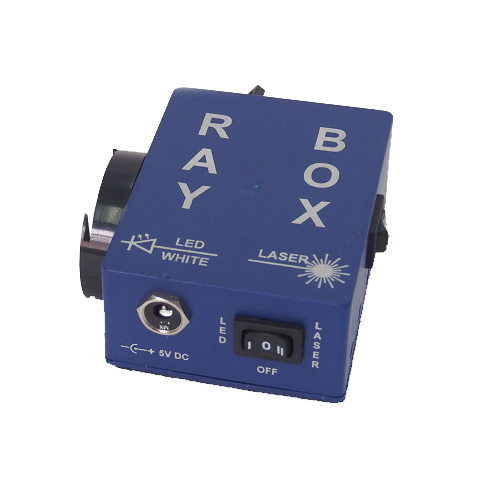
What this category is used for
Light and optical testing equipment is typically selected for classroom demonstrations, student laboratory exercises, and structured experiment programs in physics education. Depending on the setup, users can investigate how light propagates, how lenses and mirrors form images, how diffraction patterns develop, and how interference or polarization can be observed and measured.
Compared with general-purpose classroom accessories, these products are built around controlled optical experiments. That usually means defined mounts, optical benches, gratings, slit elements, and measurement aids that improve alignment and reduce setup variability. For institutions building a broader lab environment, it can also complement categories such as electrical and magnetic testing equipment when experiments combine optical and electronic measurement.
Typical product types in the range
The category includes both complete experiment systems and individual optical components. Full sets are useful when the goal is to cover multiple topics with coordinated accessories, while standalone items are practical for expanding an existing bench or replacing frequently used consumable-style parts.
Examples from the range include structured student sets such as the PHYWE 15280-88 Student Set Optics 3 Wave Optics, supplement kits like the PHYWE 13252-77 TESS Wave Optics Supplement, demonstration-oriented systems such as the PHYWE 15565-88 set for diffraction and interference on the profile bench, and individual components including diffraction gratings and a Newton rings apparatus. This mix is useful for labs that need both turnkey teaching solutions and modular expansion paths.
Core experiment themes supported by optical equipment
One of the main strengths of this category is its coverage of multiple optics topics within a consistent hardware ecosystem. Depending on the selected set or component, users can carry out experiments in interference, diffraction from slits and gratings, resolving power, polarization, refraction, lenses, mirrors, color phenomena, and basic optical properties of the human eye.
Some systems also extend toward spectroscopy, fluorescence, semiconductor-related light experiments, and the study of LEDs, photodiodes, or solar cells. That makes optical training equipment relevant not only for classical physics instruction, but also for interdisciplinary programs that connect optics with electronics and materials science. In that context, users may also look at energy testing equipment when coursework includes solar cell investigation or related measurement tasks.
How to choose the right setup
A practical selection process usually starts with the intended teaching or testing format. For student experiments, complete kits with storage boxes, matched accessories, and guided experiment coverage are often the most efficient option. They help standardize setups across groups and reduce preparation time for instructors. Products such as the PHYWE 15350-88 Student Set Optics / Atomic Physics or its digital variant are well suited when the requirement spans several experiment topics instead of a single optical effect.
For instructor-led demonstrations, a profile-bench-based system may be more appropriate. The PHYWE 15565-88 demonstration set, for example, is oriented toward diffraction and interference experiments that benefit from stable alignment and clear visibility. If the lab already has benches and mounts in place, individual elements such as the PHYWE 08532-00, 08534-00, 08540-00, 08543-00, 08546-00, or 09827-00 diffraction gratings can be a more targeted way to extend capability without replacing the whole setup.
Complete sets versus individual optical components
Choosing between a complete set and separate components often comes down to workflow. A complete package supports faster deployment, easier inventory control, and better consistency across repeated experiments. This is especially important in schools, universities, and training centers where many users share the same equipment over time.
Individual components, on the other hand, are ideal when the requirement is highly specific. A dedicated item such as the PHYWE 08550-00 Newton Rings Apparatus is suited to focused interference studies, while separate diffraction gratings allow instructors to tailor experiments around line density and setup geometry. This modularity is useful for labs that already operate within a wider PHYWE environment and want to expand selectively.
Why optical bench design and accessories matter
In optics, mechanical stability has a direct impact on experiment quality. Even when the optical principle is simple, poor alignment can make results difficult to interpret. That is why many of the products in this category rely on benches, slide mounts, diaphragm holders, scales, and screens that support more precise positioning of light paths and test objects.
Accessories also matter because they determine how many different experiments can be performed from one base setup. Slits, diaphragms, gratings, mounted lenses, filters, and measuring tools are not minor add-ons; they define whether the system can move from simple image formation to more advanced wave optics and comparison exercises. For educational labs, that flexibility improves equipment utilization across multiple lesson plans and student levels.
Digital and hybrid learning applications
Optics teaching increasingly combines hands-on experiments with digital measurement and data capture. In this category, that is reflected by solutions such as the PHYWE 15350-88D Student Set Optics / Atomic Physics Digital, which pairs optical experiments with Cobra SMARTsense current and voltage sensors. This kind of hybrid setup can be useful where schools or training centers want to combine traditional apparatus handling with tablet- or smartphone-supported analysis.
The advantage is not simply convenience. Digital integration can help students compare observations with measured values more quickly, while instructors gain a clearer path for recording, discussing, and repeating results. Where programs are built around broader physics foundations, related lab areas such as thermodynamic equipment may be organized in a similar way to create a more consistent practical learning environment.
Making procurement decisions with long-term use in mind
For B2B buyers, the right choice is usually not the widest assortment but the configuration that fits expected usage over several semesters or training cycles. It helps to assess the number of experiment groups, whether the equipment will be used for teacher demonstrations or student handling, and whether the lab needs broad topic coverage or a narrower focus on interference, diffraction, or spectroscopy.
If your requirement is broad and curriculum-driven, complete student sets can simplify rollout and maintenance. If the goal is to strengthen a particular optical topic, specialized components and supplements may offer better value and easier integration into an existing setup. In either case, selecting equipment with coherent accessories, clear experiment scope, and practical storage often leads to a more reliable optics lab over time.
Well-chosen optical equipment supports both understanding and repeatability. From bench-based diffraction demonstrations to modular student experiment systems, this category is designed for organizations that need structured, practical tools for teaching and testing the behavior of light in a clear and measurable way.
-
-
-
-
-
-
-
-
-
-
-
-
-
-
-
-
-
-
-
-
-
-
-
-