


Energy testing equipment
Understanding how energy is generated, converted, stored, and measured is essential in modern science and technical education. In laboratories, classrooms, and training environments, the right equipment helps turn abstract topics such as solar power, wind energy, hydropower, and hydrogen systems into observable, repeatable experiments with meaningful results.
Energy testing equipment supports this hands-on approach by combining demonstration hardware, experiment modules, and measurement-oriented setups for renewable energy and energy conversion topics. These systems are especially useful for schools, colleges, and technical training programs that need practical teaching tools rather than purely theoretical material.
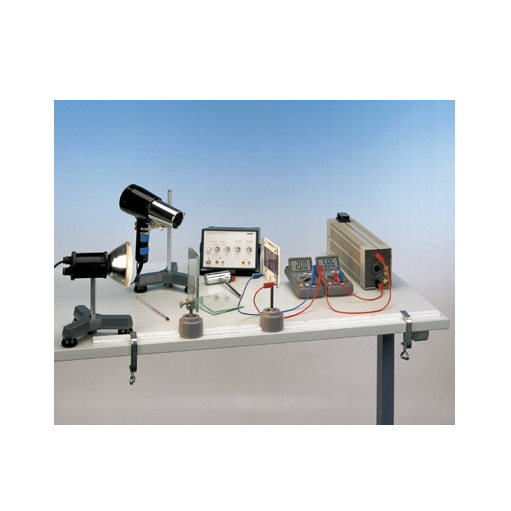
Where energy testing equipment fits in technical education
This category is designed for practical investigation of energy-related principles, including thermal processes, electricity generation, fluid-based power conversion, and electrochemical energy systems. Instead of treating energy as a single topic, these tools make it possible to study how different sources behave under changing conditions and loads.
Many setups combine physical components with measurable outputs, so learners can compare input and output, observe efficiency trends, and understand the relationship between heat, motion, light, and electrical power. For broader lab setups, it is also natural to combine these systems with electrical and magnetic testing equipment when voltage, current, or circuit behavior needs to be examined in more detail.
Typical experiment areas covered in this category
A strong feature of this category is its coverage of several renewable energy pathways within one learning ecosystem. Depending on the setup, users can explore solar thermal conversion, photovoltaic principles, wind turbine behavior, hydropower fundamentals, and hydrogen-based storage and conversion.
For example, the PHYWE 06758-00 leXsolar ThermalEnergy Ready-to-go 2.0 focuses on solar thermal topics such as collector systems, heat transfer, insulation, circulation concepts, and thermal storage. In a different application area, the PHYWE LEX-1404 leXsolar-Wind Large supports experiments on rotor design, wind speed influence, turbine startup behavior, and efficiency comparisons. This range makes the category suitable for multidisciplinary teaching across physics, chemistry, engineering basics, and energy technology.
Core equipment types found in energy testing setups
Products in this category can be complete experiment platforms, modular learning systems, or supporting components used within a larger energy training kit. Complete systems are useful when a lab needs ready-to-use experiments with matched components, while modular parts are valuable for expanding existing teaching stations or replacing key elements.
Examples include full renewable energy sets such as the PHYWE 25287-88 Student Set Renewable Energy 1 and the PHYWE 25288-88 Student Set Renewable Energy 2, which cover multiple experiment themes across solar, heat, water, and wind. At the component level, items such as the PHYWE 06752-06 Solar Cell and the PHYWE 06752-08 Holder For Solar Cell play a supporting but important role in building stable, repeatable small-scale experiments.
Some applications also overlap with thermodynamic equipment, especially where heat transfer, insulation, convection, or temperature-dependent energy conversion are central to the lesson.
Renewable energy topics that benefit from hands-on testing
Solar energy is one of the most accessible areas for practical learning because it can be studied from both thermal and electrical perspectives. A solar cell demonstrates light-to-electric conversion, while a collector-based system helps explain absorption, circulation, heat exchange, and thermal storage. This makes side-by-side comparison possible between photovoltaic and solar thermal concepts.
Wind and hydropower setups are equally valuable because they show how moving air or water can be converted into mechanical and electrical output. The PHYWE 05755-00 leXsolar Hydropower Ready-to-go, for instance, supports comparisons between turbine types and operating conditions. The PHYWE 05750-00 Blower (12V) serves as a practical accessory for controlled airflow in wind energy demonstrations, where changes in speed or rotor design can be observed directly.
For laboratories teaching electrochemical storage and conversion, hydrogen-focused systems add another layer of relevance. The PHYWE 06765-00 leXsolar-H2 Ready-to-go 2.0 and PHYWE LEX-1218 leXsolar-H2 Large support exploration of electrolyzers, PEM fuel cells, hydrogen production, storage, and basic system efficiency. These tools are useful when the goal is to connect renewable generation with storage and later reuse.
How to choose the right equipment for your lab or classroom
The best choice depends less on product quantity and more on teaching objective. If the goal is introductory education, a compact student set with structured experiments may be more appropriate than a large modular platform. If the program requires advanced demonstrations, comparison of technologies, or quantitative evaluation, a broader ready-to-go system may be the better fit.
It is also important to consider whether the equipment will be used for demonstration, group experiments, or repeated classroom deployment. Transportable sets can be useful for flexible teaching spaces, while boxed student systems simplify storage, completeness checks, and lesson preparation. Buyers should also look at whether the learning scope focuses on one energy pathway or a combined view of generation, conversion, and storage.
When selecting a brand ecosystem, PHYWE is a clear reference in this category because the available products cover both individual experiment components and larger integrated educational systems. This is especially helpful for institutions that want compatibility across multiple renewable energy topics.
Why modularity matters in energy experimentation
One of the practical advantages of many educational energy systems is modularity. Instead of treating each experiment as a standalone exercise, modular platforms allow instructors to build a progression from simple observation to structured measurement and comparison. A small solar cell experiment can become part of a larger energy conversion sequence, and a basic hydrogen demonstration can expand into a full solar-hydrogen cycle.
This approach supports gradual learning and more efficient equipment use. A foundational set can often be extended later with topic-specific additions, such as fuel cell modules or supplementary renewable energy kits. For institutions planning long-term lab development, this makes the category more flexible than buying isolated devices with limited reusability.
Applications across schools, colleges, and technical training centers
Energy testing equipment is relevant wherever learners need to connect scientific principles with real technology. In secondary education, these tools help explain topics such as climate, insulation, basic electricity, and renewable sources in a more visual and interactive format. In vocational and college settings, the same category can support deeper study of efficiency, operating parameters, and system behavior.
Because the experiments often combine mechanics, thermodynamics, electrical measurement, and fluid processes, they can also complement broader lab inventories such as mechanical device equipment when motion, load, or physical drive mechanisms are part of the lesson. This cross-topic value is one reason energy experimentation remains important in STEM and applied science programs.
Building a practical renewable energy learning environment
A well-planned lab does more than display components; it allows users to compare technologies, change variables, record outcomes, and discuss why performance changes. That is where this category becomes especially useful. From compact solar cell experiments to larger wind, hydro, thermal, and hydrogen systems, the available equipment supports practical learning with clear educational structure.
If your goal is to create a renewable energy training setup that is measurable, repeatable, and relevant to modern technical education, this category offers a strong foundation. Choosing the right combination of complete systems and supporting modules can help your team build experiments that remain useful across multiple courses and skill levels.
-
-
-
-
-
-
-
-
-
-
-
-
-
-
-
-
-
-
-
-
-
-
-
-