


Inorganic chemical equipment
Reliable laboratory work in education and research often depends on having the right setup for core experiments, demonstrations, and practical training. In environments where students need to understand reactions, compound preparation, separation methods, and basic analytical procedures, equipment selection has a direct impact on safety, repeatability, and learning quality.
Inorganic chemical equipment supports teaching and laboratory activities related to acids, bases, salts, metals, oxides, reaction behavior, solution preparation, precipitation, crystallization, and other foundational topics in chemistry. This category is especially relevant for schools, universities, training centers, and research laboratories that require practical tools for structured instruction and controlled experimental work.
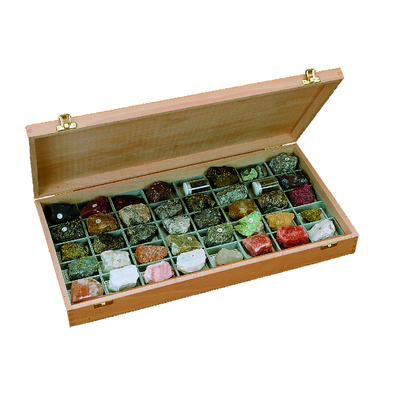
Where this equipment fits in the laboratory environment
Inorganic chemistry work is usually part of a broader laboratory ecosystem that includes general teaching tools, glassware, heating devices, support accessories, and instruments used for observation or measurement. Within that ecosystem, this category focuses on equipment intended for experiments involving non-organic compounds and reaction systems commonly taught in academic and technical settings.
Typical use cases include classroom demonstrations, student bench experiments, laboratory practice modules, and introductory research activities. For broader lab preparation and foundational setups, users may also explore general chemistry equipment when a project requires tools that are not limited to one branch of chemistry.
Common applications in inorganic chemistry training
This category is commonly used for experiments that illustrate reaction mechanisms and material behavior in a practical way. Examples may include neutralization, precipitation, gas evolution, thermal decomposition, qualitative observation of color changes, solution mixing, and preparation of simple inorganic compounds under supervised conditions.
In academic environments, the value of such equipment goes beyond completing an experiment. It helps learners understand reaction control, observe process variables, and build confidence in laboratory routines such as sample handling, heating, filtration, washing, drying, and basic recording of results. Well-matched equipment can also improve consistency between different student groups or repeated teaching sessions.
Key considerations when selecting inorganic chemical equipment
Selection should begin with the intended laboratory task rather than with a broad product search. Buyers often need to consider the experiment type, number of users, training level, chemical compatibility, required temperature conditions, and the degree of supervision in the lab. Equipment chosen for introductory teaching may differ significantly from tools needed for advanced practical work or research support.
It is also important to review the expected workflow around sample preparation, handling of corrosive substances, ease of cleaning, and compatibility with existing laboratory infrastructure. In many institutions, procurement teams also look at replacement frequency, standardization across teaching benches, and whether the equipment supports repeatable instructional outcomes over multiple academic cycles.
Safety and usability in educational and research settings
Because inorganic chemistry often involves reactive solutions, strong acids or bases, salts, and heating processes, safety remains a central purchasing factor. Equipment should be suited to the chemicals and procedures being performed, while also supporting clear operation for instructors, technicians, and students. In practice, ease of use is closely linked to safer lab behavior, especially in shared teaching environments.
Usability also matters from a maintenance perspective. Simple setup, straightforward cleaning, and practical storage can reduce downtime between sessions and make laboratory preparation more efficient. When the work involves combined chemical and physical measurements, related tools from physicochemical equipment may be relevant for a more complete experimental arrangement.
How this category supports structured chemistry education
For teaching laboratories, the equipment in this category helps translate theoretical chemistry into direct observation. Students can connect textbook concepts with visible outcomes such as precipitate formation, dissolution behavior, crystal growth, pH-related reactions, and interactions between metals and inorganic reagents. This hands-on approach is essential for building a solid foundation in chemical reasoning.
From an instructional planning standpoint, inorganic chemistry experiments often need equipment that is durable enough for repeated use and practical enough for batch preparation across multiple workstations. That makes category-level sourcing useful for institutions that want to align equipment choices with curriculum requirements, lab capacity, and teaching methods.
Relationship with other chemistry equipment categories
Although this page focuses on inorganic applications, many laboratories operate across multiple chemistry disciplines. Some experiments overlap with broader analytical or preparative workflows, which means buyers may need to compare this category with adjacent product groups before finalizing a purchase list.
For example, projects involving carbon-based compounds or reaction routes centered on organic substances may be better supported through organic chemistry equipment. Where the objective is to study matter at a more fundamental level, especially in theory-linked teaching environments, atomic and molecular chemical equipment can provide complementary context.
What buyers should prepare before purchasing
Before selecting equipment, it helps to define the target experiment list, class size, user skill level, and storage or bench constraints. Procurement teams should also confirm whether the requirement is for demonstration use, routine teaching, laboratory practice, or small-scale research support. These details make it easier to identify suitable equipment without overbuying or creating gaps in the experimental workflow.
Another practical step is to review how the equipment will integrate with existing laboratory items, including vessels, supports, heating sources, and any measurement tools already in use. A clearer specification process typically leads to better purchasing efficiency and fewer compatibility issues after delivery.
Choosing the right setup for your laboratory
A well-organized inorganic chemistry lab depends on equipment that matches both the experiment and the teaching or research objective behind it. Rather than treating all laboratory tools as interchangeable, it is more effective to build the setup around the actual procedures, safety needs, and learning outcomes expected in daily use.
This category provides a focused starting point for institutions and laboratories working with core inorganic chemistry applications. By comparing use cases, workflow needs, and adjacent categories where appropriate, buyers can create a more practical and reliable lab environment for training, experimentation, and long-term educational value.
-
-
-
-
-
-
-
-
-
-
-
-
-
-
-
-
-
-
-
-
-
-
-
-