


Industrial chemical equipment
In laboratory training, pilot plants, and technical education environments, the right equipment makes the difference between abstract theory and practical process understanding. Industrial chemical equipment supports hands-on learning around material transformation, fluid handling, thermal processes, mixing, separation, and process control. It is especially relevant where users need to study how chemical operations behave under realistic operating conditions rather than only at a small bench scale.
This category is suited to institutions, research facilities, and training centers that want to bridge chemistry fundamentals with process-oriented applications. Instead of focusing only on individual reactions, it helps users explore how industrial workflows are organized, monitored, and optimized across connected units and process stages.
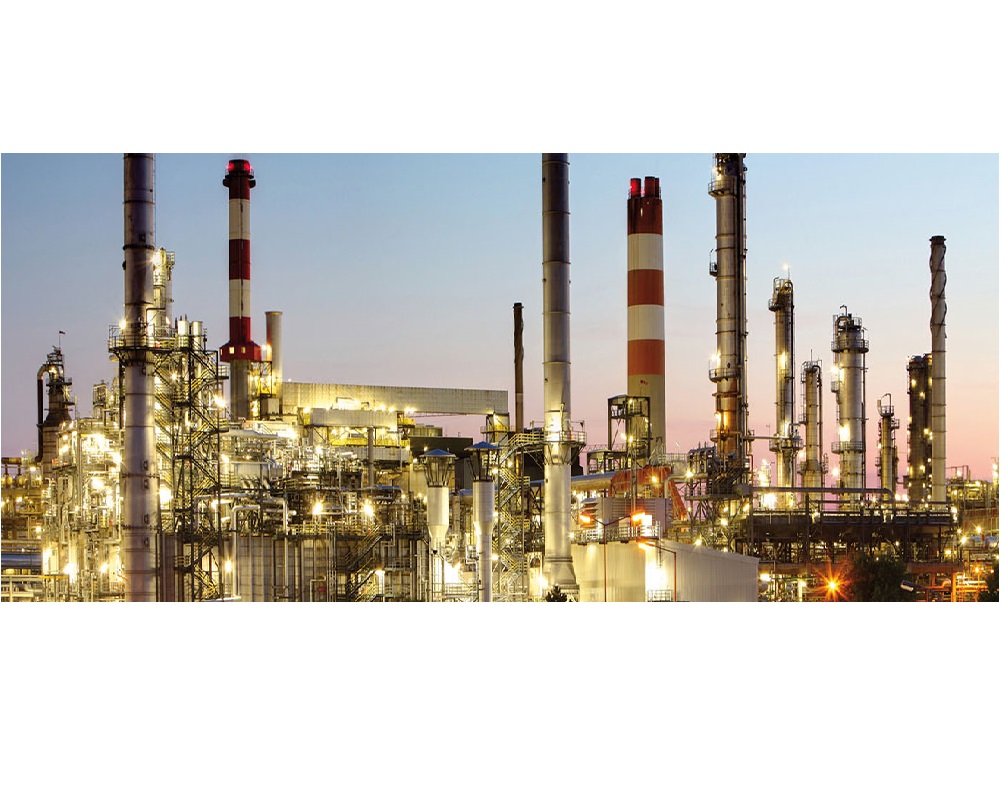
Why industrial chemical equipment matters in technical training
Chemical processing in real production settings depends on more than chemical formulas alone. Users also need to understand how temperature, pressure, flow, residence time, and equipment configuration influence process performance. That is why this category plays an important role in applied learning, where the goal is to connect scientific principles with process engineering practice.
For teaching and research, this type of equipment can help illustrate core operations such as heating, cooling, dosing, agitation, transfer, and controlled reaction handling. It also supports a broader view of plant operation, where process reliability, safety awareness, and repeatable operating conditions are just as important as the chemistry itself.
Typical scope of equipment in this category
Industrial-oriented chemical equipment generally covers systems and apparatus used to simulate, demonstrate, or support process steps found in manufacturing and applied chemical operations. Depending on the training objective, this may involve equipment for mixing and blending, heat exchange, reaction study, distillation-related practice, filtration, dosing, circulation, or other unit-operation concepts.
Compared with purely academic chemistry setups, the emphasis here is often more practical and systems-based. Users may need to observe how individual devices interact as part of a larger workflow, making this category valuable for institutions that teach unit operations, process fundamentals, and industrial production logic.
Common application areas
Industrial chemical equipment is relevant in chemical engineering education, vocational training, process technology courses, and research environments where process behavior must be demonstrated in a structured way. It can also be useful for operator training, method development, and introductory pilot-scale studies where learners need a clearer view of how industrial chemical systems function.
Because many chemical processes combine multiple disciplines, this category also supports interdisciplinary work. Users may compare reaction behavior, mass transfer, fluid flow, and thermal effects in one learning environment. Where broader chemistry study is required, related areas such as general chemistry equipment can complement industrial process training.
What to consider when selecting industrial chemical equipment
A useful starting point is the intended learning or process objective. Some users need equipment to demonstrate a single principle clearly, while others require a more integrated setup that shows how several operations connect in sequence. The right choice depends on whether the focus is on reaction study, transport phenomena, separation, thermal treatment, or complete process understanding.
It is also important to consider the operating environment, the expected user skill level, and how the equipment will be maintained over time. In educational and research settings, ease of observation, repeatable operation, and safe access to key process variables are often more important than simply increasing complexity. Looking at neighboring areas such as physicochemical equipment may also help when the application requires measurement-oriented or property-based analysis alongside process hardware.
Relationship to other chemistry equipment categories
Industrial chemical equipment sits within a broader chemical training ecosystem. While some categories focus on specific scientific branches, this one is more closely tied to applied processes and how chemical operations scale into practical systems. That makes it especially useful for users who need to connect laboratory knowledge with manufacturing logic and industrial workflows.
In many projects, this category works best when viewed together with more specialized chemistry areas. For example, users studying carbon-based compounds and synthesis routes may also explore organic chemistry equipment, while applications centered on non-carbon systems may align better with inorganic chemical equipment. These adjacent categories help build a more complete training or research setup without overlapping the specific process-oriented role of industrial equipment.
Benefits for education, pilot work, and process understanding
One of the main advantages of this category is that it helps users move from isolated experiments to a broader understanding of how chemical production systems operate. Students and trainees can observe not only what happens chemically, but also how equipment arrangement, operating conditions, and process control influence outcomes. This creates a stronger foundation for industrial work, troubleshooting, and applied research.
For instructors and program designers, industrial chemical equipment can support more realistic demonstrations and structured practical exercises. It encourages a learning approach based on cause and effect, where users can relate theory to flow paths, thermal response, transfer steps, and equipment behavior. That practical perspective is often essential in chemistry, process technology, and engineering education.
Choosing a category that supports long-term use
When selecting equipment for a lab, training center, or research program, it helps to think beyond immediate teaching needs. Flexible systems are often more valuable because they can support multiple exercises, adapt to different course levels, and remain relevant as training objectives evolve. Equipment that enables observation, discussion, and repeated operation tends to deliver stronger educational value over time.
Industrial chemical equipment is a strong fit for organizations that need to teach not just chemical principles, but also the equipment logic behind real process environments. By choosing solutions that match application goals, user level, and practical workflow requirements, buyers can build a more effective foundation for applied chemistry and process education.
-
-
-
-
-
-
-
-
-
-
-
-
-
-
-
-
-
-
-
-
-
-
-
-