


General chemistry equipment
Practical chemistry work depends on instruments that are easy to use, reliable in day-to-day handling, and relevant to the measurements students, instructors, and lab staff actually perform. In teaching labs, research support environments, and demonstration settings, the right equipment helps turn basic observations into repeatable data, whether the task is checking pH, comparing liquid density, or evaluating conductivity.
General chemistry equipment in this category focuses on core laboratory measurement and teaching needs. The range is especially suitable for foundational experiments involving liquid properties, solution analysis, and routine chemical investigation, while also connecting naturally with broader lab workflows and adjacent areas such as physicochemical equipment.
Built for essential measurements in chemistry labs
This category covers instruments commonly used to evaluate solution properties and basic liquid behavior. In many chemistry workflows, these measurements are the starting point for experiments, quality checks, and method demonstrations. They also support practical learning by helping users connect theory with observable values.
Typical tasks include measuring pH, conductivity, density, viscosity, and alcohol concentration. These are not highly specialized edge cases; they are part of standard laboratory routines in schools, universities, and training environments where users need dependable equipment for recurring experiments.
Digital sensors for pH and conductivity testing
Where faster data capture and easier visualization are important, digital sensing tools can simplify the process. Products such as the PHYWE 12921-00 Cobra SMARTsense pH sensor and the PHYWE 12922-00 Cobra SMARTsense conductivity sensor are designed for direct measurement of common solution parameters with app-based data display and flexible connection options.
For teaching and introductory analytical work, this kind of setup can be especially useful because results are shown in real time and can be recorded more conveniently than with purely manual methods. A pH sensor is suitable for acid-base experiments, titrations, and water or soil investigations, while a conductivity sensor helps assess ion content and compare solution behavior under different conditions.
These products are part of the broader PHYWE ecosystem, which is widely used in education-focused laboratory environments. For buyers comparing digital and classical instruments, this category offers a useful balance between modern sensor-based measurement and traditional glass-based lab tools.
Classic glass instruments still matter in routine chemistry
Not every application requires a digital interface. Traditional instruments remain highly relevant for foundational lab work, especially where users need a straightforward method to determine density, concentration, or flow-related liquid properties. They are also valuable for hands-on instruction because they help learners understand the underlying measurement principle directly.
Examples in this category include the PHYWE 03034-00 Alcoholometer for determining alcohol content in water/ethanol mixtures, as well as multiple hydrometer variants such as PHYWE 38254-51, 38254-52, 38254-53, 38254-54, 38254-55, and 38254-56. These instruments support density-based measurement across different liquid ranges, making them useful for general lab exercises and comparison tests.
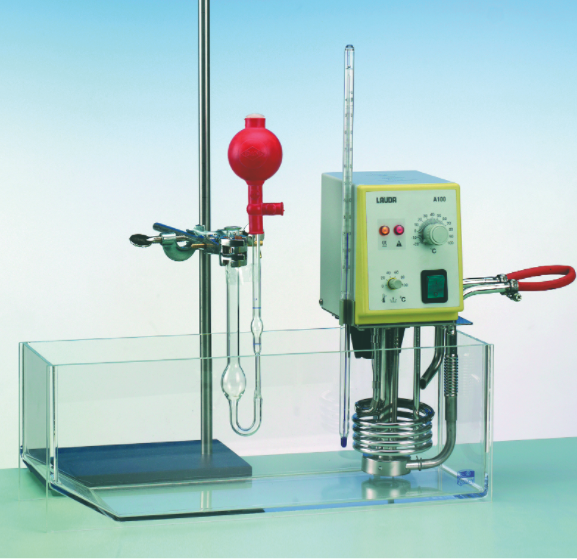
For viscosity-related work, the PHYWE 03102-02 and PHYWE 03102-03 Ubbelohde Viscosimeter models represent another important group within the category. They fit naturally into experiments where liquid flow behavior and temperature-dependent properties need to be observed in a structured laboratory setting.
How to choose the right equipment for your application
The most practical way to select from this category is to begin with the measurement variable you actually need. If your task is to monitor acidity or alkalinity, a pH sensor is the logical choice. If ionic concentration or dissolved salt behavior is more relevant, conductivity measurement is more appropriate. For liquid characterization by mass per volume, hydrometers and alcoholometers are often the better fit.
It is also worth considering how the equipment will be used. In a classroom or training environment, ease of setup, visibility of results, and repeatability across multiple users may be more important than advanced laboratory complexity. In that case, digital sensors with app-based recording can reduce setup time, while conventional instruments may be preferred for teaching core principles and manual reading techniques.
Another key factor is the expected operating range. Hydrometers, for example, are offered in different density intervals, so selecting the right range matters for readability and useful resolution. In the same way, pH and conductivity tools should be matched to the solutions and teaching scenarios involved, rather than chosen only by format.
Suitable for education, training, and experimental demonstration
A large share of the products shown here are well suited to educational laboratories, where experiments must be both instructive and manageable. Measuring pH, conductivity, density, and viscosity are common parts of chemistry teaching because they illustrate broad topics such as solution chemistry, intermolecular behavior, concentration, and physical properties of liquids.
These instruments can support laboratory classes, guided demonstrations, and small-scale experimental projects. They are also relevant in interdisciplinary contexts where chemistry overlaps with environmental study, materials investigation, or introductory process analysis. If your work extends into more structure-focused topics, it may also be useful to explore atomic and molecular chemical equipment for related teaching and experiment needs.
Combining traditional and digital workflows
One of the strengths of this category is that it does not force a single approach. Many labs benefit from combining digital and manual methods: digital sensors can speed up acquisition and visualization, while glass instruments remain effective for reference experiments, basic comparisons, and method training.
This mixed approach is often useful in procurement because it supports different user levels within the same facility. Beginners may start with direct-reading instruments to understand the measurement concept, while more advanced users can move toward connected sensors for higher sampling convenience and graphical analysis. For broader laboratory setups that include synthesis and substance-specific work, related categories such as organic chemistry equipment may also provide relevant additions.
Find equipment that fits your lab workflow
Whether you are equipping a teaching room, updating a training laboratory, or expanding a practical chemistry setup, this category brings together instruments for several of the most frequently performed measurements in general chemical work. From pH and conductivity sensors to hydrometers, alcoholometers, and viscosimeters, the focus is on tools that support clear experimental procedures and useful measurement results.
Choosing the right item depends on the property being measured, the expected range, and the way the equipment will be used in practice. A well-matched selection can make routine experiments easier to run, easier to explain, and more consistent across users and sessions.
-
-
-
-
-
-
-
-
-
-
-
-
-
-
-
-
-
-
-
-
-
-
-
-