


Optical Attenuation Meter
Accurate control of optical loss is essential in fiber testing, component validation, and network maintenance. When engineers need to simulate link conditions, verify margin, or characterize the behavior of optical components under controlled attenuation, an Optical Attenuation Meter becomes a practical part of the test setup. This category focuses on instruments and modules used to introduce, monitor, or evaluate attenuation across single-mode and multimode optical systems.
In real projects, attenuation measurement and control are rarely isolated tasks. They are closely tied to insertion loss checks, reflection analysis, power verification, and end-to-end link qualification. That is why buyers often compare these instruments not only by attenuation range, but also by wavelength coverage, resolution, repeatability, connector type, and whether power monitoring is built in.
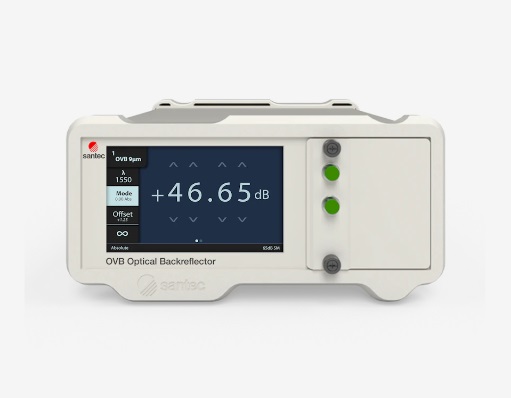
Where optical attenuation instruments are used
These devices are commonly selected for laboratory validation, optical component testing, telecom transmission work, and production environments where signal level must be adjusted in a controlled way. In fiber networks, attenuation tools help verify receiver sensitivity, emulate line loss, and confirm whether a system still performs correctly when optical power is reduced step by step.
They are also useful when testing modules, transceivers, amplifiers, and passive components that require repeatable optical conditions. For troubleshooting and field acceptance, attenuation-related measurements are often used alongside an optical power meter to confirm actual power levels and total link loss from a practical operating perspective.
Typical product types in this category
The range shown here includes both variable optical attenuators and related optical loss test solutions. Some models are designed for high-power single-mode applications, while others support multimode fiber and routine attenuation tasks in test benches or modular platforms. This makes the category relevant for users working across telecom, datacom, and component manufacturing environments.
Examples from EXFO illustrate this breadth well. The EXFO OSICS ATN-SMF and EXFO OSICS ATN-PMF are high-power variable optical attenuators intended for controlled attenuation over broad wavelength ranges, while the EXFO MOA-3800 addresses single-mode attenuation requirements with fine tuning resolution. Modular options such as the EXFO FTBx-3500 series extend the category further by offering single-mode or multimode configurations, with or without integrated power monitoring depending on the workflow.
Key selection criteria for B2B buyers
Choosing the right unit usually starts with fiber type and wavelength range. Single-mode applications in telecom environments often require coverage around 1310 nm and 1550 nm, while some setups need broader operating windows up to 1650 nm. Multimode environments may instead focus on shorter wavelength ranges and fiber types such as 50/125 µm or 62.5/125 µm.
After that, the important comparison points are attenuation range, insertion loss, setting resolution, and measurement stability. A buyer evaluating precision work will typically look for repeatability and low uncertainty, while a system integrator may prioritize remote control, platform compatibility, or power monitoring. Connector format also matters because mismatch at the interface can affect both convenience and actual test quality.
Power monitoring and why it matters
Not every attenuation task requires built-in power monitoring, but for many labs and production lines it improves efficiency. Instruments with integrated monitoring make it easier to verify the optical level while adjusting attenuation, reducing the need for separate steps and helping maintain more consistent test conditions.
This difference is visible in the EXFO FTBx-3500 family. Models such as the FTBx-3500-BI, FTBx-3500-CI, and FTBx-3500-DI include power monitoring, while the FTBx-3500-B, FTBx-3500-C, and FTBx-3500-D are aimed at users who only need attenuation control. In practice, the choice depends on whether the test station is built around a compact all-in-one workflow or around separate instruments with specialized roles.
Understanding attenuation, loss, and reflection in real testing
Although the category name emphasizes attenuation, buyers often need to think beyond a simple dB adjustment. In optical test environments, attenuation control interacts with insertion loss, return loss, and back reflection. These factors influence how accurately the setup represents real network behavior, especially in high-speed or long-haul applications where even small deviations can affect performance margins.
For example, the EXFO OSICS BKR Variable Back Reflector is relevant when reflection behavior needs to be characterized in addition to attenuation effects. In many diagnostic workflows, attenuation instruments are used together with an OTDR meter when engineers need not only total loss information but also fault location, splice evaluation, or reflection event analysis along the fiber path.
Lab conditions versus field conditions
One of the most common challenges in optical loss work is the gap between clean laboratory results and field measurements. In controlled environments, stable sources, known-good patch cords, and clean connectors help keep variation low. In the field, connector contamination, cable stress, handling differences, and environmental changes can all shift the observed loss.
This is why attenuation tools should be selected with realistic operating use in mind. Resolution on paper is important, but so are connector quality, repeatability, return loss behavior, and the practical test method used by technicians. Where installation quality is a concern, related tools such as a fusion splicer also play an indirect role by helping reduce excess splice loss before attenuation measurements are interpreted.
Representative solutions available in this category
For high-power and broad-range attenuation control, EXFO OSICS ATN-SMF and OSICS ATN-PMF are suitable examples for single-mode and polarization-maintaining applications. Where modular bench or platform-based operation is preferred, the EXFO FTBx-3500 series provides several options across single-mode and multimode fiber types, with fine attenuation setting resolution and versions tailored to different monitoring needs.
The EXFO MOA-3800 is another relevant choice for users seeking a variable optical attenuator for single-mode work, while the EXFO LXM-MM1 MPO Optical Loss Test and EXFO LXM-SM1 MPO Optical Loss Test show how attenuation and loss testing can extend into MPO-based multimode and single-mode environments. Together, these products show that the category is not limited to one form factor or one test scenario, but supports a wider optical measurement ecosystem.
How to choose the right setup for your application
If your priority is controlled signal reduction in a lab or R&D bench, start with wavelength compatibility, attenuation range, and tuning precision. If your work involves repeated qualification steps or automated workflows, integrated monitoring and remote control support may be more valuable than the lowest insertion loss alone. For production and validation teams, repeatability over many cycles can be just as important as the headline dB range.
For network maintenance, it is also helpful to define whether the goal is to adjust optical power, verify end-to-end loss, or locate a physical fault. An attenuation instrument is strong at controlled loss simulation and channel characterization, but it is usually part of a broader toolkit rather than a standalone answer for every fiber problem. Matching the instrument to the actual test method will deliver better long-term value than choosing by specification sheet alone.
This category is intended for engineers and technical buyers who need dependable fiber optic test capability, from variable attenuation and power-aware measurement to broader optical loss workflows. By comparing fiber type, wavelength range, monitoring features, and intended use case, you can narrow the selection to the instruments that fit your lab, field, or production environment more naturally.
-
-
-
-
-
-
-
-
-
-
-
-
-
-
-
-
-
-
-
-
-
-
-
-