


Air and Gas Transmitters
Stable monitoring of airflow and air-related parameters is essential in ventilation systems, clean areas, process rooms, storage spaces, and building automation. When measurements need to be sent continuously to a controller, BMS, PLC, or supervisory system, Air and Gas Transmitters provide a practical way to convert environmental conditions into reliable electrical or digital signals.
This category brings together instruments designed for continuous measurement rather than spot checking. Depending on the application, that may include air velocity, temperature, humidity, or gas-related values that must be tracked over time for control, alarm handling, logging, and process optimization.
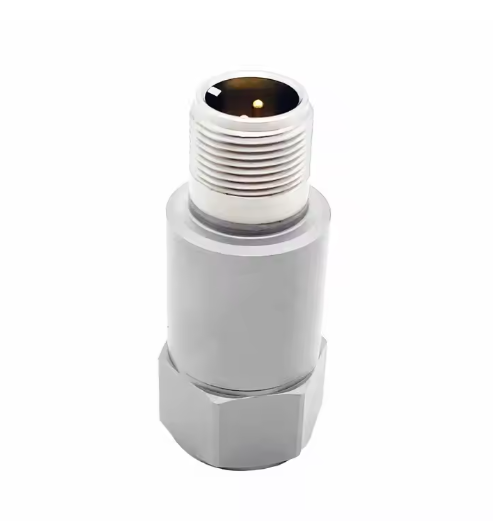
Where air and gas transmitters are typically used
These devices are commonly selected for HVAC systems, environmental monitoring panels, laboratory ventilation, air handling units, ducts, technical rooms, and industrial spaces where conditions must remain within a defined range. In many installations, the transmitter is not only measuring but also supporting control logic, helping maintain airflow balance, comfort conditions, or process stability.
In practical terms, users often look for a transmitter when handheld measurements are no longer enough. A fixed device with analog or digital communication can provide continuous data for trending, preventive maintenance, and automatic system response. If your project also involves broader environmental instrumentation, related solutions can be explored in air quality sensors for complementary indoor monitoring points.
Key measurement functions in this category
The scope of this category covers more than one sensing task. Some products focus on airflow or air speed, while others may be used for gas or environmental parameters depending on the installation requirement. This makes the category relevant for engineers who are comparing sensing technologies, output types, and mounting formats within one broader instrumentation family.
A representative example in this range is the Senseca HD29 series, which combines air speed, temperature, and humidity measurement in a single transmitter. This type of multi-parameter design is useful when system designers want to reduce device count while still gathering the main values needed for ventilation monitoring and control.
Output options and integration considerations
One of the first selection criteria is the signal interface. In this category, users may need either analog output for straightforward connection to standard control hardware or digital communication for more structured integration. The listed Senseca models illustrate both approaches, with versions available in Modbus and 0-10 Vdc output configurations.
For example, models such as Senseca HD29S371TC302, HD29S371TC305, and HD29S371TC310 are suited to Modbus-based architectures, while Senseca HD29V371TC302, HD29V371TC305, and HD29V371TC310 are intended for 0-10 Vdc signal handling. The right choice usually depends on controller compatibility, wiring strategy, required diagnostics, and whether the project prioritizes simple analog scaling or networked communication.
Probe design, installation space, and cable length
Mechanical fit is often just as important as the sensing principle. In air systems, probe length affects how easily the sensor can be positioned in a duct, chamber, or difficult access point. Within the featured product range, probe lengths such as 215 mm, 415 mm, and 570 mm provide flexibility for different mounting depths and installation geometries.
Cable length also matters in real installations, especially when electronics and sensing points cannot be mounted in the same place. Variants with 2 m, 5 m, and 10 m cable lengths can simplify panel layout and reduce installation constraints. A stainless steel probe construction, such as the AISI 304 probe used in the highlighted Senseca transmitters, is also relevant when users need a more robust sensing element for technical or industrial environments.
How to choose the right transmitter for your application
A good selection process usually starts with the control objective. If the goal is airflow verification in low-speed conditions, measurement range and sensitivity become critical. If the transmitter will be installed in a building automation project, output compatibility and power supply requirements may drive the decision. If humidity and temperature data are also needed, a combined transmitter can reduce wiring and installation complexity.
It is also important to check the expected environmental conditions around the probe. Temperature exposure, humidity level, installation access, and maintenance practices all influence long-term usability. For projects focused specifically on airflow measurement hardware, users may also want to review dedicated air velocity transmitter solutions when narrowing the selection to that function alone.
Examples from the featured product range
The current selection includes several Senseca HD29 transmitter variants designed around similar sensing architecture but different physical configurations. Models such as HD29S371TC202, HD29S371TC205, and HD29S371TC210 provide Modbus output with a 415 mm probe and different cable lengths, while HD29S371TC102, HD29S371TC105, and HD29S371TC110 offer similar functionality with a 215 mm probe format.
For applications requiring a longer insertion depth, HD29S371TC310 and HD29V371TC310 combine a 570 mm probe with a 10 m cable, while shorter cable versions like HD29S371TC305 or HD29V371TC305 may be more suitable where the control cabinet is nearby. These examples show how model selection in this category is often driven by installation details as much as by the measured parameters themselves.
Brand coverage and broader instrumentation context
Air and gas transmitters are used across many industries, so buyers often compare brands based on signal options, mounting style, environmental suitability, and integration preferences. This category is relevant to users searching across manufacturers such as Dwyer, OMEGA, KANOMAX, Rotronic, Sauermann, Adtek, and Senseca, depending on the project standard and required measurement task.
In many systems, transmitters are part of a wider environmental monitoring setup rather than standalone devices. If the application extends into validation or airborne particle workflow support, related product groups such as aerosol generator equipment may also be relevant in specialist testing environments.
Choosing with long-term operation in mind
For B2B users, the most suitable transmitter is usually the one that fits the control architecture, physical installation space, and maintenance plan with minimal compromise. Looking beyond the headline parameter and checking output type, probe length, cable routing, power requirements, and operating environment can help avoid mismatches later in the project.
This category is intended to support that comparison process by bringing together transmitters for continuous environmental and air monitoring. Whether you are specifying a compact airflow installation point or a multi-parameter transmitter for integration into a larger automation system, a careful match between sensing function and installation reality will usually lead to a more dependable result.
Types of Air and Gas Transmitters (495)
-
-
-
-
-
-
-
-
-
-
-
-
-
-
-
-
-
-
-
-
-
-
-
-