


Safety Belt
Working at height, climbing poles, or carrying tools in demanding field conditions requires equipment that supports both safety and efficient movement. In these situations, choosing the right Safety Belt is not just about basic protection; it is also about matching the belt or harness to the actual task, the user’s working position, and the surrounding risk level.
This category brings together safety belts, harness sets, fall-arrest webbing, self-retractable lifelines, and tool belts used across construction, electrical maintenance, telecom work, industrial facilities, and utility applications. Whether the priority is fall restraint, work positioning, or keeping tools accessible during installation and service work, the selection should always start with the job requirement rather than appearance alone.
Understanding the role of safety belts in fall protection
In industrial and field environments, a safety belt can serve different purposes depending on its design. Some models are intended for work positioning, helping the user maintain a stable position while keeping both hands free. Others are part of a broader fall-protection system that may include a full body harness, lanyard, hook, or retractable lifeline.
This distinction matters. A simple belt used for positioning is not the same as a complete fall-arrest solution. For tasks where there is a risk of free fall, full body harness assemblies and compatible connecting devices are typically the more appropriate choice, especially when compliance and controlled load distribution are important.
Typical product types in this category
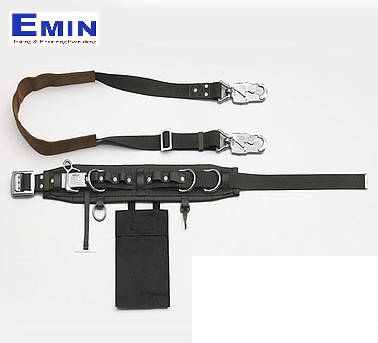
The range in this category covers more than one format, which makes it suitable for different operational needs. Belt-style products such as the ADELA SC-19A Safety Belt, ADELA H227 Safety Belt, and ADELA H32 Lineman Safety Belt are relevant where workers need support around the waist and secure attachment points for positioning during pole or structure work.
For higher-risk applications, full harness sets such as the ADELA H4501+EW31 and H4501+EW32 provide a more complete body support configuration. Products like ADELA RFA-100 Self Retractable Lifelines and ADELA RFA-150 Self Retractable Lifelines extend the system further by helping manage movement while reducing slack in the connection line.
This category also includes supporting items with a more practical role in daily work. For example, the Proskit ST-5504 Tool Belt with Safety Lock and Proskit ST-5503 Wide Tool Belt are useful for technicians who need to carry hand tools securely, even though they are not substitutes for fall-arrest equipment.
How to choose the right model for the job
A good starting point is to define the actual task: climbing, positioning, restraint, or full fall arrest. If the user works on poles, ladders, towers, or structures and needs stable positioning, a lineman-style belt or positioning belt may be appropriate. If there is a real possibility of falling from height, a full body harness combined with a suitable lanyard or retractable device is generally the safer direction.
Next, consider the working duration and user comfort. Adjustable chest, waist, and thigh points can improve fit and reduce fatigue over longer shifts. Connection hardware such as D-rings, hooks, and lanyards should also match the work method and anchor arrangement, since compatibility within the full system is just as important as the belt itself.
Material and build are also practical considerations. Polyester and polyamide designs are commonly selected for durability and regular industrial use, while cable-based retractable units are more relevant where longer vertical travel or managed fall distance is required.
Examples from the available product range
Several products in this category illustrate how different applications call for different equipment. The ADELA H4501+EW31 Full Body Harness Completed set with one Fall Arrest Lanyard is suitable when users need an integrated harness-and-lanyard setup. The H4501+EW32 version expands that concept with dual steel lanyards, which may be relevant in tasks requiring continuous tie-off transitions.
For positioning-oriented use, the ADELA SC-19 and SC-19A Safety Belt models offer a belt-based approach with multiple D-rings, while the ADELA H32 Lineman Safety Belt is aligned with utility and climbing-related work. Where longer-range fall-protection support is needed, the ADELA RFA-100 and RFA-150 Self Retractable Lifelines add a more dynamic connection method to the overall system.
There are also practical belt solutions outside pure fall protection. The VIỆT NAM daydaiantoan 1 big hook safety belt represents a basic belt-type option, while Proskit tool belts focus more on carrying tools and improving access during service or installation work.
Why certifications and system compatibility matter
When evaluating safety equipment, buyers often look first at shape or price, but technical compatibility should come earlier in the process. In the available product data, some ADELA items reference standards such as EN 361, EN 362, EN 358, EN360, and CE-related approvals. These references help indicate the intended use category of the product, especially for harnesses, connectors, positioning belts, and retractable fall-protection devices.
Even so, certification markings should be read together with the application context. A belt, hook, lanyard, and anchorage need to function as a coordinated system. This is particularly important for procurement teams, contractors, and maintenance managers who need to standardize PPE selection across crews or sites.
Related protective equipment often selected together
Safety belts are frequently purchased as part of a wider personal protection setup rather than as standalone items. In electrical and utility environments, buyers often review related protective products such as insulating gloves and insulating boots or insulating carpet to support safer work around energized systems.
For teams working outdoors, on infrastructure, or in field maintenance, it can also be useful to keep first aid equipment available as part of broader jobsite readiness. These related categories help build a more complete safety approach around the actual task, not just a single item of PPE.
Who this category is suitable for
This category is relevant for contractors, MRO buyers, utility service teams, telecom installers, facility maintenance personnel, and industrial safety departments. It covers both users looking for a straightforward positioning belt and those needing a more complete fall protection setup with harnesses and retractable lifelines.
Because the available range includes both body-worn protection and tool-carrying belts, it is useful to confirm whether the requirement is worker protection, tool organization, or both. That simple clarification helps narrow the selection quickly and avoids choosing a belt that looks suitable but does not match the actual risk level.
Final considerations before purchasing
The right choice depends on how the equipment will be used in the field: stationary positioning, climbing support, restrained movement, or active fall arrest. Reviewing connection points, adjustment range, belt or harness style, and compatibility with lanyards or lifelines will usually lead to a better decision than comparing products on name alone.
Within this Safety Belt category, buyers can compare practical belt models, full body harness sets, and retractable lifeline options for different industrial tasks. A careful selection process helps improve worker safety, supports compliance goals, and ensures the equipment fits real operating conditions rather than a generic specification sheet.
-
-
-
-
-
-
-
-
-
-
-
-
-
-
-
-
-
-
-
-
-
-
-
-