


Frame Memory Board (Video)
In video processing and image analysis workflows, temporary high-speed storage is often just as important as the sensor or display itself. When a system needs to capture, buffer, and move image data reliably between acquisition and output stages, a Frame Memory Board (Video) becomes a practical building block in the signal chain.
These boards are commonly used in environments where individual frames or short image sequences must be stored and handled with stable timing. That can include inspection systems, laboratory imaging setups, video analysis benches, and custom industrial platforms where predictable frame handling matters more than consumer-style playback features.
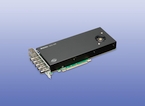
Where frame memory boards fit in a video system
A frame memory board is designed to hold video frame data in memory so that it can be accessed, processed, transferred, or output at the required time. In practical terms, this helps bridge differences between the speed of image capture, the timing of downstream processing, and the requirements of display or recording equipment.
In many technical systems, video data does not move through a single uninterrupted path. Instead, it may need to be captured, buffered, synchronized, or reformatted before the next stage. A frame buffer at board level helps stabilize that flow, especially when the application depends on repeatable frame access rather than simple live viewing.
Typical applications in industrial and technical environments
Frame memory boards are relevant wherever video frames must be handled as data, not just viewed as moving images. Examples include machine vision support, image comparison, video signal evaluation, research instrumentation, and test environments that require precise control over captured frames.
They can also support workflows where engineers need to freeze, inspect, or replay frame data during development and troubleshooting. In these cases, the board acts as a hardware-level resource for temporary storage, enabling more controlled analysis than a basic live feed alone would provide.
Why buffering and frame storage matter
One of the key reasons to use this category of hardware is timing control. Video sources, processing engines, and output devices do not always operate at exactly the same rate. A frame memory board helps absorb these differences by storing image data temporarily and making it available when the next device or process is ready.
This can improve system stability in applications where dropped frames, inconsistent timing, or poorly synchronized transfers would affect measurement, inspection, or verification work. It is especially relevant in specialized video environments where repeatability and signal integrity are more important than broad media features.
Selection points to review before choosing a board
Choosing the right frame memory board starts with the broader system architecture. Buyers typically look at the required video format, how frame data will be written and read, the expected throughput, and how the board must interface with the host system or surrounding hardware. The right choice depends less on a generic specification checklist and more on how the board is used inside the complete workflow.
It is also important to consider whether the board is supporting acquisition, intermediate processing, output preparation, or test and validation. In some setups, the board functions alongside a video recorder for capture and review, while in other systems it may sit closer to signal handling or image generation stages.
Relationship to other video equipment categories
A frame memory board is rarely selected in isolation. It often forms part of a larger video platform that may include capture, transfer, processing, and output devices. For example, when image data must be moved between subsystems, a video transfer box may be relevant depending on the architecture.
In more advanced visualization or image synthesis environments, users may also evaluate related hardware such as a rasterizer for video systems. Where very high-resolution acquisition is part of the workflow, it can also be useful to review options associated with an 8K camera platform to understand the broader data path and storage demands.
Integration considerations for engineers and technical buyers
For B2B procurement and engineering teams, integration is usually the deciding factor. A board may be technically capable, but its real value depends on how well it fits the host environment, data path, software workflow, and maintenance expectations of the project. Physical compatibility, signal handling requirements, and system-level timing behavior should all be reviewed carefully.
It is also useful to think about the service life of the overall platform. In industrial and laboratory applications, a frame memory board may be part of a long-running installation where reliability, repeatable operation, and support for existing video infrastructure are more important than frequent hardware refresh cycles.
When this category is the right fit
If your application involves storing and managing image frames inside a dedicated video workflow, this category is worth close attention. It is particularly relevant when frame-level handling, buffering, synchronization, or controlled playback of captured image data is necessary for analysis, inspection, or system coordination.
By focusing on the role of the board within the full video chain, buyers can narrow down solutions that match the actual operational need rather than selecting on broad or consumer-oriented assumptions. That usually leads to a more stable integration path and a better fit for technical video systems.
For teams building or maintaining specialized imaging setups, Frame Memory Board (Video) products support a critical layer between source data and downstream processing. Reviewing this category alongside adjacent video hardware can help define a more consistent, reliable, and application-focused system architecture.
-
-
-
-
-
-
-
-
-
-
-
-
-
-
-
-
-
-
-
-
-
-
-
-