


IoT Training
Building practical IoT skills usually requires more than a controller board and a few sensors. In engineering education, applied research, and technical training environments, learners also need structured experiments, repeatable measurement methods, and hardware that connects embedded design with wireless communication, power analysis, and device validation. That is where IoT Training equipment becomes especially valuable.
This category brings together training platforms and courseware intended for hands-on learning across IoT system design, sensor integration, wireless connectivity, and power-focused validation. It is relevant for universities, technical institutes, R&D labs, and industrial training centers that want to move from theory to guided experimentation using real devices, measurement workflows, and application-oriented exercises.
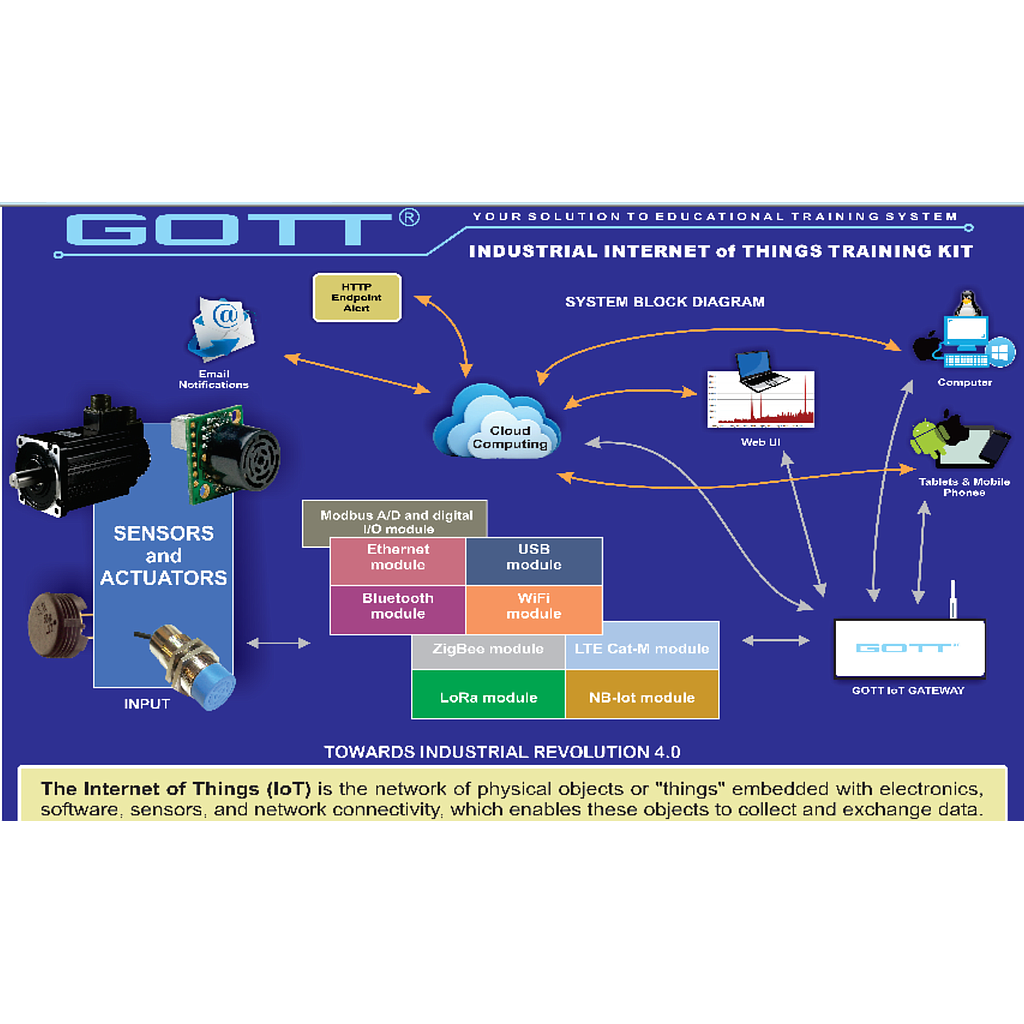
What this category supports in an IoT lab environment
IoT learning typically spans several disciplines at once: embedded programming, sensor interfacing, communications, basic electronics, cloud connectivity, and device-level troubleshooting. A well-planned training setup helps students and engineers understand how these elements interact in complete systems rather than as isolated topics.
Within this category, the focus is on platforms that support hands-on experimentation in areas such as GPIO, PWM, I2C, SPI, analog and digital sensor connections, Bluetooth® Low Energy, Zigbee, LoRa-related validation concepts, and power measurement for battery-operated nodes. Some solutions are built around modular trainers for circuit-level practice, while others are structured as complete educational kits with lab sheets and teaching materials.
Typical product groups found in IoT training
The range includes both academic courseware packages and modular practice systems. For example, KEYSIGHT offerings in this category are oriented toward structured IoT education with guided labs, recommended measurement instruments, and topics such as wireless communication compliance, MEMS sensor analysis, and precision power characterization.
Representative examples include the KEYSIGHT U3813A for IoT system design fundamentals, the U3815A and U3816A for wireless communication and compliance training, and the U3817A and U3818A for precision power measurement and MEMS sensor work. These are suitable when the training objective includes not only building an IoT node, but also understanding how to validate communication behavior and analyze real power consumption in low-power designs.
On the modular side, ETEK provides trainers that support progressive lab work in sensor circuits, Arduino-based applications, and IoT wire and wireless networking. Systems such as the ETEK IOT-2510, AMC-2520, IOTN-2530, and AIOT-2550 are useful when the requirement is to teach through individual modules covering sensors, actuators, microcontroller interfaces, and practical application building blocks.
Core learning areas covered by IoT training systems
A strong IoT curriculum usually starts with embedded system fundamentals. Learners need to understand how microcontrollers interact with peripherals, how digital and analog signals are acquired, and how software controls external hardware. Training kits in this category support that foundation through exercises involving sensor input, relays, displays, and communication interfaces.
The next layer is connectivity. IoT devices rarely operate alone, so training often includes Bluetooth® Low Energy, Zigbee, WLAN-related concepts, or network architecture for distributed sensor nodes. Platforms such as the KEYSIGHT U3815A and U3816A are especially relevant when the goal is to connect classroom learning with validation and pre-compliance style workflows for wireless designs.
Power behavior is another critical topic, particularly for portable and battery-operated devices. The KEYSIGHT U3817A and U3818A illustrate this area well by focusing on dynamic current drain, battery life evaluation, solar-powered scenarios, and sensor efficiency. In real product development, these skills are essential because wireless and sensor performance must be balanced against runtime and energy consumption.
How to choose the right IoT training platform
The best fit depends on who will use the equipment and what outcomes the lab is expected to deliver. For undergraduate teaching, introductory platforms that cover system overview, sensor interfacing, and basic wireless communication may be enough. The KEYSIGHT U3813A and U3814A align well with this type of progression because they connect embedded design concepts with practical lab activities and, in some versions, editable teaching slides.
For programs that emphasize device testing, RF behavior, or communication quality, it makes sense to prioritize solutions that extend into measurement and compliance-related learning. In that case, kits built around signal analysis, wireless validation concepts, and network security topics will be more suitable than entry-level board trainers alone.
If the requirement is modular bench practice with clear separation between topics, ETEK systems can be a practical option. The IOT-2510 focuses on sensor circuits, AMC-2520 on Arduino microcontroller training, and IOTN-2530 on network-related circuit modules. This modular approach can help instructors build lessons step by step, especially in technical schools and skills-based training centers.
Applications in education, research, and technical upskilling
These products are not limited to classroom use. In research preparation, IoT training systems can shorten the time needed to familiarize students or junior engineers with test setups, sensor behavior, and basic communication stacks before moving into custom prototypes. They can also support capstone projects involving smart home, environmental monitoring, wearable sensing, industrial automation, or low-power remote nodes.
For corporate technical training, the value often lies in repeatability. A structured trainer or courseware package helps teams practice the same workflow across multiple users, whether the topic is microcontroller interfacing, wireless node validation, or sensor power optimization. That makes these solutions useful for onboarding, internal workshops, and lab standardization.
Organizations building broader technical labs may also explore related areas such as Information technology Training or more general Apllication training resources when the curriculum extends beyond device-level IoT work.
Why measurement-aware IoT training matters
Many introductory IoT courses stop at proving that a node can send data. In practice, however, a working prototype is only the starting point. Engineers still need to understand signal integrity, communication robustness, sensor response, and how much power the device actually consumes during sleep, wake-up, transmission, and event detection.
This is why measurement-aware training is important. Educational kits that reference oscilloscopes, digital multimeters, signal analyzers, DC power analyzers, or software tools help bridge the gap between learning and engineering practice. Instead of treating IoT as a purely software topic, they show how embedded hardware, RF behavior, and electrical performance affect the final application.
Examples of training paths within this category
One common path starts with embedded and peripheral basics, then moves into sensor integration, wireless communication, and finally system optimization. Products like the KEYSIGHT U3813A or U3814A support this progression by combining introductory IoT system design topics with practical exercises on interfaces and connectivity.
A second path is communication-focused, where the main objective is to understand wireless standards, coexistence, validation, and security. The KEYSIGHT U3815A and U3816A are suitable references for this type of lab structure. A third path is device efficiency and sensor performance, where KEYSIGHT U3817A and U3818A fit well because they emphasize power measurement, MEMS sensors, and battery-related analysis.
For more hardware-centric practice, ETEK modules allow instructors to build targeted lessons around sensor circuits, Arduino applications, or wire and wireless network circuits. That flexibility is useful when the lab must support mixed skill levels or short training modules rather than a single long-form course.
Final considerations
Choosing IoT training equipment is really about matching the platform to the depth of learning required. Some labs need a structured introduction to embedded IoT design, while others need stronger coverage of wireless validation, sensor characterization, or low-power analysis. The products in this category support those different needs through a mix of courseware-based systems and modular trainers.
By selecting equipment that reflects real engineering workflows, institutions and technical teams can create more effective labs for teaching, experimentation, and skills development. If your priority is a balanced learning environment, look for solutions that combine embedded design, wireless communication, and practical measurement methods so learners can move from concept to validated IoT implementation with confidence.
-
-
-
-
-
-
-
-
-
-
-
-
-
-
-
-
-
-
-
-
-
-
-
-