

Test kits and equipment
Hands-on testing remains one of the most effective ways to build understanding in science education, laboratory training, and introductory research work. Whether the task is checking water quality, observing biological samples, studying motion, or preparing simple laboratory procedures, the right test kits and equipment help users move from theory to measurable results with greater clarity and consistency.
This category brings together practical kits and teaching-oriented equipment designed for structured experiments, demonstrations, and routine testing activities. The range is especially relevant for schools, training centers, and research support environments that need dependable tools for chemistry, biology, physics, and applied science workflows.
Where this category fits in laboratory and education environments
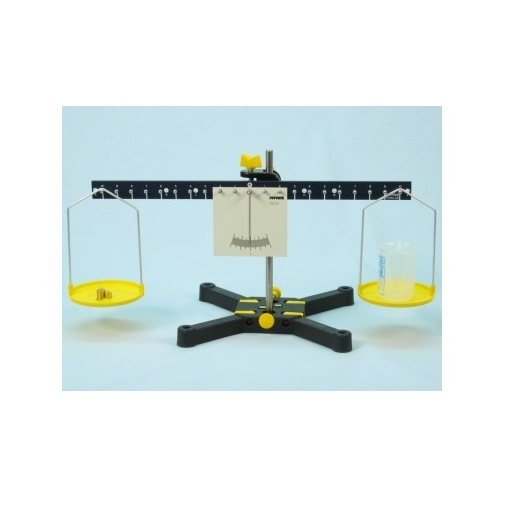
In many technical and academic settings, testing equipment is not limited to a single discipline. A basic water test kit, a microscopy set, a motion experiment package, or a magnetic stirrer may all support different stages of learning, sample preparation, and experimental validation. That is why this category is useful for organizations that need a flexible foundation rather than one highly specialized instrument type.
Users comparing options in this section are often looking for equipment that is easy to deploy, suitable for repeated use, and aligned with guided experimentation. For broader setups, it can also be helpful to explore adjacent groups such as chemical equipment or biological devices when a project requires additional preparation or analysis tools.
Typical product types included in this category
The product mix shown here covers both direct test solutions and experiment-oriented education sets. Some items are intended for straightforward field or classroom testing, while others support repeated laboratory exercises in areas such as mechanics, microscopy, or water-related science.
Examples include the L-Tek LS-H2S Water Test Kit (100test/box), which is designed for presence/absence bacteria testing in water, and training-focused sets such as PHYWE student kits for water studies, biological water analysis, microscopy, and linear motion. Equipment like the PHYWE 35761-99 magnetic stirrer without heating and the PHYWE 35760-93 hotplate magnetic stirrer also support sample handling and preparation in simple lab routines.
Water testing and environmental learning applications
Water-related testing is one of the clearest use cases in this category because it connects directly to environmental monitoring, classroom science, and introductory lab practice. A kit such as the L-Tek LS-H2S Water Test Kit is suitable when the goal is a simple manual procedure for checking bacterial presence or absence in water samples over a defined incubation period.
For more educational and observational use, the PHYWE 30834-88 Student Set Biological Water Analysis supports field-style study of water quality through indicator organisms and biological assessment methods. In early science education, the PHYWE 15233-88 Student Set Water and PHYWE 15233-88D Student Set Water Digital extend the topic into experiments about density, temperature, mixtures, surface effects, and basic purification concepts. Together, these examples show how water testing can range from straightforward screening to broader scientific investigation.
Support equipment for preparation, handling, and demonstration
Not every item in this category is a test kit in the narrow sense. Some products serve as support equipment that makes testing and experimentation more practical. Magnetic stirrers are a good example: they help with mixing solutions, improving repeatability in sample preparation, and maintaining more consistent handling steps during routine laboratory work.
The PHYWE 35761-99 model is suited to stirring without heat, while the PHYWE 35760-93 adds heating and connection for an external temperature probe, which can be useful when a process requires both mixing and controlled temperature conditions. In the same broader ecosystem, users may also need complementary items from tools and accessories for setup, storage, and day-to-day lab handling.
How to choose the right test kit or training set
The most practical selection approach starts with the intended activity. If the requirement is rapid routine screening, a focused water test kit may be the better fit. If the goal is guided instruction, curriculum support, or repeated student exercises, a structured experiment set often provides more value because it combines components, documentation, and repeatable learning tasks in one package.
It is also important to consider the working environment: field use, classroom demonstration, bench-scale lab work, or group-based student experiments. Capacity, number of users, manual versus digitally assisted operation, and whether the product is meant for testing, demonstration, or sample preparation all influence the best choice. For mechanics-focused practical learning, related options in physical device categories may also be relevant when building a more complete teaching setup.
PHYWE and L-Tek in this category
PHYWE is strongly represented here with educational science kits, demonstration sets, and supporting laboratory devices. The range shown in this category reflects a practical teaching orientation, covering topics such as water science, microscopy, mechanics, and experimental measurement. This makes PHYWE especially relevant for institutions that need coordinated solutions for training and STEM instruction.
L-Tek appears in a more targeted role through the LS-H2S water test kit, offering a focused option for simple bacteriological water screening. The two manufacturers therefore serve slightly different needs within the same category: one emphasizes broad education and experiment ecosystems, while the other addresses a defined testing application.
Common buying considerations for B2B users
For schools, laboratories, NGOs, and technical procurement teams, the decision usually goes beyond the product name. Buyers often review how many tests or experiments a kit supports, whether the method is manual or instrument-assisted, how easily multiple groups can use the set, and what additional accessories may be required for complete operation.
Durability and storage are also important in shared environments. Many education-oriented sets are designed around organized boxes or structured component layouts, which helps inventory control and reuse across classes or training sessions. When comparing options, it is useful to think in terms of workflow fit, not just individual features: sample collection, preparation, execution, observation, and teaching outcomes should all align with the intended application.
Conclusion
This category is well suited to users who need reliable, practical equipment for testing, experimentation, and introductory scientific investigation. From bacteria screening in water to microscopy, mechanics, and sample preparation, the available range supports both direct analysis tasks and broader educational programs.
If you are selecting equipment for a lab, classroom, or training environment, focus on the testing objective, user level, and supporting workflow around the experiment. A well-matched set of laboratory training equipment and test kits can improve usability, reduce setup time, and make results easier to observe, teach, and document.
-
-
-
-
-
-
-
-
-
-
-
-
-
-
-
-
-
-
-
-
-
-
-
-