


Cell biology equipment
Practical work in cell biology depends on equipment that helps users observe, count, compare, and document microscopic samples with consistent results. In teaching laboratories, training centers, and research-oriented educational environments, the right tools make it easier to move from basic slide observation to structured cell analysis. This is where Cell biology equipment becomes especially important, covering instruments that support both routine microscopy and more standardized counting workflows.
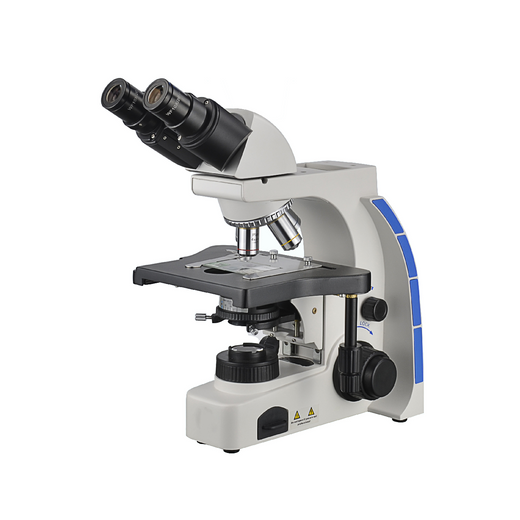
Typical equipment used in cell biology workflows
Cell biology activities often begin with direct visual observation. Microscopes are central for examining sample structure, identifying cells, checking morphology, and supporting classroom demonstrations or lab exercises. Depending on the task, users may choose monocular, binocular, trinocular, or stereo configurations to balance cost, viewing comfort, and documentation needs.
For applications that require faster and more repeatable quantification, automated counting instruments can reduce manual effort and operator-to-operator variation. A product such as the Benchmark QuadCount™ automated cell counter illustrates this part of the category well, especially when cell concentration checks must be performed more systematically than with manual counting alone.
Microscopes for teaching, inspection, and routine laboratory use
Many cell biology labs need optical instruments that are easy to use, durable, and suitable for repeated daily handling. The PHYWE range in this category reflects that requirement with several student and laboratory microscope formats. Examples include the PHYWE MIC-111A and PHYWE MIC-110A for entry-level monocular use, as well as binocular models such as MIC-121A, MIC-126A, and MIC-129A for users who need more comfortable long-session viewing.
Where image sharing or camera integration matters, trinocular options become more relevant. The PHYWE MIC-231 Trinocular Microscope is a good example for demonstrations, digital capture, and teaching scenarios in which instructors want to display live observations to a class. For broader observation tasks beyond standard compound microscopy, the PHYWE 63206-99 Stereo Microscope can support work involving larger specimens, surfaces, or sample preparation steps.
How to choose cell biology equipment for your lab
A useful starting point is the intended workflow. If the main task is introductory observation of stained slides or prepared biological samples, a student microscope with LED illumination, mechanical stage movement, and common objective ranges may be sufficient. If the lab needs extended observation sessions, frequent focusing adjustments, or shared use among multiple students, binocular or trinocular microscopes are often more practical than monocular designs.
Sample type also matters. Routine educational work may only need magnification levels suitable for common classroom exercises, while more detailed cell observation can call for higher magnification configurations. If the workflow includes repeated concentration checks in suspension samples, an automated counter may be more efficient than relying only on manual visual estimation.
Another consideration is deployment environment. Several PHYWE models in this category are designed with features that suit classroom and lab-course settings, including LED illumination, mechanical stages, and compact form factors. Instructors equipping multiple workstations may prefer instruments that are straightforward to standardize across an entire teaching lab.
Examples from PHYWE and Benchmark
PHYWE is strongly represented in this category with microscopes spanning monocular, binocular, trinocular, and stereo formats. For basic instruction, the MIC-111A and MIC-110A support introductory microscopy tasks. Moving upward, the MIC-116A, MIC-119A, MIC-121A, MIC-126A, and MIC-129A offer different magnification and viewing combinations that can better match course depth, user preference, and observation time.
For users looking beyond visual inspection alone, Benchmark adds a more specialized cell analysis angle. The QuadCount™ automated cell counter is relevant when laboratories need a faster method to count cells within a defined range and standardized sample workflow. This makes it a useful complement to microscopes rather than a replacement for them, especially in environments where both morphology review and cell counting are part of the process.
Key features that matter in real use
In educational and routine cell biology settings, equipment should be easy to operate and dependable over long periods. LED illumination is especially common because it supports stable lighting and low-maintenance use. A mechanical stage helps users reposition slides more accurately, while coarse and fine focusing controls improve repeatability during observation.
Optical configuration is equally important. Infinity optics, achromatic objectives, and appropriate eyepiece arrangements can improve image clarity and user comfort, especially in training sessions where multiple people need to review the same type of sample. For trinocular systems, the ability to connect imaging accessories can also support documentation and collaborative teaching.
For cell counters, users typically focus on factors such as sample handling convenience, counting speed, image-based detection, and fit with expected cell size or concentration ranges. The exact balance depends on whether the instrument is being used for classroom demonstration, routine lab checks, or more structured sample screening.
Applications across biology education and laboratory practice
This category is relevant to a wide range of use cases, from introductory microscopy classes to more focused practical work in cell handling and biological sample evaluation. Instructors may use these instruments to teach slide preparation, staining interpretation, magnification principles, and comparative observation. Laboratory users may rely on them for checking cell suspensions, reviewing prepared samples, or documenting visible differences between specimens.
Cell biology often overlaps with adjacent subject areas as well. Depending on the curriculum or application, users may also explore related solutions in botany equipment, zoology equipment, or human physiology equipment when building a broader teaching or lab setup.
Building a more effective equipment set
Rather than choosing instruments only by magnification, it is usually better to think in terms of the complete learning or laboratory process. A well-matched setup might include student microscopes for daily use, a trinocular microscope for demonstration and image capture, and an automated cell counter for repeatable counting tasks. This approach supports both observation and measurement without overcomplicating the lab.
When comparing options, focus on user level, sample type, throughput expectations, and whether the equipment will be used individually or across multiple benches. That makes it easier to select tools that fit real workflows instead of simply choosing the most feature-heavy model.
Choosing the right cell biology equipment is ultimately about matching instruments to how samples are observed, taught, and analyzed in practice. From classroom microscopes to automated cell counting solutions, this category supports laboratories that need reliable tools for everyday biological work and structured training environments.
-
-
-
-
-
-
-
-
-
-
-
-
-
-
-
-
-
-
-
-
-
-
-
-