


Applied science equipment
From classroom demonstrations to hands-on laboratory practice, applied science training often depends on equipment that helps learners connect theory with measurable results. This category brings together applied science equipment used for observation, testing, physiological measurement, motion-related study, and stable experimental setup in teaching and research-oriented environments.
Rather than focusing on a single discipline, these products support interdisciplinary use across human physiology, biomedical training, exercise testing, and practical lab work. That makes this range especially relevant for schools, universities, training centers, and research labs that need reliable instruments for both instruction and repeatable experimental work.
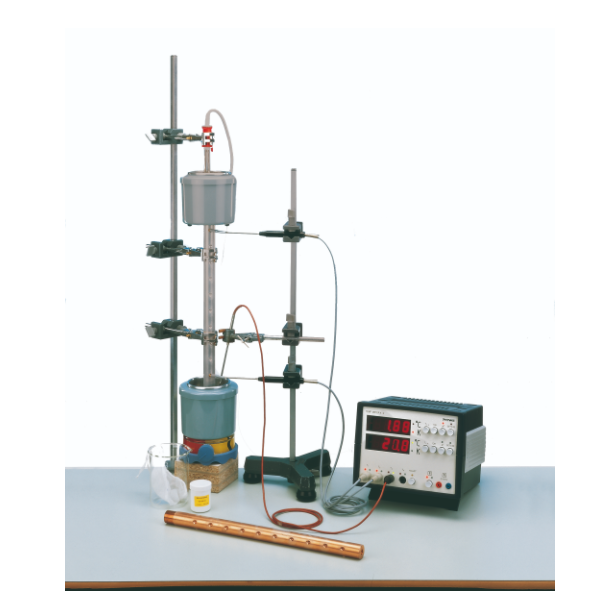
Where applied science equipment fits in learning and laboratory work
Applied science environments usually require more than basic demonstration tools. In many cases, users need devices that can capture signals from the body, evaluate physical performance, support controlled experiments, or reduce external disturbance during sensitive measurements. This is where the category becomes practical: it supports real measurement tasks instead of purely illustrative teaching.
For institutions building a broader training setup, this category also complements adjacent areas such as physical device equipment and biological devices. In practice, many educational laboratories combine these groups to create more complete teaching modules covering mechanics, life science, and experimental analysis.
Typical equipment types found in this category
A key part of applied science training is physiological measurement. Products such as the PHYWE Cobra SMARTsense series illustrate this well, with solutions for pulse, EKG, blood pressure, skin resistance, and spirometry. These tools are useful when students need to record and interpret human body signals rather than only study them in theory.
For example, the PHYWE 12935-01 Cobra SMARTsense - Pulse, PHYWE 12934-01 Cobra SMARTsense - EKG, and PHYWE 12944-00 Cobra SMARTsense - Blood Pressure can support practical activities in human physiology and health-related science education. The PHYWE 12936-01 Cobra SMARTsense - Spirometer is also relevant where breathing dynamics, airflow, and respiratory volume are part of the training objective.
Another equipment group in this category supports controlled physical testing. The Lode Valiant 2 Cardio-Pulmonary Exercise Testing Treadmill Stands is a clear example of equipment used in movement and performance analysis. In addition, accessories such as the Lode P945815 programmable control unit, Lode P945822 SpO2 option, Lode P945833 Bluetooth HR option, and Lode 930911 RS232 cable help expand connectivity, user interaction, and data capture within a larger testing setup.
Why measurement quality and stability matter
In applied science education, the quality of the learning outcome often depends on the quality of the measured signal. If data is unstable, poorly captured, or difficult to repeat, it becomes harder for learners to understand cause and effect. This is especially important in physiology experiments, where small changes in heart activity, blood pressure, breathing, or skin response may need to be tracked clearly.
Experimental stability is equally important for precision-focused work. The ESCO MIRI® AVT Anti-Vibration Table is relevant in settings where balances, microscopes, or other sensitive instruments can be affected by ambient vibration. In training and laboratory practice, a vibration-reducing platform can help improve consistency, particularly during fine measurements or demonstrations that require a steady work surface.
Choosing equipment based on teaching or application goals
A useful way to select from this category is to start with the learning objective. If the goal is to teach cardiovascular signals and body response, pulse, EKG, blood pressure, or skin resistance measurement tools may be the most appropriate choice. If the focus is respiratory function or exercise physiology, spirometry and treadmill-based testing systems are more likely to match the application.
It is also important to consider the full equipment ecosystem, not only the main device. In many applied science setups, accessories and options play a practical role in data transfer, interface control, sensor expansion, or communication with external systems. A cable, control unit, or add-on physiological module may be essential to making a training station complete and usable in daily operation.
Representative manufacturers in this range
PHYWE is a strong fit for education-oriented sensor technology, particularly where digital data collection and human physiology experiments are part of the curriculum. Its Cobra SMARTsense devices show how applied science equipment can support direct, measurable learning with a combination of sensor-based acquisition and software-driven visualization.
Lode is relevant where exercise testing, controlled motion, and cardiopulmonary assessment are involved. ESCO, meanwhile, contributes to the laboratory infrastructure side of applied science by supporting stable working conditions for sensitive instruments. Together, these manufacturers reflect the broad scope of the category, from measurement and testing to setup quality and experiment support.
How this category supports interdisciplinary laboratories
One of the strengths of applied science equipment is that it can be used across multiple departments instead of serving only one narrow subject area. A physiology sensor may be relevant in biology and health science teaching, while a treadmill-based testing system may be used in sports science, rehabilitation training, or human performance assessment. Likewise, an anti-vibration table can serve analytical, imaging, or precision weighing tasks in different labs.
This flexibility makes the category valuable for institutions planning shared-use spaces and modular lab environments. Where broader practical training is required, users may also explore related sections such as chemical equipment or tools and accessories to complete a more comprehensive teaching setup.
What to review before ordering
Before purchasing, it is worth checking how the equipment will be used in practice: individual student work, guided demonstration, research support, or repeated training sessions. Consider whether the device needs to capture real-time data, integrate with accessories, support specific physiological parameters, or remain stable under demanding lab conditions.
It is also sensible to think about user workflow. Some applications need straightforward operation for teaching efficiency, while others benefit from expandability and more advanced data handling. Matching the instrument to the training level, experiment design, and expected measurement environment will usually lead to a better long-term result than choosing by product type alone.
Conclusion
This category is designed for organizations that need practical, measurement-focused tools for science education and applied laboratory work. Whether the requirement is physiological sensing, exercise-related assessment, or a stable platform for sensitive instruments, the available range supports meaningful experimentation and clearer learning outcomes.
By selecting equipment according to application, signal type, and operating environment, buyers can build setups that are both technically relevant and easy to use in training. For schools, universities, and research facilities, that makes applied science equipment an important bridge between scientific theory and hands-on practice.
Types of Applied science equipment (7)
-
-
-
-
-
-
-
-
-
-
-
-
-
-
-
-
-
-
-
-
-
-
-
-