


Test equipment for gypsum board
Reliable quality control in gypsum board production depends on more than a single test value. Manufacturers and laboratories often need to verify thickness, bending behavior, impact resistance, surface bonding, consistency of gypsum slurry, and in some cases fire-related performance. This is where test equipment for gypsum board becomes important, helping teams evaluate whether finished boards and related gypsum materials meet process and product expectations.
In practical use, this category supports both routine inspection and more detailed material evaluation across production, incoming material checks, and laboratory comparison work. The available instruments focus on the kinds of measurements commonly needed when working with gypsum board and gypsum-based materials in industrial settings.
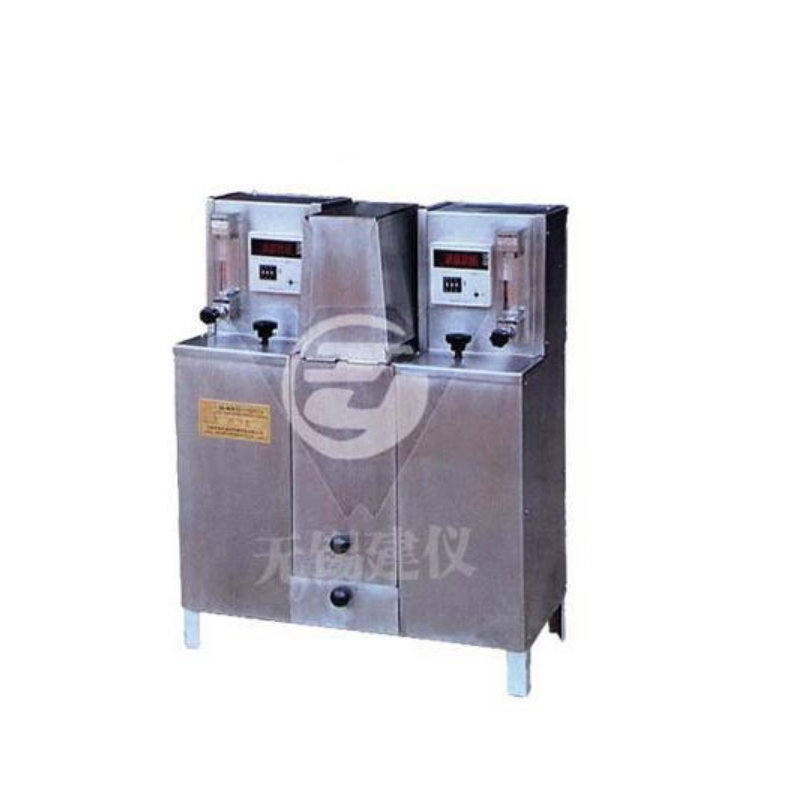
What this category is used for
Gypsum board testing is typically carried out to assess whether a board can maintain dimensional consistency, mechanical strength, and expected performance under defined test conditions. Depending on the production stage, users may need to measure board thickness, check anti-flexure behavior, examine resistance to impact, or evaluate bonding-related properties.
For gypsum material preparation, additional instruments help verify parameters such as bulk density and consistency. These tests are useful for process control because variations in raw material handling or mixing can affect downstream board quality, repeatability, and production efficiency.
Typical instruments in the gypsum board testing workflow
This category includes several types of equipment that fit different points in the inspection process. For dimensional checks, the Wuxi BH-30 Gypsum Board Thickness Measuring Device is intended for direct thickness measurement with fine resolution. In a production environment, this kind of tool supports quick verification of board uniformity and helps identify deviations before they become larger quality issues.
For mechanical performance, the Wuxi TYE-6B Gypsum Board Anti-flexure Tester is suited to evaluating bending resistance, while the Wuxi KCJ-50 Anti-impact Strength Tester is used where impact-related performance matters. The Wuxi NJ-2 Gypsum Board Glutinosity Tester adds another layer of evaluation by checking a bonding-related property relevant to gypsum board quality assessment.
Where the focus is on gypsum material behavior before or during board production, the Wuxi CHD-50 Gypsum Consistency Testing Apparatus and the Wuxi RZ-100 Gypsum Bulk Density Measuring Device are useful references. For applications involving elevated temperature testing, the Wuxi XB-0620 Fire Resistance Tester can support fire-related material evaluation under controlled conditions.
Why different test methods matter
No single instrument can describe the full condition of a gypsum board. Thickness tells you whether the product is dimensionally close to target, but it does not show how the board behaves under load. Flexural testing helps reveal resistance to bending, while impact testing provides a different perspective on how the board responds to sudden force.
Likewise, tests on gypsum slurry or powder characteristics can explain changes observed later in the finished board. A more stable testing routine often combines dimensional, mechanical, and material-property checks instead of relying on one result alone. This makes the category especially relevant for factories, third-party labs, and technical departments that want more consistent evaluation across batches.
Working with Wuxi instruments in this category
Many of the featured products in this range come from Wuxi, covering both finished-board testing and gypsum material measurement. This is useful for buyers who prefer a more consistent equipment ecosystem for routine lab work, operator familiarity, and procurement planning.
Examples include the BH-30 for thickness measurement, the TYE-6B for anti-flexure testing, and the KCJ-50 for impact-related checks. On the material side, the CHD-50 consistency apparatus and RZ-100 bulk density measuring device support upstream quality control. Instead of treating each instrument as an isolated purchase, many users evaluate them as part of a broader lab setup for gypsum board process verification.
How to choose suitable gypsum board test equipment
A practical starting point is to define what needs to be verified: finished board dimensions, structural behavior, process consistency, or fire-related performance. If day-to-day production control is the main goal, thickness and anti-flexure testing may be more relevant. If formulation, raw material variation, or gypsum mix behavior is under review, consistency and bulk density instruments may be a better fit.
It is also worth considering the operating environment, required measurement range, load capacity, and available power supply where applicable. Some buyers prioritize compact devices for routine checks, while others need heavier-duty lab equipment for repeatable mechanical testing. Selecting by test objective first usually leads to a better match than choosing by model name alone.
For broader construction material inspection programs, users may also compare gypsum board testing with related methods such as concrete test hammers or ultrasonic pulse velocity tools, especially when multiple building materials are evaluated within the same lab.
Applications in factories, labs, and technical inspection
In manufacturing plants, these instruments help support incoming inspection, process adjustment, and final product checks. A thickness gauge or anti-flexure tester may be used as part of routine batch verification, while consistency and bulk density devices help monitor how material preparation may influence later board properties.
In laboratory and quality assurance settings, testing equipment for gypsum board is also relevant for comparative studies, supplier evaluation, and troubleshooting. When a production line shows variation in performance, test data from several methods can help narrow down whether the issue is related to formulation, board structure, or handling conditions.
For organizations working across multiple material categories, complementary tools such as cover meters and rebar detectors may be relevant in adjacent inspection workflows, though gypsum board testing itself remains focused on board and gypsum material characteristics.
Building a more complete quality control setup
A well-planned gypsum board test bench often combines instruments for dimensional measurement, mechanical evaluation, and material-property analysis. This approach improves traceability because teams can connect raw material behavior with the final board result instead of reviewing isolated data points. It also makes it easier to standardize internal inspection procedures across operators or shifts.
When selecting equipment, it is generally helpful to think in terms of testing sequence: material preparation, board formation, finished product checks, and any special performance testing required for the application. That structure helps buyers identify which instruments are essential now and which can be added later as testing requirements expand.
Conclusion
Choosing the right test equipment for gypsum board depends on the type of control you need, from simple dimensional inspection to more detailed mechanical and material evaluation. This category brings together instruments that support practical testing tasks across gypsum board production and laboratory analysis.
If your workflow involves checking thickness, anti-flexure behavior, impact strength, bonding-related properties, gypsum consistency, bulk density, or fire-related response, reviewing the available models in this category can help you build a more suitable and consistent testing process.
-
-
-
-
-
-
-
-
-
-
-
-
-
-
-
-
-
-
-
-
-
-
-
-