


Pull Off Tester for concrete
When surface integrity, coating adhesion, or repair quality must be verified on concrete, a reliable pull-off test is often one of the most practical methods available. It helps engineers, inspectors, contractors, and laboratories evaluate how well a coating, mortar, plaster, or repair layer is bonded to the substrate, while also providing useful insight into the near-surface tensile strength of the concrete itself.
This category focuses on Pull Off Tester for concrete applications used in construction testing, renovation assessment, and quality control. These instruments are widely used in field and lab environments where consistent bond strength data supports acceptance testing, maintenance planning, and troubleshooting of coating or repair failures.
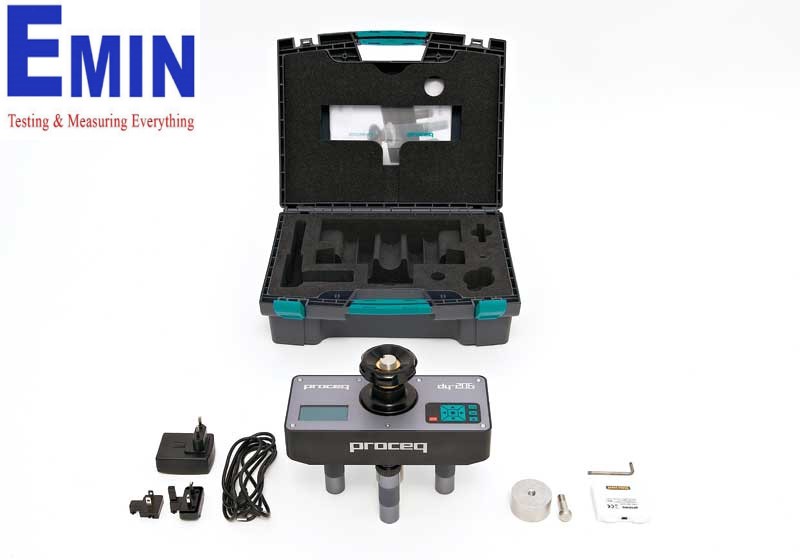
Why pull-off testing matters in concrete assessment
A pull-off test is commonly selected when the goal is to measure adhesive or tensile bond strength directly on the tested area. In concrete work, this is especially relevant for evaluating repair mortars, overlays, protective coatings, plasters, and similar applied layers that must remain securely bonded during service.
Unlike indirect screening methods, pull-off testing provides a localized mechanical result that can be used to compare treatment methods, substrate preparation quality, or curing conditions. It is also useful in renovation projects where the performance of the existing surface has to be confirmed before additional layers are installed.
Typical uses for concrete pull-off testers
Concrete pull-off instruments are used across new construction, repair, and maintenance programs. Common applications include checking the bond of surface coatings, confirming the adhesion of concrete repair systems, and assessing the surface strength of concrete before refurbishment or protective treatment.
They are also relevant in infrastructure inspection, industrial flooring, façade work, precast quality control, and civil engineering projects where bond performance affects long-term durability. In many cases, pull-off data is reviewed together with other non-destructive or semi-destructive methods such as concrete test hammer measurements or ultrasonic pulse velocity testing to build a more complete picture of material condition.
How to choose the right pull-off tester
The most suitable model depends on the materials being tested, the expected force range, and whether the work is performed mainly in the field or under controlled lab conditions. Buyers typically compare tester capacity, measurement accuracy, data handling, portability, and the accessories required for common test disc and draw bolt setups.
For site work, ease of transport, battery operation, and clear digital readout can make daily testing more efficient. For formal quality control programs, users may also prioritize calibration class, memory functions, and repeatability, especially where test results need to be documented and reviewed across multiple locations or projects.
It is also important to match the instrument to the expected bond level. Lower-force and higher-force variants serve different testing scenarios, so the selection should reflect the materials and acceptance criteria involved rather than simply choosing the highest available range.
Representative products in this category
Several recognized solutions in this category illustrate the range of concrete pull-off testing needs. The Controls Group 58-C0215/AUTO Pull-Off Bond Strength Tester is a relevant option for users focused on bond strength evaluation in professional concrete and construction testing workflows.
For portable digital pull-off testing, the PROCEQ DY series is well known in concrete renovation and coating assessment. Models such as the Proceq DY-206, DY-216, and DY-225 cover different force ranges, making them suitable for applications that vary from lighter surface evaluations to more demanding bond strength measurements. These instruments are typically considered where users need documented results, portable operation, and flexible use across coatings, mortars, plasters, and concrete surfaces.
Although this category is centered on concrete pull-off testing, related adhesion control tools can support broader surface evaluation tasks. For example, the TQCSheen SP3000 Cross Cut Adhesion Test Kit is more aligned with coating adhesion checks on painted surfaces, while the Ludatest ZT-96 Cement Mortar Strength Tester Jolting Table serves a different role in cement mortar specimen preparation and strength-related workflows rather than pull-off testing itself.
Key evaluation points before purchase
When comparing models, it helps to look beyond headline force range and consider the full testing process. A good starting point is whether the tester supports your routine materials, substrate conditions, and reporting requirements. In many B2B environments, the real value comes from a combination of measurement consistency, usability on site, and compatibility with established testing procedures.
- Required test force range for coatings, repair mortars, plasters, or concrete surface strength checks
- Accuracy and calibration level needed for inspection or quality documentation
- Portability, battery operation, and ease of use in field conditions
- Memory or software features for recording and reviewing measurements
- Accessories included for routine pull-off test setups
For broader structural assessment, pull-off testing is often used alongside reinforcement location and durability checks. Depending on the project, users may also review solutions for cover meter and rebar detection or permeability testing when investigating concrete condition before repair or protection work.
Understanding the role of pull-off testing in a broader concrete testing workflow
No single test can answer every question about concrete quality. Pull-off methods are especially useful when the concern is surface bond or near-surface tensile performance, but they are typically strongest when interpreted in context with substrate condition, reinforcement layout, moisture exposure, and the intended service environment.
That is why this category is relevant not only to contractors applying repair systems, but also to consultants, laboratories, maintenance teams, and asset owners managing rehabilitation projects. A carefully selected pull-off tester supports better decision-making before acceptance, handover, or remedial work.
Who this category is suitable for
This range is relevant for construction laboratories, inspection companies, civil engineering contractors, coating applicators, infrastructure maintenance teams, and technical procurement departments. It fits users who need dependable equipment for checking adhesion performance on concrete and related building materials.
Whether the requirement is routine site verification or more formal documentation of bond strength, the models in this category provide practical options for concrete testing workflows. Reviewing force range, portability, and data features together will usually lead to a better fit than choosing by brand name alone.
If your work involves surface preparation control, repair validation, or coating performance on concrete, this category offers a focused starting point for selecting the right testing instrument. A suitable pull-off tester helps turn local bond behavior into measurable data that can support inspection quality, repair acceptance, and more informed maintenance decisions.
-
-
-
-
-
-
-
-
-
-
-
-
-
-
-
-
-
-
-
-
-
-
-
-