

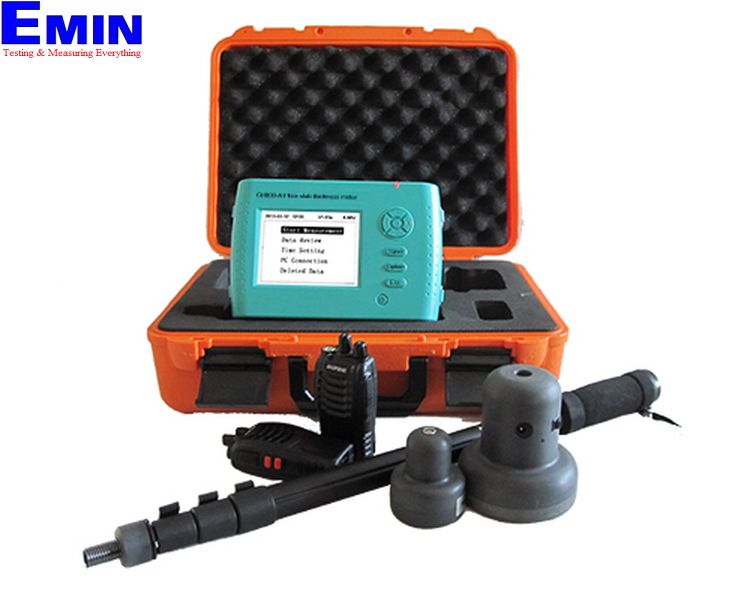
Floor slab thickness meter
When verifying structural dimensions in existing buildings, renovation projects, or quality inspections, reliable thickness data helps teams make faster and safer decisions. A floor slab thickness meter is used for non-destructive measurement of concrete slab thickness and similar nonmetallic structures, making it a practical tool for site engineers, inspectors, and testing laboratories that need accurate results without core drilling.
On projects where speed and traceability matter, this category supports field measurement of slabs, walls, beams, columns, and other structural elements. It is especially useful when confirming as-built conditions, checking construction quality, or gathering reference data before repair, reinforcement, or load assessment.
Where floor slab thickness measurement is used
Thickness verification is a common requirement in concrete inspection because the actual section depth directly affects structural performance, load assumptions, and retrofit planning. In many cases, engineers need a quick on-site method that avoids damaging finished surfaces or interrupting building use more than necessary.
Typical applications include checking concrete floor slabs in residential, commercial, and industrial buildings, as well as testing beams, walls, pillars, and some other nonmetallic materials. For broader condition assessment, this type of equipment is often used alongside tools for rebar location and cover verification or ultrasonic concrete evaluation when a project requires more than one inspection method.
How this category fits into concrete testing workflows
In practical field work, slab thickness is rarely checked in isolation. Contractors, consultants, and inspection teams often combine thickness measurement with surface hardness screening, reinforcement detection, or durability assessment depending on the inspection scope. That makes this category relevant not only for acceptance testing, but also for maintenance planning and investigation of existing structures.
For example, after identifying rebar position and cover, the next step may be to confirm section depth at selected points. In other cases, teams may compare thickness findings with rebound results from a concrete test hammer to build a more complete picture of structural condition before repair or strengthening work begins.
What to look for when choosing a floor slab thickness meter
The most important factor is the measuring range required by the structures you test most often. Existing buildings can include relatively thin slabs as well as thicker structural members, so the usable range should match the expected inspection tasks. Accuracy across that range also matters, especially where the result will be compared against drawings, tolerances, or engineering calculations.
Another key point is workflow efficiency. Instruments with direct thickness display, data storage, and stable probe positioning can reduce operator error and speed up repetitive testing. For field teams working across multiple rooms or floors, practical details such as battery operation, portability, display readability, and data transfer can make a meaningful difference over a full inspection day.
It is also worth considering the probe arrangement and measurement method. Systems designed for non-destructive testing on concrete elements are preferred when surface preservation is important and the structure cannot be interrupted by coring or destructive sampling. If your work regularly includes mixed inspection tasks, it may be useful to review solutions from TIME or compare available configurations based on operating habits in the field.
Representative instruments in this category
Several products in this category illustrate the range of applications commonly required on site. The TIME TC300 Concrete Thickness Gauge (40 ~ 820mm) is suitable for users who need a wide measurement span for concrete members and structured data storage for repeated inspections. Its profile makes it relevant for routine field checks as well as more systematic testing programs.
For teams focused on slab verification in concrete floors and related nonmetallic structures, the Jeweltest CH-800A Floor slab thickness meter is another representative option. It is positioned around non-destructive measurement with direct thickness readout, stored results, and a wireless probe communication approach that can simplify operation in the field. Where replacement or accessory needs arise, items such as the TIME TC300 probe Concrete Thickness Gauge Probe also show that this category can include supporting components within the same measurement ecosystem.
Common selection criteria for B2B buyers
For distributors, contractors, testing labs, and project-based procurement teams, device selection usually depends on more than headline range alone. Buyers often compare expected test frequency, site conditions, reporting requirements, and whether the instrument will be shared among multiple operators. Ease of training and consistency of results are often just as important as raw specifications.
Another practical consideration is whether the meter will be part of a wider inspection toolkit. Companies that already use reinforcement detection, permeability assessment, or corrosion-related instruments may prefer equipment that fits naturally into established testing procedures. If your inspection scope also includes durability concerns, it may be useful to review related methods such as rebar corrosion detection for a more complete structural assessment workflow.
Why non-destructive slab thickness testing matters
Using a dedicated thickness meter helps reduce uncertainty before drilling, anchoring, cutting, rehabilitation, or structural modification. In many retrofit and renovation scenarios, knowing the actual slab thickness can help prevent costly mistakes and support safer planning. It also provides a documented basis for technical decisions when drawings are incomplete or site conditions differ from original design assumptions.
Because the method is non-destructive, testing can often be performed with less disruption than invasive alternatives. This is particularly valuable in occupied buildings, finished spaces, and time-sensitive projects where preserving surfaces and maintaining operational continuity are important.
Choosing the right solution for your inspection scope
The right instrument depends on the types of structures you inspect, the thickness range you expect, and how results are recorded and reviewed. Some users need a straightforward field meter for quick slab checks, while others need broader measurement coverage and stored datasets for multi-point inspection work across larger sites.
This category is intended for professionals who need practical, field-ready tools for concrete thickness verification. By comparing measurement range, usability, and integration with other inspection methods, you can select a floor slab thickness meter that fits your workflow and supports more confident structural evaluation.
-
-
-
-
-
-
-
-
-
-
-
-
-
-
-
-
-
-
-
-
-
-
-
-