


Cement tester
Reliable cement quality control depends on more than a single instrument. In laboratory and plant environments, technicians often need a combination of mixing, fineness, sampling, specimen preparation, and curing equipment to evaluate raw materials and finished cement under repeatable conditions. This is where a well-structured cement tester category becomes useful: it helps buyers find the right tools for each stage of preparation and testing without losing sight of the overall workflow.
On this page, you can explore equipment used for routine cement laboratory work, from fineness determination and paste mixing to mortar specimen preparation and curing. The range is relevant for cement plants, construction materials laboratories, universities, and inspection centers that need dependable instruments for standard test procedures and daily QC tasks.
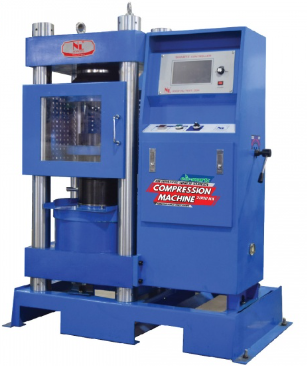
What equipment is typically included in cement testing?
Cement testing usually involves several linked steps rather than one isolated measurement. A lab may begin with sampling and material preparation, then move into fineness checks, standard consistency work, paste or mortar mixing, specimen forming, and controlled curing before strength-related evaluations are carried out.
That is why this category includes instruments with different roles in the test chain. Examples include the Samyon QY-1 Sampler for routine cement sampling, the Samyon SY-160B Cement Paste Mixer and Samyon NJ-160 Cement Paste Mixer for preparing uniform paste, and the Samyon SY-5 Cement Mortar Mixer for mortar-related work. For fineness evaluation, products such as the Tin Peng DBT-127 Blaine Fineness Apparatus and the Samyon SY-150D Vacuum Sieving Tester represent two common approaches used in cement laboratories.
Fineness testing and why it matters
Fineness is one of the most important characteristics checked in cement quality control because it influences hydration behavior, strength development, and consistency in downstream applications. Depending on the standard or laboratory method, fineness may be assessed by air permeability or by sieving-based procedures.
The Tin Peng DBT-127 Blaine Fineness Apparatus is designed around the Blaine air permeability method, a widely recognized approach for cement fineness determination. For labs working with vacuum sieving procedures, the Samyon SY-150D Vacuum Sieving Tester offers another practical option for powder fineness testing. When selecting between these methods, buyers should consider their required standard, sample throughput, operator familiarity, and whether the lab needs a dedicated fineness workflow or a broader cement testing setup.
For users also working on material transport or fluid penetration behavior in construction materials, our permeability test equipment category may provide useful complementary tools.
Mixing, specimen preparation, and repeatability
Accurate results depend heavily on repeatable sample preparation. Even if the measurement instrument is suitable, poor control of mixing speed, timing, or specimen formation can introduce unnecessary variation into test outcomes. In practical terms, this makes mixers and preparation equipment just as important as the final measuring device.
For paste preparation, the Samyon SY-160B Cement Paste Mixer and Samyon NJ-160 Cement Paste Mixer support standardized mixing steps used in consistency and related cement lab procedures. For mortar applications, the Samyon SY-5 Cement Mortar Mixer is intended for preparing mortar before specimen production. Equipment such as the Samyon GZ-75 Cement Mortar Shaking Table and Samyon GZ-85 Cement Mortar Shaking Table helps form standard mortar specimens with controlled vibration conditions, supporting better consistency from batch to batch.
Where water dosing is part of the method, the Samyon JJ-268 Water Measuring Vessel can support controlled measurement during standard consistency work. In labs that need complete process coverage, these preparation tools are often the foundation of a reliable testing routine.
Curing and handling after specimen formation
Once specimens are prepared, curing conditions become critical. Temperature stability, moisture control, and proper handling all affect the validity of later test results. This is especially important for comparative testing, routine QC, and any environment where consistency across multiple batches must be maintained.
The Samyon SY-84 Standard Cement Curing Box is intended for controlled curing tasks in cement laboratory workflows. For sample storage and conditioning in a regulated water environment, the Samyon SBY-32B Constant Temperature Water Concrete Sample Curing Tank can support organized curing operations for multiple groups of specimens. Although these units are not measuring instruments in the narrow sense, they are essential parts of the broader cement testing ecosystem because poor curing can compromise otherwise well-prepared samples.
How to choose the right cement tester for your lab
The best choice depends on test scope, not simply on product type. A plant laboratory performing daily incoming and production checks may prioritize fast sampling, fineness testing, and routine paste preparation. An academic or research lab may require a wider combination of instruments for controlled specimen preparation, curing, and method comparison.
It is also useful to think in terms of workflow: what happens before the measurement, during the test, and after specimen preparation? If your current bottleneck is sample uniformity, a mixer or sampler may be more urgent than another measuring device. If the main need is fineness verification, Blaine or vacuum sieving equipment may be the better starting point. For broader setup planning, brands such as Samyon and Tin Peng are relevant references within this category.
Cement testing in the wider construction materials lab
Cement evaluation rarely stands alone in a construction materials laboratory. Many users working with cement also handle concrete quality, reinforcement inspection, or non-destructive assessment of hardened structures. As a result, category navigation matters just as much as product selection.
If your work extends from cement characterization to structural inspection, you may also want to review concrete test hammer solutions for surface hardness assessment or ultrasonic pulse velocity instruments for non-destructive concrete evaluation. These adjacent categories help connect laboratory material control with field verification tasks.
Typical buyers and use cases
This category is relevant for cement manufacturers, ready-mix and precast laboratories, third-party testing centers, universities, and public or private construction materials institutes. In these settings, equipment may be used for routine quality control, incoming raw material checks, educational lab work, process verification, or sample preparation before strength-related testing.
Some users need a single replacement unit, such as a sampler, mixer, or curing box. Others are building a more complete laboratory line and need multiple instruments that work together in a coherent process. Reviewing the intended method, sample volume, and lab environment is usually the fastest way to narrow the selection.
Build a practical cement testing workflow
A good cement laboratory setup is built around method consistency, operator usability, and the ability to repeat the same procedure over time. That often means combining sampling, fineness testing, controlled mixing, specimen preparation, and curing rather than focusing on one isolated instrument.
Whether you are upgrading an existing lab or specifying equipment for a new facility, this cement tester category is designed to support that broader view. By selecting instruments that match your actual workflow and testing standard, it becomes easier to maintain dependable results and a more efficient quality control process.
-
-
-
-
-
-
-
-
-
-
-
-
-
-
-
-
-
-
-
-
-
-
-
-