


Pile Tester
Foundation verification often has to happen under tight construction schedules, where engineers need dependable field data before the next stage of work can proceed. In that context, Pile Tester equipment plays an important role in assessing load behavior, checking pile integrity, and identifying possible defects without relying only on destructive methods or assumptions from design calculations.
For contractors, geotechnical teams, and inspection specialists, this category focuses on instruments used to evaluate deep foundation performance in real project conditions. The range includes solutions for static loading tests, high-strain and low-strain dynamic testing, as well as drill hole monitoring for quality control during foundation construction.
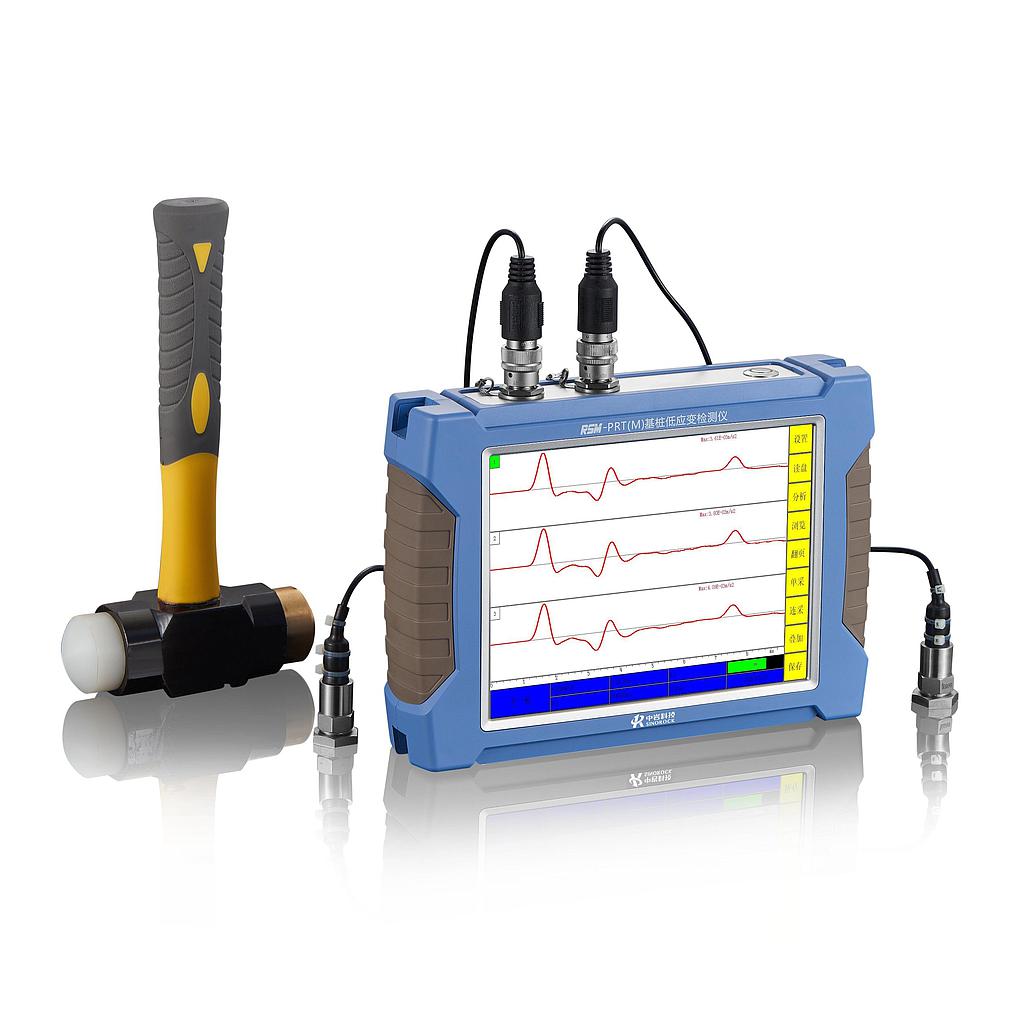
Where pile testing fits in foundation quality control
Pile testing is used to verify whether installed piles perform as expected in terms of load capacity, continuity, and structural condition. Depending on the project requirement, the test may focus on confirming bearing performance, screening for defects along the shaft, or checking the geometry and condition of drilled holes before concreting.
This makes the category especially relevant for civil engineering, transportation infrastructure, marine works, industrial plants, and high-rise construction. Compared with broader ultrasonic flaw detection equipment used for material inspection, pile testing systems are more specialized for foundation investigation and site-based structural assessment.
Main testing methods covered in this category
Not every site calls for the same test method. A suitable system depends on whether the objective is to measure static behavior, estimate dynamic capacity, evaluate integrity, or inspect the borehole itself before pile formation.
Static loading pile testing is typically selected when direct load-displacement behavior must be recorded. In this category, the Samyon SLPT Static Loading Pile Tester supports this type of work and is intended for capacity testing by static method, with data acquisition suited to field measurement and analysis.
Dynamic pile testing is used when faster testing or capacity estimation is needed in the field. Models such as the Samyon HPT High Strain Dynamic Pile Tester and Samyon L-HPT Dynamic Pile Tester are intended for high-strain applications related to pile loading capacity, while low-strain options such as the Samyon LPT-EA Low Strain Dynamic Pile Tester and Samyon LPT-EV Dynamic Pile Tester are aimed at integrity testing and defect localization.
Representative Samyon instruments for pile and borehole inspection
This category highlights equipment from Samyon, covering several common testing tasks in foundation engineering. Rather than serving as generic measurement devices, these instruments are built around practical site workflows such as impact testing, signal acquisition, integrity interpretation, and load test documentation.
For low-strain integrity work, the Samyon LPT-EA and Samyon LPT-EV are relevant choices where the goal is to detect discontinuities or suspicious zones in deep foundations. For high-strain testing, the Samyon HPT and Samyon L-HPT are more aligned with dynamic capacity evaluation and combined loading or integrity analysis. Where borehole and groove quality must be checked before pile completion, the Samyon 8360 Drill Hole Monitor extends the scope of the category into ultrasonic inspection of drilled foundation openings.
How to choose the right pile tester
The first step is to define the engineering question clearly. If the project team needs direct confirmation of pile behavior under applied load, a static loading system is usually the logical route. If faster field testing is needed to support installation control or dynamic assessment, a high-strain system may be more suitable. When the concern is pile continuity, necking, voids, or other possible integrity issues, low-strain testing is often the better fit.
It is also useful to review the jobsite environment and reporting workflow. Factors such as channel count, sensor type, connection method, data transfer distance, touchscreen usability, and compatible analysis software can all affect field efficiency. For drilled foundation work, borehole diameter range, test depth, and imaging capability may also influence equipment selection.
Where inspection needs extend beyond foundation elements, some projects may also require methods such as X-ray flaw detection or magnetic flaw detection for related material or weld evaluation. That broader context helps ensure the selected instrument matches the actual inspection objective rather than only the procurement label.
Standards and data relevance in the field
Standards matter because they shape how results are collected, interpreted, and compared across stakeholders. Several products in this category reference ASTM methods commonly associated with pile load or integrity testing, including ASTM D4945, ASTM D5882, ASTM D1143, and ASTM D3689. For engineering teams, this helps align field practice with recognized testing procedures.
Just as important as the standard itself is the quality of the recorded signal and the consistency of the test setup. Accelerometers, strain gauges, displacement transducers, and software-based curve interpretation all contribute to whether the resulting data is useful for acceptance decisions, troubleshooting, or further geotechnical review.
Typical applications across construction and infrastructure projects
Pile testers are commonly used in projects where foundation reliability has a direct impact on safety, schedule, and long-term performance. This includes bridges, highways, railways, marine structures, industrial facilities, commercial towers, and heavy civil works where deep foundations must be verified before superstructure loading advances.
Drill hole monitoring is especially relevant for bored pile construction, diaphragm wall work, and other drilled foundation processes where hole geometry and internal condition need to be checked. In these cases, the ability to inspect before concreting can help reduce rework and improve confidence in final foundation quality. For specialized rope or cable-related inspection tasks in other industries, a separate category such as wire rope ultrasonic testing may be more appropriate.
What to review before ordering
Before selecting a system, it is worth confirming the intended test method, applicable standard, expected depth or pile size, and the type of report required by the consultant or owner. Matching the instrument to the field method is more important than simply choosing a broader or more advanced-looking model.
It also helps to consider training, software workflow, sensor compatibility, and whether the project requires static, low-strain, high-strain, or borehole-focused inspection. A well-matched setup can improve both data quality and site productivity, especially when multiple piles or boreholes must be assessed within a limited timeframe.
Conclusion
This Pile Tester category is intended for professionals who need practical tools for evaluating deep foundation performance, integrity, and construction quality. With options covering static loading, dynamic testing, low-strain integrity checks, and drill hole monitoring, the range supports several core workflows used in modern foundation inspection.
If you are comparing solutions for a specific test method or project requirement, focus on the inspection objective first, then the standard, sensing approach, and field conditions. That approach usually leads to a more efficient selection and more meaningful test results on site.
-
-
-
-
-
-
-
-
-
-
-
-
-
-
-
-
-
-
-
-
-
-
-
-