


Magnetic flaw detector
Surface-breaking cracks, corrosion-related indications, and localized discontinuities can be difficult to evaluate reliably without the right inspection method. In many maintenance, fabrication, and field service environments, magnetic flaw detectors are used to reveal defects quickly on ferromagnetic components while keeping the test process practical for routine inspection work.
This category brings together instruments and supporting tools used in magnetic and closely related non-destructive testing workflows. Whether the task involves weld checking, crack depth evaluation, magnetic particle inspection, or specialized electromagnetic inspection, the goal is the same: detect relevant indications early and support better decisions on repair, acceptance, or continued operation.
Where magnetic flaw detection is used
Magnetic inspection methods are widely applied in steel structures, pipelines, welded assemblies, pressure equipment, cast parts, shafts, and other ferromagnetic components. These methods are valued because they help inspectors identify surface defects and, in some cases, near-surface discontinuities before those flaws grow into more serious service issues.
In practice, this matters wherever fatigue, stress concentration, corrosion damage, or manufacturing imperfections may affect integrity. For routine plant maintenance, fabrication quality control, and shutdown inspection programs, magnetic techniques often complement other NDT methods such as ultrasonic flaw detection when deeper internal assessment is also required.
Typical equipment in this category
The category is not limited to one single device format. It may include handheld yokes for magnetic particle testing, crack depth meters based on electro-potential or magnetic-eddy-current principles, reference samples for verification, and accessories such as electrode blocks used to maintain measurement readiness.
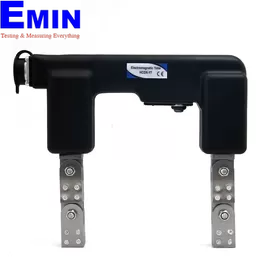
For example, the NOVOTEST EMY250-AC Magnetic Particle Testing Yoke is suited to portable inspection tasks where a stable AC magnetizing field is needed across a practical leg span. For crack evaluation, instruments such as the NOVOTEST DEPTH MASTER Crack Depth Meter and the Mashproject 281M provide a more measurement-oriented approach when the inspection requires depth estimation rather than simple indication visibility.
Magnetic particle inspection and supporting accessories
One of the most common workflows in this category is magnetic particle testing. A magnetic field is introduced into the test object, and leakage fields form around discontinuities such as cracks. When used with appropriate magnetic particles, these leakage areas become visible and help the inspector locate relevant defects quickly.
Equipment reliability depends not only on the main instrument but also on the supporting items used during setup and verification. Products such as the NOVOTEST DMSL 10-10 and DMSL 10-05 electrode blocks serve as spare components in the measurement chain, while the NOVOTEST DMRF-10 reference sample helps support checking and comparison in crack depth work. In applications requiring fluorescent indication under UV light, solutions from SPECTRO-UV, such as the UV-365SBLC/FB blacklight lamp kit, are relevant to the broader inspection ecosystem.
Solutions from key manufacturers
NOVOTEST is strongly represented in this category with practical devices for magnetic particle inspection and crack depth evaluation. Its product examples here reflect a focus on field usability, portable measurement, and accessories that support repeatable inspection tasks.
Mashproject expands the scope with more specialized systems, including the VID-345 magnetic-eddy-current flaw detector, the MA-412MM magnetic metal analyzer/coercive force meter, and the CORSAIR-16 low-frequency electromagnetic testing system. These products illustrate how magnetic and electromagnetic methods can serve different inspection objectives, from crack detection on coated surfaces to broader condition assessment of metallic structures.
SPECTRO-UV also plays an important supporting role where fluorescent magnetic particle inspection is used. UV lamps are not flaw detectors by themselves, but they are essential in many workflows because indication visibility directly affects interpretation quality and inspection efficiency.
How to choose the right magnetic flaw detector
The best choice depends on the inspection objective rather than the category name alone. If the need is fast go/no-go detection of surface indications on ferromagnetic parts, a portable yoke may be the most practical option. If the requirement is to estimate flaw depth, compare defect severity, or work with a specific probe arrangement, a dedicated crack depth meter may be more suitable.
It is also important to consider material type, access to the inspection area, expected defect location, and whether the work is performed in a workshop or in the field. Some applications call for simple portable equipment, while others benefit from more advanced systems that combine data processing with specialized transducers. If your inspection program includes multiple NDT techniques, it may also be useful to compare this category with X-ray flaw detector solutions for cases where volumetric internal inspection is needed.
When deeper analysis is needed
Not every flaw can be evaluated with the same level of detail using one magnetic method. Magnetic particle inspection is excellent for locating surface-breaking defects on ferromagnetic materials, but it does not replace all other techniques. Crack depth meters and electromagnetic systems help extend capability, especially when defect sizing or more specialized surface and near-surface assessment is required.
For example, the Mashproject VID-345 is designed for magnetic-eddy-current flaw detection, while the CORSAIR-16 is aimed at low-frequency electromagnetic testing in broader inspection scenarios. This makes the category useful not only for basic indication finding but also for users who need a more complete magnetic inspection workflow around defect detection, characterization, and screening.
Practical selection points for B2B buyers
For industrial purchasing teams, technical fit should come first. Review the target material, likely defect type, required portability, probe or accessory availability, and whether verification samples are needed as part of the inspection routine. In many organizations, the right purchase is the one that fits existing procedures, operator skill level, and reporting requirements rather than the one with the broadest feature list.
It is also worth considering whether the application may expand into adjacent methods over time. Some users start with portable magnetic inspection tools and later add complementary equipment for thickness, crack sizing, or internal flaw assessment. In that context, browsing related categories such as metal content meters can help define a more complete material evaluation workflow.
Conclusion
This Magnetic flaw detector category is intended for users who need practical NDT tools for detecting cracks, discontinuities, and other defect-related indications on metallic components, especially ferromagnetic materials. The range includes not only core instruments but also accessories and supporting devices that make inspection work more consistent in real operating conditions.
By matching the method to the inspection task, buyers can build a more effective testing process for production control, maintenance, and field service. If you are comparing portable yokes, crack depth meters, UV support equipment, or advanced electromagnetic systems, this category provides a focused starting point for selecting the right magnetic inspection solution.
-
-
-
-
-
-
-
-
-
-
-
-
-
-
-
-
-
-
-
-
-
-
-
-