


Gasket Tester
Sealing performance often determines whether a system runs safely, efficiently, and without unplanned downtime. In industrial pipelines, pressure vessels, automotive assemblies, and process equipment, even a small leak at the gasket interface can lead to product loss, contamination, safety risks, or repeated maintenance work. That is why selecting the right Gasket Tester is important for both product development and routine quality verification.
This category focuses on equipment used to evaluate how gasket materials and sealing assemblies behave under defined test conditions. Depending on the application, testing may involve compression, leakage behavior, recovery characteristics, mechanical stability, or performance under temperature and pressure changes. For engineering teams, laboratories, and manufacturers, these systems help generate more reliable data for material comparison, design validation, and process control.
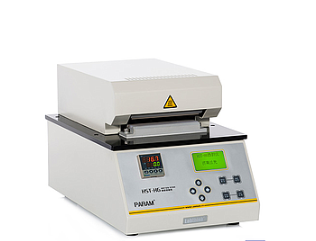
Why gasket testing matters in industrial applications
Gaskets operate at the interface between joined components, where they must maintain a seal despite bolt load variation, thermal cycling, vibration, media exposure, and long service periods. A dedicated tester helps quantify how a gasket performs instead of relying only on theoretical material data or field assumptions.
In practice, this is useful for manufacturers developing new sealing products, OEMs validating assembly performance, and maintenance teams comparing replacement materials. A structured test method can support more consistent decisions when choosing a gasket for demanding environments such as chemical processing, energy systems, fluid handling, and general industrial machinery.
What a gasket tester is used to evaluate
A gasket testing system is typically used to examine one or more aspects of sealing behavior under controlled conditions. The goal is not only to see whether a gasket seals initially, but also how it responds when load, temperature, or operating conditions change over time.
Common evaluation areas may include compression characteristics, sealing effectiveness, deformation, recovery after unloading, and resistance to leakage under pressure. In some testing workflows, the equipment is also part of a broader material validation process alongside thermal treatment, environmental conditioning, or other mechanical test methods. Where thermal preconditioning is relevant, related equipment such as industrial furnaces may be used before or after the core gasket test.
Typical users and application scenarios
This category is relevant to a wide range of technical users in B2B environments. Material laboratories use gasket testers to compare sealing materials during R&D, while production and quality teams apply them to confirm batch consistency and support inspection procedures. Engineering departments may also use test data when refining flange design, bolt load requirements, or maintenance intervals.
Application needs vary by industry, but the overall objective is similar: understand how sealing materials behave in realistic service conditions. In packaging and barrier-related fields, leakage and transmission behavior can also be studied with complementary systems such as a water vapor transmission rate test system or an oxygen permeation system, depending on the material and end-use environment.
Key factors when choosing a gasket tester
Selecting the right platform starts with the actual test objective. Some users need material-level comparison, while others need assembly-level validation under simulated operating conditions. Before choosing a system, it is useful to define the gasket type, expected load range, pressure conditions, temperature influence, and whether the priority is leakage measurement, mechanical deformation, or long-term sealing stability.
It is also important to consider the required level of automation, data capture, repeatability, and integration with laboratory workflows. For regulated or quality-driven environments, clear documentation and repeatable test procedures are often just as important as the test hardware itself. A well-matched tester should support reliable comparisons across samples without creating unnecessary complexity for routine operation.
How gasket testing fits into a broader test environment
Gasket evaluation rarely happens in isolation. In many facilities, seal testing is one part of a larger mechanical and physical testing workflow that may include compression testing, environmental exposure, thermal conditioning, vibration-related assessment, and final product verification. Looking at gasket performance within this broader context often leads to better engineering decisions than reviewing sealing data alone.
For example, assemblies exposed to machine movement or dynamic loads may also require attention to system vibration behavior. In such cases, supporting equipment like a vibration isolator can be relevant elsewhere in the test setup or installation environment. Similarly, applications involving pressurized containers may connect to adjacent workflows in gas cylinder test and maintenance equipment, where sealing integrity is one of several safety-critical concerns.
Benefits of a structured gasket testing process
A defined test process helps teams move from assumption-based selection to evidence-based sealing evaluation. This can reduce material mismatch, improve consistency across production lots, and support more confident qualification of new gasket designs. For procurement and engineering stakeholders, test data also makes supplier and material comparisons more practical.
Over time, better testing can contribute to lower leakage risk, fewer maintenance interventions, and clearer performance documentation. In development settings, it may shorten the cycle between prototype changes and validation. In quality control, it helps standardize acceptance criteria for materials that must perform consistently in service.
Supporting reliable selection for technical buyers
When reviewing options in this category, it is worth focusing on how closely the test method matches the real service conditions of the gasket. Load profile, medium, temperature exposure, and installation method all affect the usefulness of the resulting data. The most valuable solution is usually the one that aligns with the actual engineering question, rather than the one with the broadest feature list.
This Gasket Tester category is intended for buyers who need practical tools for sealing performance assessment, material comparison, and laboratory validation. By choosing equipment that fits the application and test workflow, teams can build more dependable quality processes and make better decisions across design, production, and maintenance.
-
-
-
-
-
-
-
-
-
-
-
-
-
-
-
-
-
-
-
-
-
-
-
-