


High Voltage/ Step-up Transformers Repair Service
Reliable high-voltage test systems are critical in power equipment maintenance, insulation verification, laboratory testing, and production quality control. When a step-up transformer begins to show unstable output, insulation degradation, abnormal heating, or control irregularities, repair work needs to focus not only on restoring operation but also on protecting operator safety and test accuracy.
High Voltage/ Step-up Transformers Repair Service is intended for organizations that depend on these units for controlled high-voltage generation in testing environments. A proper repair process helps return the transformer to dependable service, reduce unplanned downtime, and support stable performance in applications where voltage integrity and insulation behavior matter.
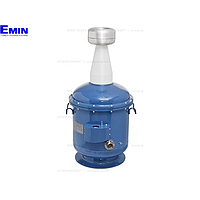
Why repair quality matters for high-voltage transformers
Step-up transformers used in electrical testing operate under demanding conditions. Repeated high-voltage stress, thermal cycling, environmental contamination, and aging insulation can gradually affect output consistency, dielectric strength, and overall reliability. In many facilities, even a minor fault can interrupt scheduled testing or create uncertainty in measurement results.
A repair service for this type of equipment should therefore go beyond replacing an obviously damaged part. It should address the broader condition of the unit, including insulation integrity, output stability, connections, protection functions, and the general health of the transformer assembly. This is especially important in systems that are part of larger electrical test workflows.
Common issues seen in step-up transformer service work
High-voltage transformers can develop problems that appear gradually or suddenly depending on usage conditions. Typical service cases may involve output fluctuation, failure to reach target voltage, overheating, insulation breakdown, unusual noise, damaged terminals, degraded cables, or faults in associated switching and control sections.
In practical terms, these symptoms may point to winding-related issues, contamination, moisture ingress, aging insulating materials, loose internal connections, or stress damage caused by repeated test cycles. Because these faults can overlap, repair work usually starts with a structured evaluation rather than a single-point replacement approach.
What a professional repair approach should cover
A useful repair process for high-voltage and step-up transformer equipment typically includes inspection, fault isolation, corrective work, and post-repair verification. The goal is not simply to make the unit power on again, but to confirm that it can operate safely and consistently under intended test conditions.
Depending on the fault condition, service work may involve checking transformer windings, reviewing insulation condition, examining terminal hardware, verifying output behavior, and assessing supporting electrical sections. For users operating broader electrical test benches, related equipment may also require attention over time, such as withstand voltage test repair support when the transformer is part of a high-voltage test setup.
Applications where dependable performance is essential
These repair services are relevant across utilities, industrial maintenance teams, transformer and cable manufacturers, testing laboratories, and service companies responsible for electrical asset condition assessment. In such environments, a high-voltage source is often used to evaluate insulation behavior, verify product quality, or support acceptance and maintenance procedures.
Because the transformer is often one element in a wider test chain, its condition can influence the reliability of surrounding instruments and procedures. For example, organizations working with line and insulation diagnostics may also use related services for cable fault tester repair or insulating materials tester repair as part of a broader maintenance strategy.
How to evaluate whether repair is the right option
Repair is often worth considering when the transformer remains mechanically serviceable but shows electrical or insulation-related performance issues. Examples include unstable high-voltage output, intermittent operation, failed startup, abnormal thermal behavior, or signs that the unit no longer supports consistent test conditions. In many cases, targeted service can restore usability without the delay and cost associated with immediate replacement.
A practical evaluation should consider operating history, fault severity, equipment age, service criticality, and the role of the transformer in the test process. If the unit works alongside other electrical verification instruments, it can also be helpful to review the condition of adjacent assets such as breaker testing equipment repair service where those systems are maintained under the same reliability program.
Key points to look for in a repair service partner
For this category of equipment, technical handling and safety awareness are especially important. A suitable repair service should be able to assess high-voltage insulation systems, identify likely failure modes, and verify that the equipment can return to operation with acceptable electrical behavior. Clear communication about detected faults, repair scope, and post-service condition is also valuable for maintenance planning.
It is equally important that the service approach reflects the actual role of the transformer in your process. A unit used for periodic field testing may require different attention from one used in repetitive production or laboratory environments. The best repair outcome is usually achieved when the service scope matches real operating demands rather than following a generic checklist alone.
Supporting longer equipment life and safer testing
High-voltage transformers are not simple commodity items in a test environment. They are part of a critical electrical testing infrastructure where output stability, insulation condition, and safety margins directly affect work quality. Timely repair can help extend equipment life, improve confidence in test performance, and reduce the operational risk associated with unstable or degraded high-voltage sources.
If your organization relies on this type of equipment for electrical testing, repair service should be viewed as part of an overall asset care strategy. A careful, technically grounded service process helps restore function while supporting safer operation and more dependable test results over time.
-
-
-
-
-
-
-
-
-
-
-
-
-
-
-
-
-
-
-
-
-
-
-
-