


Breaker Testing Equipment Repair Service
Reliable breaker testing depends not only on the accuracy of the test procedure, but also on the condition of the equipment used to verify trip timing, contact resistance, insulation performance, and related electrical parameters. When these instruments begin to drift, respond inconsistently, or fail under field conditions, repair becomes essential to keep maintenance work safe, traceable, and efficient.
Breaker Testing Equipment Repair Service is intended for organizations that rely on electrical test instruments in utilities, industrial plants, service companies, and maintenance teams. A proper repair process helps restore equipment performance, reduce unexpected downtime, and support continued use of valuable test assets instead of replacing them prematurely.
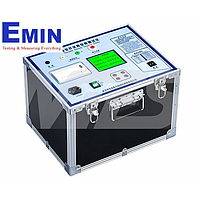
Why repair matters for breaker testing instruments
Breaker testing equipment is often used in demanding environments such as substations, switchgear rooms, commissioning sites, and industrial maintenance shutdowns. In these settings, instruments may be exposed to vibration, temperature variation, dust, cable wear, connector damage, and repeated transport, all of which can affect measurement stability and overall reliability.
Repair is not only about fixing a device that no longer powers on. In many cases, the more important issue is the gradual loss of confidence in the readings. If a tester shows unstable timing results, inconsistent resistance measurements, intermittent channel response, or communication problems, service intervention can help restore measurement reliability and make the equipment suitable for continued diagnostic work.
Typical issues seen in breaker testing equipment
Instruments used for breaker analysis can develop faults in both their electronic and mechanical subsystems. Common symptoms include display failure, damaged input terminals, charging or power issues, loose connectors, unresponsive controls, and unstable test output. Field cables and accessories can also contribute to apparent instrument problems, especially when signal paths are interrupted or degraded.
Another frequent concern is performance drift. Even when a unit still turns on and completes a test sequence, the captured data may no longer be trustworthy if internal components have aged or if the unit has experienced electrical stress. This is why repair and inspection are often considered together in maintenance planning for critical test assets.
What a repair service typically supports
A professional service approach generally starts with fault evaluation and condition assessment. This may include checking power functions, communication behavior, interface condition, signal integrity, internal boards, and overall instrument response under controlled conditions. The goal is to identify whether the issue comes from worn components, damaged connectors, power circuitry, display assemblies, or other serviceable parts.
Depending on the condition of the unit, repair work may involve component replacement, connector restoration, internal cleaning, board-level troubleshooting, functional verification, and post-repair testing. For companies managing multiple electrical test devices, it is often helpful to coordinate breaker tester servicing with related support such as withstand voltage test repair service when high-voltage verification tools are used in the same maintenance workflow.
When to send equipment for repair
Not every failure is sudden. Many teams first notice a problem when test results become difficult to repeat, setup takes longer than usual, or the instrument behaves differently from previous jobs. If technicians need to rerun tests multiple times to confirm breaker timing or continuity behavior, that is often a sign the equipment should be inspected.
Repair should also be considered after physical impact, storage in poor environmental conditions, liquid exposure, cable strain, or abnormal electrical events. Organizations that work with a broader portfolio of diagnostic tools may also review associated instruments at the same time, including services such as low resistance meter repair for contact resistance measurement tasks that often complement breaker maintenance programs.
Benefits for utilities, contractors, and maintenance teams
For B2B users, repairing existing equipment can help preserve workflow continuity and protect previous investment in specialized test assets. This is especially relevant when teams have established procedures, trained operators, and reporting formats built around particular instruments. A repaired unit can often return to service faster than sourcing and onboarding a replacement device.
There is also a practical quality benefit. Well-maintained instruments support more dependable maintenance decisions during inspection, commissioning, and troubleshooting of circuit breakers. In environments where asset condition data affects outage planning and operational safety, restoring functional performance in test equipment is an important part of the broader reliability strategy.
Repair in the context of electrical test equipment management
Breaker testing equipment rarely works in isolation. Maintenance teams often use it alongside insulation, dielectric, resistance, and cable diagnostic instruments depending on the asset and test scope. Because of that, repair planning is more effective when viewed as part of a larger instrument management process rather than as a one-off response to a failure.
If your operation handles several categories of electrical testers, it may be useful to review neighboring service areas such as insulating materials tester repair service or cable fault tester repair service. This helps standardize how damaged or unstable instruments are evaluated, serviced, and returned to operation across the wider testing fleet.
How to choose the right service scope
Before sending equipment in, it is helpful to document the observed symptoms as clearly as possible. Notes about power-up behavior, error messages, unstable channels, damaged ports, battery issues, failed accessories, or inconsistent readings can shorten the diagnostic process and improve repair efficiency. If the fault appears intermittently, describing the operating conditions can be just as valuable as describing the symptom itself.
It is also useful to distinguish between a simple operational issue and a true hardware fault. Accessories, test leads, communication cables, and external connections can sometimes create misleading symptoms. A structured repair intake process helps identify the real cause and determine whether the service requirement is limited to one unit or affects a broader set of tools.
Supporting longer equipment life with timely repair
In electrical maintenance work, dependable test equipment is a foundation for dependable decisions. Sending a unit for service at the first signs of instability can help prevent larger failures, reduce interruption to field work, and maintain confidence in breaker test results over time.
For organizations that depend on routine breaker analysis, a focused repair service provides a practical way to restore usability, extend equipment life, and keep critical testing operations moving. When planned as part of a broader instrument maintenance strategy, repair becomes more than a fix for a fault; it becomes a way to protect the quality and continuity of your electrical testing program.
-
-
-
-
-
-
-
-
-
-
-
-
-
-
-
-
-
-
-
-
-
-
-
-