


Water Toximeter
When water quality needs to be assessed beyond basic parameters such as pH or conductivity, toxicity monitoring becomes an important part of the decision process. In industrial wastewater control, environmental screening, and process verification, a Water Toximeter helps users evaluate whether a sample may contain substances that can affect biological systems, treatment performance, or downstream discharge quality.
This category brings together instruments and related measurement solutions used in liquid testing environments where toxicity, reactive chemicals, or chemical concentration checks are relevant. Depending on the application, users may need a portable field instrument, an online monitoring system, or a dedicated meter for compounds such as hydrogen peroxide that can influence water treatment, disinfection, or process chemistry.
Why toxicity-related water measurement matters
In many plants and laboratories, water quality cannot be judged by appearance alone. A clear sample may still contain oxidizing agents, toxic compounds, or process residues that affect product quality, environmental compliance, or biological treatment systems. That is why toxicity-related testing is often used as part of a broader water analysis workflow.
Typical use cases include industrial effluent monitoring, disinfection process control, plating bath management, and rapid screening of chemicals in water-based solutions. In these settings, a toximeter or concentration meter supports faster decisions by giving operators measurable data instead of relying only on manual observation or periodic outsourced testing.
Different measurement approaches in this category
This category covers more than one measurement principle because real-world liquid testing requirements vary. Some instruments are designed for direct toxicity monitoring, while others are specialized for the concentration of chemicals that strongly influence water safety, treatment efficiency, or process stability.
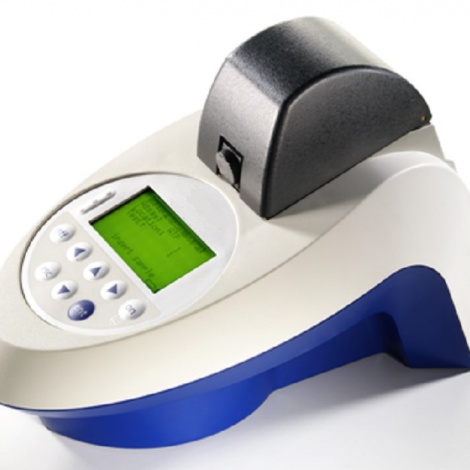
For example, the Aqualabo TOXmini portable luminometer is suited to portable toxicity-related analysis, while the Aqualabo iTOXcontrol is built for online toxicity monitoring in continuous applications. For chemical concentration verification, products such as the ATAGO PR-50HO digital refractometer and several KASAHARA hydrogen peroxide meters provide targeted measurement methods for hydrogen peroxide solutions across different ranges.
Portable instruments for field and lab use
Portable devices are useful when measurements need to be taken at multiple sampling points or when a fixed installation is not practical. They are commonly selected for inspection work, troubleshooting, pilot-scale studies, and routine laboratory checks. Fast startup, compact form factor, and simple operating steps are often key considerations in this type of equipment.
The Aqualabo TOXmini portable luminometer is an example of a mobile solution for toxicity-related testing. For hydrogen peroxide control, the KASAHARA H2O2-V7 UV-LED hydrogen peroxide meter offers a reagent-free measurement approach, while the HANNA HI3844 chemical test kit provides a manual titration-based method that can be practical where simple chemical test procedures are preferred.
If your testing workflow also includes concentration checks with optical methods, the ATAGO range can be a useful reference point, especially for users already working with refractometry in process liquids.
Online and continuous monitoring for critical processes
In applications where water quality can change quickly, continuous monitoring may be more effective than spot testing. Online systems are commonly used in industrial discharge monitoring, municipal or plant-side treatment control, and automated supervision of sensitive processes where rapid response is important.
The Aqualabo iTOXcontrol Integrated On-line Toxicity Monitoring System is relevant in these environments because it is intended for continuous operation and system integration. Compared with periodic manual testing, online platforms can support trend tracking, alarm handling, and data transfer into plant monitoring systems. This is especially valuable when operators need to identify changes early rather than after a delayed lab result.
For users building a broader liquid analysis setup, categories such as ion measurement electrodes may also complement toxicity or chemical concentration monitoring where multiple parameters need to be reviewed together.
Hydrogen peroxide measurement within water and process applications
Hydrogen peroxide is widely used in disinfection, cleaning, and industrial processing, but its concentration must be monitored carefully. Too little may reduce treatment effectiveness, while too much can affect process control, material compatibility, or discharge conditions. That is why this category includes several instruments focused on hydrogen peroxide measurement.
The product mix covers different ranges and methods. The ATAGO PR-50HO digital refractometer is designed for water solutions of hydrogen peroxide at percentage concentration levels. The KASAHARA H2O2-V1, H2O2-V2, and H2O2-V3 address high, medium, and low concentration conditions respectively, including use cases related to copper-plated bath measurement. For trace-level checks, the HANNA HI3844 kit provides a chemical test option over a lower mg/L range.
Where reagent handling is part of the workflow, related items such as other reagents can be relevant for supporting routine testing activities.
How to choose the right water toximeter or related meter
The first selection factor is the actual measurement target. Some users need direct toxicity indication, while others need to quantify a specific substance that drives toxicity risk or process performance. Defining the sample type, expected concentration range, and required response time will help narrow the options quickly.
The second factor is the measurement environment. Portable devices fit field sampling and lab work, while online systems are better for permanent installations. You should also consider whether the method requires reagents, how often testing is performed, and whether data logging or communication outputs are needed for traceability.
It is also important to match the instrument to the expected range. A device intended for low mg/L measurement is not automatically suitable for percentage-level concentration checks, and vice versa. For quick screening tasks, simple formats such as test paper may be useful in some workflows, but they are not a substitute for dedicated instruments when higher accuracy or documentation is required.
Representative manufacturers in this category
Several established brands appear in this category, each representing a different measurement approach. HANNA is well known for practical water testing tools and chemical test kits, while KASAHARA offers specialized meters for hydrogen peroxide concentration across multiple process ranges.
ATAGO is associated with refractometric measurement for liquid concentration control, which can be useful when hydrogen peroxide solutions are handled at higher concentration levels. Aqualabo contributes portable and online instruments for toxicity-related monitoring, helping users cover both field analysis and continuous installation needs.
Build a practical testing setup around your application
Choosing a water toximeter is usually part of a larger testing strategy rather than a standalone purchase decision. Some sites need a portable instrument for periodic verification, others need a fixed monitoring system, and many require a combination of toxicity screening and targeted chemical measurement. The right choice depends on how your process is controlled, how often samples are checked, and which risks need to be identified early.
By comparing measurement method, range, operating format, and application fit, buyers can select equipment that supports more reliable water quality decisions. If your workflow involves toxicity monitoring, hydrogen peroxide control, or related liquid analysis tasks, this category provides a practical starting point for matching the instrument type to the job.
-
-
-
-
-
-
-
-
-
-
-
-
-
-
-
-
-
-
-
-
-
-
-
-