


Photometer
Accurate water analysis often depends on getting fast, repeatable results without adding unnecessary complexity to the workflow. In many industrial, environmental, utility, and laboratory settings, a Photometer is a practical choice for checking key chemical parameters in liquid samples, especially when color-based test methods are required.
This category brings together portable and benchtop photometers used for water environment and liquid testing. These instruments are commonly selected for routine monitoring of disinfectants, nutrients, metals, pH-related parameters, and treatment chemicals across applications such as pool and spa maintenance, boiler and cooling water control, environmental analysis, and process water management.
Where photometers fit in liquid testing
A photometer measures how a sample reacts to light at one or more wavelengths. In water testing, this is especially useful when a reagent creates a color change proportional to the concentration of a target substance. The instrument then converts that optical response into a numerical result, helping users move beyond subjective visual comparison.
Compared with manual color matching methods, photometers support more consistent quantitative analysis, better traceability, and easier standardization between operators. For field service teams, maintenance departments, and laboratories that need reliable day-to-day measurements, this can improve both process control and reporting quality.
Typical applications in water and process environments
Photometers are widely used wherever liquid quality must be checked quickly and regularly. Common use cases include monitoring chlorine and bromine in treated water, checking iron or copper in process systems, verifying cyanuric acid in pool applications, and supporting nutrient or environmental analysis in broader water quality programs.
Different instruments are optimized for different tasks. For example, the PCE CP 21 Photometer is suited to multi-parameter checks such as chlorine, pH, iron, cyanuric acid, bromine, and iodine, making it useful where several water indicators are reviewed in one workflow. In contrast, a model such as the HANNA HI97747C Copper Low Range Portable Photometer Kit is more focused on a specific analyte and is relevant when low-range copper measurement is the priority.
When reagent-based testing is part of the process, it is also worth reviewing compatible consumables such as water testing reagents to support ongoing operation and method consistency.
Portable versus benchtop photometers
One of the first decisions is whether the job calls for a handheld unit or a benchtop platform. Portable photometers are typically chosen for on-site work, routine inspections, maintenance rounds, and field sampling. They are easier to carry, faster to deploy, and practical when measurements must be made close to the sampling point.
Benchtop models are often preferred in fixed testing areas where operators need broader method coverage, more data handling capability, or integration with pH measurement. Instruments such as the HANNA HI83300-02 Multiparameter Benchtop Photometer and pH meter, HANNA HI83306-02 Environmental Analysis Photometer, and Hanna HI83308-02 Water Conditioning Photometer reflect this approach by combining multiple wavelengths, stored methods, and extended logging features for more structured analysis routines.
If the workflow also includes electrochemical measurement, related tools such as a domestic ion measurement electrode may complement photometric testing in the same lab or utility environment.
How to choose the right photometer
The best fit depends less on the instrument name and more on the testing task. Start by defining which parameters you actually need to measure, the expected concentration range, the required resolution, and whether testing will be done in the field or at a bench. This helps narrow the choice between single-parameter, multiparameter, portable, and benchtop instruments.
It is also important to review operational details such as wavelength configuration, cuvette format, data storage, calibration support, and connectivity. For example, some models are designed for simple routine checks, while others provide USB or software connectivity, larger memory capacity, and support for a wider library of methods. In facilities that document results for maintenance records or quality audits, these practical features can matter as much as the measurement range itself.
Brand preference may also play a role, especially when buyers want continuity across instruments and accessories. This category includes solutions from HANNA, along with products from ATAGO, KERN, and PCE for different testing styles and application areas.
Examples of instruments in this category
Several products in this category illustrate the range of available approaches. The PCE CP 21 Photometer is a compact multi-parameter option for users who need one device for several common water quality indicators. The HANNA HI83325-02 Nutrient Analysis Photometer is more aligned with nutrient-focused testing workflows, while the Hanna HI83303-02 Aquaculture Photometer is tailored to liquid analysis needs in aquaculture-related environments.
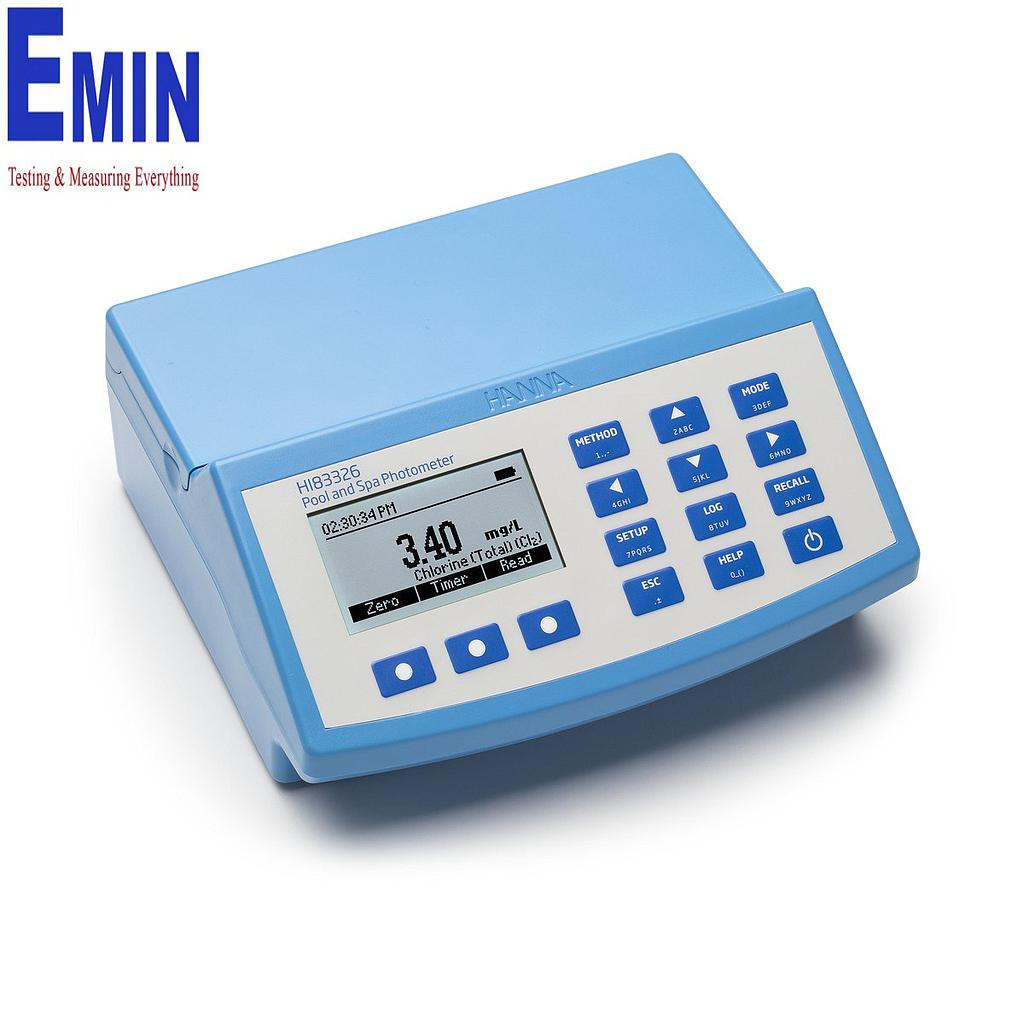
For water treatment systems, the Hanna HI83305-02 Boiler and Cooling Tower Photometer and Hanna HI83326-02 Pool and Spa Photometer show how application-specific photometers can simplify routine control in dedicated sectors. Meanwhile, the HANNA HI83306-02 Environmental Analysis Photometer is relevant where broader environmental water testing is required.
Some products listed in this category context, such as the urine refractometer category or instruments like the KERN ORA 1GG Refractometer and ATAGO MASTER-VET, belong to a different optical measurement principle. They are useful examples of how liquid analysis can also involve refractive index or specific gravity measurement rather than reagent-based photometric testing.
Why method alignment matters
A photometer only delivers useful data when the instrument, reagent chemistry, and measurement method are aligned with the application. Buyers should confirm the target parameter, expected matrix, and workflow before selecting a model. This is especially important in water treatment, environmental sampling, and regulated process environments where decision-making depends on repeatable results.
Method alignment also affects ease of use. Instruments built around preconfigured methods for applications such as environmental analysis, water conditioning, aquaculture, or pool testing can reduce setup time and help operators follow a more repeatable testing routine. That is often more valuable than simply choosing the device with the broadest specification sheet.
Supporting a practical testing workflow
Beyond the instrument itself, a good testing workflow includes proper sample handling, clean cuvettes, suitable reagents, and a clear routine for calibration or zeroing where required. Data logging and connectivity can further help teams track results over time, compare trends, and document maintenance or treatment actions.
For quick screening tasks, some users may still rely on simpler tools such as test paper. However, when numerical readings, improved repeatability, and better documentation are needed, photometers are generally the stronger option for routine liquid analysis.
Choosing with confidence
This photometer category is intended for buyers who need dependable tools for water and liquid testing, from compact portable units to more advanced benchtop systems. Whether the requirement is targeted measurement of a single parameter or broader multi-method analysis, the right choice usually comes down to application fit, method availability, and workflow requirements rather than headline specifications alone.
By comparing intended use, measurement scope, and operating environment, it becomes easier to identify a suitable instrument for day-to-day testing. If your process also involves reagents, pH-related measurements, or complementary optical tools, this category can serve as a useful starting point for building a more complete liquid testing setup.
-
-
-
-
-
-
-
-
-
-
-
-
-
-
-
-
-
-
-
-
-
-
-
-