


Nanoparticle Analyzer
Accurate particle characterization matters whenever formulation stability, dispersion quality, or nano-scale material behavior must be understood before production or research moves forward. In laboratory and industrial environments, a Nanoparticle Analyzer helps teams evaluate particle size and related sample behavior in liquids, supporting work in pharmaceuticals, chemicals, coatings, advanced materials, and R&D applications.
This category focuses on instruments used for nano and fine particle analysis with different optical measurement principles. Depending on the sample type, required size range, and data depth, users may choose systems based on dynamic light scattering, dynamic image analysis, or laser diffraction. The right choice depends less on brand names alone and more on what kind of particles you need to measure, how the sample is dispersed, and how the data will be used in process control or research.
Why nanoparticle analysis is important
Particle size influences sedimentation, dissolution, flow behavior, optical properties, reactivity, and long-term suspension stability. In many liquid-based systems, even a small shift in particle distribution can change product performance, shelf life, or downstream processing behavior.
That is why nanoparticle analysis is widely used not only in research laboratories but also in formulation development, quality control, and troubleshooting. Teams working with emulsions, inks, liposomes, ceramics, abrasives, or nano-dispersions often need reliable size data to compare batches, optimize formulations, and identify aggregation issues early.
Common measurement principles in this category
One of the most common approaches is Dynamic Light Scattering (DLS), which is especially suitable for small particles suspended in liquid. DLS estimates particle size by analyzing fluctuations in scattered light caused by Brownian motion. It is often selected when users need nano-scale measurement capability and small sample volumes.
For broader particle populations or applications where particle shape also matters, dynamic image analysis can be relevant. Instruments such as the Anton Paar Litesizer DIA 100, DIA 500, and DIA 700 illustrate how image-based measurement can extend into larger particle ranges and provide additional insight beyond a single average size value.
Laser diffraction is another important technique for particle sizing across a wide range. Systems such as the Anton Paar Litesizer DIF 100, DIF 300, and DIF 500 are designed for fast particle size distribution analysis, making them useful when samples span from submicron to much larger particle sizes. If your workflow also involves broader liquid testing tasks, related tools such as test paper may support basic screening in adjacent laboratory processes.
How to choose the right nanoparticle analyzer
The first point to consider is the actual measurement range required by your samples. Some applications focus on true nanoparticles in the submicron or nanometer range, while others involve wider dispersions that extend into several micrometers. For example, the Anton Paar Litesizer DLS 101 is aimed at nano-scale particle sizing, while the Litesizer DLS 501 and Litesizer DLS 701 extend capability with multi-angle measurement options for more advanced analysis needs.
Sample volume and concentration also matter. In research environments where material is limited or expensive, a low minimum sample volume can be a practical advantage. For users comparing available brands, the Anton Paar portfolio in this category is relevant for applications requiring DLS, laser diffraction, and dynamic image analysis within one broader particle characterization ecosystem.
Another key factor is whether you only need size data or also need to study behavior linked to suspension stability. Some laboratories may also evaluate zeta-related properties in adjacent workflows, although the exact requirement depends on the instrument and application scope. In routine environments, ease of alignment, measurement speed, software workflow, and repeatability can be just as important as the theoretical measuring range.
Representative instruments in this category
For nano-scale liquid samples, the Anton Paar Litesizer DLS series is a strong example of how DLS instruments can cover small particles with precise optical measurement. The Litesizer DLS 101 supports standard DLS particle sizing, while the DLS 501 and DLS 701 add wider angular measurement capability, helping users handle more demanding characterization tasks with very small sample volumes.
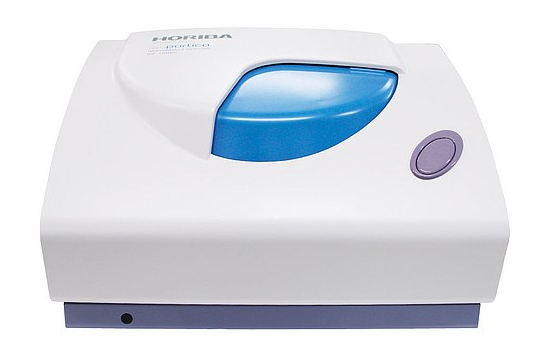
Users looking beyond one manufacturer may also consider solutions from HORIBA and Genizer. The HORIBA SZ-100-S2 Nano and Zeta substance Analyzer is relevant for laboratories that need nanoparticle size analysis with additional molecular weight-related evaluation logic, while the Genizer GDPS Dual-Light Nano Particle Sizer is positioned for applications such as emulsions, liposomes, ceramics, inks, paints, and nanoparticles.
Where samples cover a wider particle range, image-based and diffraction-based systems may be more appropriate than DLS alone. The Anton Paar Litesizer DIA 700, for example, supports dynamic image analysis down to very small particle sizes while also handling much larger particles depending on the dispersion mode. This makes category selection highly application-driven rather than limited to a single measurement principle.
Factors that affect nanoparticle measurement results
Even a capable analyzer can only deliver meaningful data when the sample is prepared correctly. Results may be affected by concentration that is too high or too low, the presence of bubbles, contamination, temperature variation, or particle agglomeration before measurement begins.
In liquid testing workflows, dispersion quality is often a major source of error. If particles are not fully dispersed, the measured distribution can shift toward larger sizes and mask the true state of the sample. Good laboratory practice includes stable temperature conditions, clean cells or cuvettes, and consistent sample handling from batch to batch.
Users working in broader analytical settings may also rely on supporting categories for sample preparation or complementary checks. For example, some laboratories combine particle characterization with chemical consumables or other reagents used in preparation, dilution, or validation steps around the main measurement process.
Typical application areas
Nanoparticle analyzers are commonly used in pharmaceutical development, cosmetic formulation, nanomaterials research, specialty chemicals, and academic laboratories. They are also relevant in industries where dispersion stability and particle uniformity influence final product performance, such as inks, coatings, and functional fluids.
In practical terms, these instruments help answer questions such as whether a formulation remains stable after mixing, whether a milling or homogenization step has achieved the intended result, or whether one batch behaves differently from another. They can also support process optimization by showing how changes in formulation, temperature, or dispersion conditions affect particle distribution.
FAQ
What size range do nanoparticle analyzers typically cover?
It depends on the measurement principle. In this category, some DLS instruments measure from the nanometer range into micrometer levels, while laser diffraction and dynamic image analysis models can cover much broader particle size ranges.
Is DLS always the best choice for nanoparticle measurement?
Not always. DLS is highly useful for small particles in liquid suspension, but if your sample has a very broad distribution, larger particles, or shape-related evaluation needs, dynamic image analysis or laser diffraction may be more suitable.
What should be checked before measuring a sample?
Users should review sample concentration, dispersion quality, cleanliness of the measuring cell, temperature stability, and the risk of bubbles or agglomeration. These factors can strongly influence final results.
Final thoughts
Choosing a nanoparticle analyzer is mainly about matching the instrument to the sample and the decision you need to make from the data. Whether the priority is nano-scale sizing by DLS, wider-range particle distribution by laser diffraction, or visual particle analysis by imaging, this category brings together relevant options for laboratories working with liquid-based samples and fine particle systems.
A careful review of sample type, size range, required throughput, and measurement principle will make product selection more effective. If you are comparing systems for research, formulation, or routine laboratory testing, this category provides a practical starting point for narrowing down the right solution.
-
-
-
-
-
-
-
-
-
-
-
-
-
-
-
-
-
-
-
-
-
-
-
-