


Bromine meter
Maintaining the right bromine level is important in many water treatment and process control applications, especially where disinfection performance and operator safety both matter. When users search for a Bromine meter, they are usually looking for more than a single device—they need a practical way to measure bromine reliably, whether in spot testing, routine monitoring, or integration into a wider liquid testing workflow.
This category brings together bromine measurement tools, compatible reagents, and related sensing components used in water analysis. The range includes handheld colorimetric testers, replacement reagents, and sensor-based solutions suited to different measurement tasks and maintenance strategies.
Where bromine measurement is commonly used
Bromine is widely applied as a disinfectant in water systems where stable sanitizing performance is required. Measuring its concentration helps operators confirm treatment efficiency, avoid under-dosing, and reduce the risk of excessive chemical levels that may affect downstream processes or compliance targets.
Depending on the site, bromine testing may be part of routine water quality control, periodic field checks, or continuous monitoring. In these cases, the right instrument choice depends on whether the priority is quick manual verification, reagent-based color comparison, or signal output for integration into control systems.
Typical product types in this category
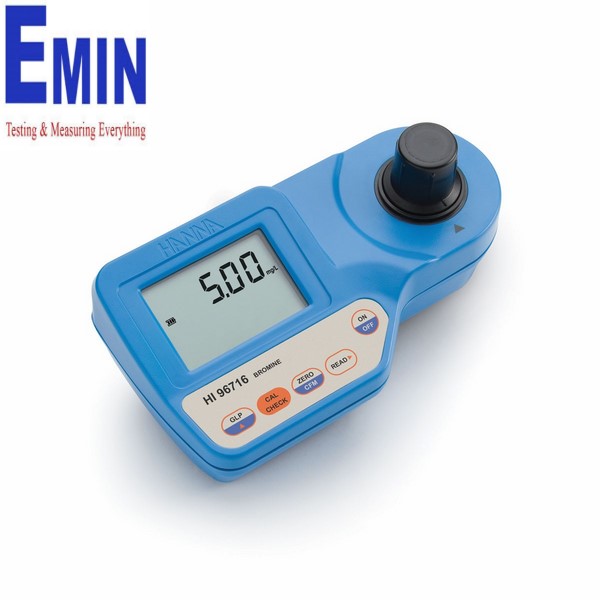
This category covers several approaches to bromine analysis. A compact handheld option such as the Hanna HI716 Bromine Checker is useful for direct on-site testing, especially when operators want a simple digital readout instead of relying on visual interpretation alone.
For reagent-based workflows, products such as HANNA HI93716-01 Bromine Reagents and Aqualabo 1MS004 recharge reagents support repeated testing and replenishment of consumables. These items are essential in colorimetric methods where the reaction produces a visible color change that the instrument reads or the user compares.
For fixed installations or process environments, a sensor such as the Jumo tecLine Br with 4 to 20 mA output represents a different use case. Instead of occasional sampling, this type of solution is better aligned with continuous measurement and signal transmission into monitoring or automation systems.
How bromine meters work in practice
Many portable bromine testers use the DPD method, a well-known colorimetric principle in water analysis. In this method, bromine reacts with the reagent and creates a pink coloration in the sample. The instrument then evaluates the intensity of that color to estimate concentration.
This approach is practical for routine field testing because it combines straightforward sample preparation with relatively fast results. It is often suitable for technicians who need repeatable checks without using a large laboratory setup. When reagent stock is part of the workflow, users may also want to keep related consumables available through categories such as other reagents.
In contrast, electrochemical or ion-selective measurement methods serve different analytical needs. For example, the OMEGA ISE-8722 bromide solution is relevant in ion concentration measurement contexts, where the chemistry and sensing principle differ from standard handheld bromine colorimeters. Users working with electrodes may also explore related options in ion measurement electrode solutions when building a broader testing setup.
How to choose the right bromine testing solution
The best starting point is the measurement task itself. If the goal is fast verification during maintenance rounds or water treatment checks, a small handheld checker is usually the most practical choice. It is easy to carry, quick to deploy, and well suited to routine testing by operators who need immediate readings.
If your process requires frequent testing over time, reagent availability becomes just as important as the instrument. In that case, it makes sense to select a platform with clearly supported consumables, calibration accessories, and replacement items. This helps reduce downtime and keeps measurement practice consistent across users and shifts.
For installations tied to PLCs, controllers, or remote monitoring, a dedicated sensor with analog output may be more appropriate than a portable meter. This type of setup supports process integration, especially when bromine concentration needs to be tracked continuously rather than checked only at fixed intervals.
Representative manufacturers and solution styles
HANNA is well known in this category for compact bromine testing instruments and reagent sets that support day-to-day water analysis. Products such as the HI716 Checker and HI93716-01 reagents fit users who need a clear workflow for field measurement and consumable replacement.
Jumo is relevant where bromine measurement must connect with industrial process systems. A sensor with 4 to 20 mA output is typically selected for installation-based monitoring rather than simple handheld checks.
OMEGA and Aqualabo add useful context to the broader ecosystem. OMEGA supports ion measurement applications, while Aqualabo contributes reagent support for bromine testing programs. Together, these product types show that bromine analysis is not a one-format category but a combination of instruments, sensors, and consumables matched to different operating conditions.
Practical considerations for daily operation
In real use, measurement quality depends not only on the device but also on sample handling, reagent condition, and maintenance discipline. Clean cuvettes, correct reagent dosage, and timely testing after sample collection all contribute to more stable and repeatable results.
Users should also consider operating environment, testing frequency, and stock planning for consumables. Portable units are convenient, but they still depend on batteries, clean optical surfaces, and compatible reagents. Sensor-based systems may reduce manual effort, but they require installation planning and routine verification to maintain confidence in the readings.
Why this category matters in a water testing workflow
Bromine monitoring is often one part of a larger water quality control program. Choosing the right meter or sensor can make routine checks faster, improve process visibility, and simplify maintenance planning. For technical buyers, the key is to match the measurement principle to the actual operating requirement instead of selecting only by format or price point.
Whether you need a portable checker for quick field verification, replacement reagents for ongoing testing, or an industrial sensor for control system integration, this category helps narrow the options to the most relevant bromine testing solutions. A well-matched setup supports more consistent decisions and a smoother day-to-day testing process.
-
-
-
-
-
-
-
-
-
-
-
-
-
-
-
-
-
-
-
-
-
-
-
-