


Refrigerant gas detector, air conditioner
Finding small refrigerant leaks early can make a major difference in HVAC/R maintenance, equipment uptime, and compliance work. In service environments where air conditioners, refrigeration systems, and cooling circuits must operate reliably, a refrigerant gas detector helps technicians locate escaping gas before the issue leads to performance loss, higher energy use, or more costly repairs.
This category brings together instruments used to detect common refrigerants and other halogen-based gases in air-conditioning and refrigeration applications. Whether the priority is field troubleshooting, preventive maintenance, or confirming repairs, these tools support faster leak checks and more confident service decisions.
Why refrigerant leak detection matters in HVAC and cooling systems
Even a minor leak can affect system pressure, cooling efficiency, and long-term component health. In practical terms, missed leaks often lead to repeat service visits, unstable performance, and refrigerant loss that increases operating cost over time. For contractors, maintenance teams, and industrial users, having the right detector is part of a more efficient troubleshooting workflow.
These instruments are commonly used around evaporators, condensers, fittings, valves, joints, service ports, and pipe connections. In air-conditioning service, they are especially valuable when a visual inspection does not clearly reveal the source of the problem. A properly selected detector can help identify difficult leaks in tight spaces and speed up verification after repair work.
What to expect from this product category
Refrigerant gas detector, air conditioner products are typically handheld tools designed to sense escaping refrigerant in the surrounding air. Depending on the sensing method and product design, they may be suitable for routine HVAC service, commercial refrigeration checks, or maintenance tasks involving halogen-containing gases.
Many users look for practical criteria such as sensitivity, response speed, probe flexibility, warm-up time, and ease of use in the field. In service work, fast response and stable detection behavior are often more important than simply choosing the highest stated number on a datasheet. Good usability also matters when technicians must inspect around coils, compressors, brazed joints, or concealed pipe runs.
Typical applications and operating environments
These detectors are widely used in residential and commercial air-conditioning maintenance, refrigeration servicing, and mechanical room inspections. They can support diagnostics in split systems, packaged units, cold storage equipment, and other cooling installations where refrigerant loss may affect operation or safety procedures.
For broader environmental monitoring tasks, users may also work alongside related instruments such as air and gas transmitters or air quality sensors when a project requires continuous monitoring or integration into building systems. That said, a dedicated refrigerant detector remains the more targeted choice for mobile leak search and maintenance work.
How to choose a suitable refrigerant detector
Selection usually starts with the type of refrigerant or gas that needs to be detected. In HVAC and refrigeration service, users often need compatibility with common halogen-based refrigerants, along with a sensor design that can react quickly when checking suspect points around the system. If the detector will be used daily, probe length, portability, battery operation, and sensor replacement can also become important purchasing factors.
Another key consideration is the service context. For routine field maintenance, a compact handheld unit may be the most practical option. For users who need broader environmental instrumentation in the same workflow, it can also be useful to compare related measurement devices from brands such as TESTO or INFICON, especially when standardizing tools across technical teams.
Example product in this category
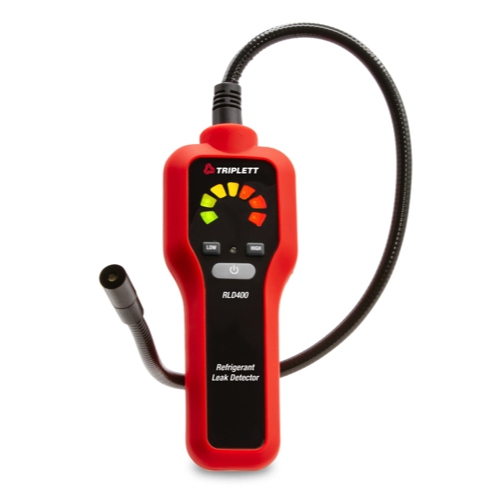
One representative model is the Triplett RLD400 Refrigerant Leak Detector, a handheld instrument designed for refrigerant and halogen gas detection in service applications. According to the provided product information, it uses a replaceable heated diode sensor and supports detection of several refrigerant types and other halogen-containing compounds. This makes it suitable as an example of the kind of portable leak detection tool users often look for in air-conditioner servicing.
The same product also illustrates several buying points that matter in practice: sensitivity, fast response, a flexible probe for reaching inspection points, and field-ready battery operation. Rather than focusing only on one model, this category is intended to help buyers compare detectors by application fit, usability, and maintenance needs.
Brands commonly considered for refrigerant leak detection
Buyers in this segment often compare instruments from established test and measurement manufacturers with experience in HVAC/R service and gas detection. Within this category context, commonly referenced brands include Bacharach, OMEGA, MasterCool, Neutronics, PCE, Sauermann, TPI, and Triplett, alongside the linked manufacturers above.
Brand choice usually depends on the service environment, required sensitivity, preferred sensor technology, and how the instrument fits into an existing tool set. For some users, the priority is routine mobile servicing; for others, it is maintenance standardization across multiple technicians or sites. In either case, it is more useful to evaluate detector performance and application fit than to choose only by brand familiarity.
Good practice when using a handheld leak detector
A detector can perform more consistently when used as part of a structured inspection process. Technicians commonly allow the instrument to complete its warm-up cycle, then move the probe slowly around likely leak points rather than sweeping too quickly. Stable movement and attention to fittings, joints, and service valves can improve the chance of finding small leaks.
It is also important to confirm findings in context. Air movement, confined areas, and the physical layout of the system can influence how escaping gas is sensed. In many maintenance workflows, leak detection is combined with broader HVAC diagnostics, and some users may also review adjacent tools such as aerosol generators for specialized testing environments where airflow behavior and containment are relevant.
Choosing with long-term service needs in mind
For B2B buyers, the best choice is usually the one that matches real maintenance conditions rather than simply offering the most aggressive specification. Sensor replacement, ease of training, portability, and suitability for repeated field use can all affect total value over time. A detector that is simple to deploy and consistent in everyday service may support faster diagnosis across multiple jobs.
If your work involves air conditioners, refrigeration units, or HVAC/R systems where refrigerant loss needs to be found quickly and accurately, this category is a practical starting point. Comparing supported gas types, detector format, and maintenance requirements will help narrow the right solution for your technical team and application.
-
-
-
-
-
-
-
-
-
-
-
-
-
-
-
-
-
-
-
-
-
-
-
-