


Passive Dosl Tubes (for TWA Measurement)
When exposure needs to be assessed over a working shift rather than at a single moment, passive sampling is often the practical choice. Passive Dosl Tubes (for TWA Measurement) are used to evaluate time-weighted average gas or vapor concentration without relying on an active pump, making them suitable for occupational hygiene checks, plant safety routines, and solvent exposure surveys.
In this category, the focus is on passive detector tubes and related accessories used for air monitoring across a defined sampling period. They are especially relevant where users need a simple method to estimate cumulative exposure to specific substances in workplaces such as manufacturing lines, chemical handling areas, laboratories, coating processes, and storage spaces.
Why passive tubes are used for TWA measurement
A time-weighted average (TWA) measurement is intended to reflect exposure over several hours rather than a brief spot reading. This is important because airborne concentration can change during production cycles, maintenance work, solvent use, cleaning operations, or batch processing. A passive tube helps capture that broader exposure picture.
Unlike direct-reading instruments that show real-time values, passive dosimeter tubes are typically selected when the goal is to monitor accumulated exposure for a target substance over a defined duration such as 1 to 8 hours or 1 to 10 hours, depending on the tube type. For many industrial users, this makes them a practical complement to other air quality sensing solutions used for broader environmental monitoring.
How passive dosimeter tubes work
These tubes operate through diffusion-based sampling. Airborne gas or vapor enters the tube naturally, without active pumping, and reacts with the reagent inside. The reaction creates a visible color change, and the stain length or indication is then interpreted in relation to sampling time to estimate exposure level.
This approach is especially useful when portability and ease of deployment matter. Because there is no pump to prepare or calibrate during sampling, passive tubes can be convenient for personal exposure checks, temporary surveys, and quick workplace studies where users need a straightforward method for specific compounds.
Typical substances covered in this category
The range in this category includes tubes for several common industrial chemicals and solvents. Examples from Gastec include options for formaldehyde, toluene, acetone, methyl ethyl ketone, ethanol, acetic acid, hydrogen peroxide, trichloroethylene, tetrachloroethylene, and 1,3-butadiene.
Different tubes are designed for different concentration bands and exposure windows. For example, the Gastec 91D Passive Dosl Tubes are intended for formaldehyde at low ppm levels, while the Gastec 122DL Passive Dosl Tubes target toluene exposure over a broader industrial range. Products such as Gastec 151D for acetone and Gastec 152D for methyl ethyl ketone are relevant in solvent handling, coating, cleaning, and production environments where vapor exposure may vary through the shift.
Choosing the right tube for your application
The first selection point is always the target gas or vapor. Passive tubes are substance-specific, so the user should match the tube to the chemical being evaluated. If the process involves aldehydes, solvents, chlorinated hydrocarbons, or oxidizing chemicals, each requires the corresponding tube type rather than a general-purpose sampler.
The second factor is the expected concentration range and exposure duration. The products in this category show different measuring ranges and sampling hours, so the correct choice depends on whether you expect low-level indoor exposure, moderate process emissions, or higher solvent concentration in a working area. It is also worth considering how the tube will fit into the rest of the monitoring workflow, especially where facilities already use air and gas transmitters for fixed-point monitoring and need passive sampling for worker-focused assessment.
Users should also account for handling accessories. The Gastec 722 Tube tip holder, for example, supports practical tube use in the field, while the Gastec Passive Dosimeter-Tube product line represents the core passive sampling format within this category.
Where these tubes fit in an industrial monitoring program
Passive dosimeter tubes are commonly used as part of a broader air monitoring strategy rather than as the only measurement method. They are helpful when documenting exposure during a shift, comparing work areas, checking process changes, or screening a task before moving to more advanced investigation if needed.
In many facilities, this category is relevant for occupational safety staff, EHS teams, plant engineers, maintenance supervisors, and laboratory managers. It can also support temporary studies in areas where fixed infrastructure is limited. For applications involving particulate generation or validation of controlled test environments, related equipment such as an aerosol generator may be considered in other types of environmental measurement workflows.
Representative product examples in this category
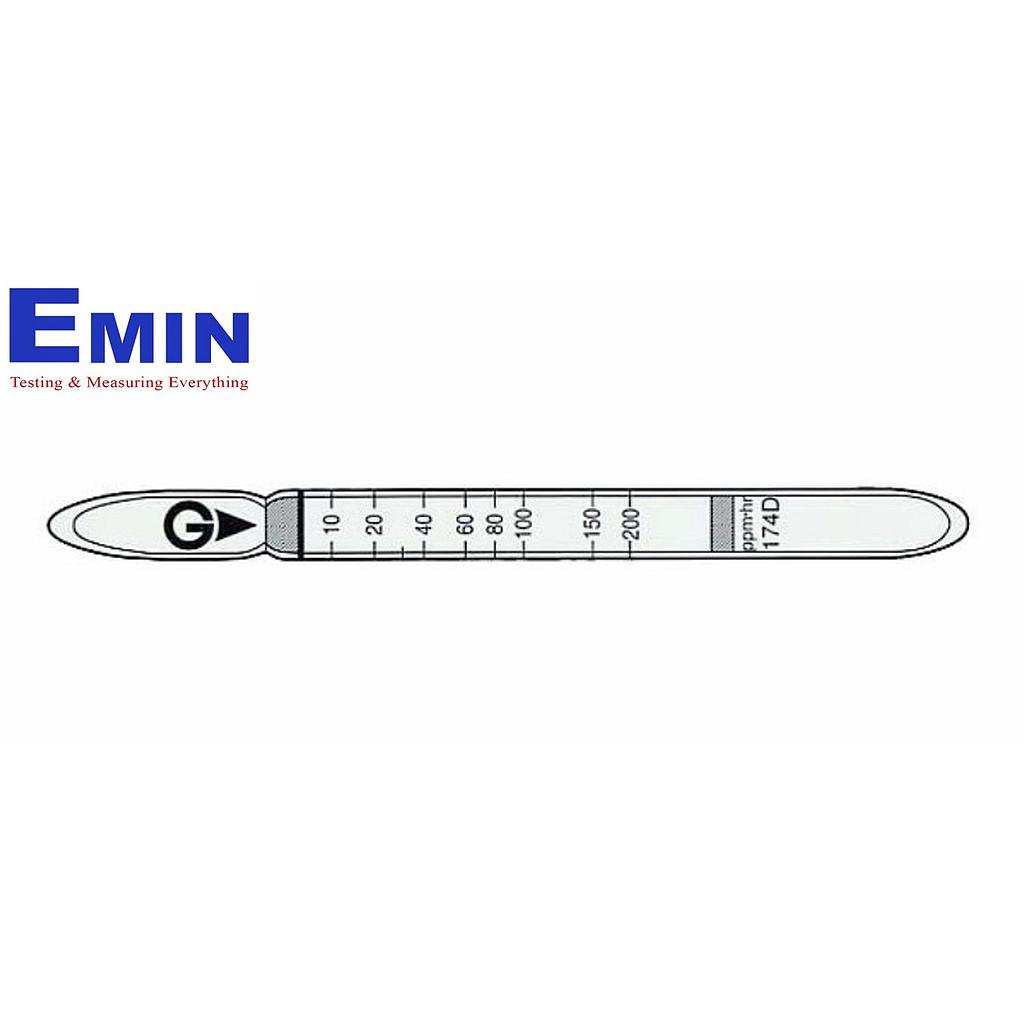
Several products in this category illustrate how passive tubes are tailored to specific chemicals. The Gastec 174D is intended for 1,3-butadiene monitoring, the Gastec 133D and 132D cover tetrachloroethylene and trichloroethylene respectively, and the Gastec 32D is designed for hydrogen peroxide exposure checks. Each of these products is built around a reagent system that produces a visible color change for that compound.
Other examples include the Gastec 81D for acetic acid and the Gastec 112D for ethanol, showing that the category covers both lower-range and higher-range applications depending on the substance. Rather than comparing products only by model number, it is better to evaluate them by chemical compatibility, expected exposure profile, and required sampling time.
Good practice for use and interpretation
For reliable results, passive tubes should be selected according to the intended substance and used within the specified sampling period. Reading should be performed carefully after exposure, with attention to the indicated scale and any handling instructions associated with the product. Because passive sampling reflects integrated exposure, interpretation should consider the actual duration of use and the work conditions during that time.
It is also important to treat passive tubes as application-specific measurement tools. They are valuable for routine exposure surveys and practical field use, but users should still align the method with internal safety procedures, site sampling plans, and the level of accuracy needed for their decision process.
Finding a suitable passive tube for workplace exposure checks
This category is intended for users who need a simple and focused way to monitor airborne chemical exposure over time. With substance-specific options from Gastec and supporting accessories for field handling, passive dosimeter tubes can be a useful choice for shift-based exposure assessment in industrial and laboratory environments.
If you are selecting a tube for a particular chemical, start with the target substance, then confirm the measuring range and sampling duration that best match your process conditions. That approach makes it easier to narrow the category to the most relevant product for your TWA measurement task.
-
-
-
-
-
-
-
-
-
-
-
-
-
-
-
-
-
-
-
-
-
-
-
-