


Particle Counter, Dust Monitor
Controlling airborne contamination often starts with one practical question: how much particulate matter is actually present in the space or process being monitored? In industrial plants, cleanrooms, HVAC validation, facility maintenance, environmental checks, and coating inspection, reliable data on particle concentration helps teams make faster decisions about air cleanliness, filtration performance, and exposure conditions.
Particle Counter, Dust Monitor instruments support that work by detecting suspended particles or dust-related contamination in air and on surfaces, depending on the test method. This category brings together handheld particle counters, desktop aerosol monitors, PM meters, and related accessories used for spot checks, routine monitoring, troubleshooting, and documentation in technical B2B environments.
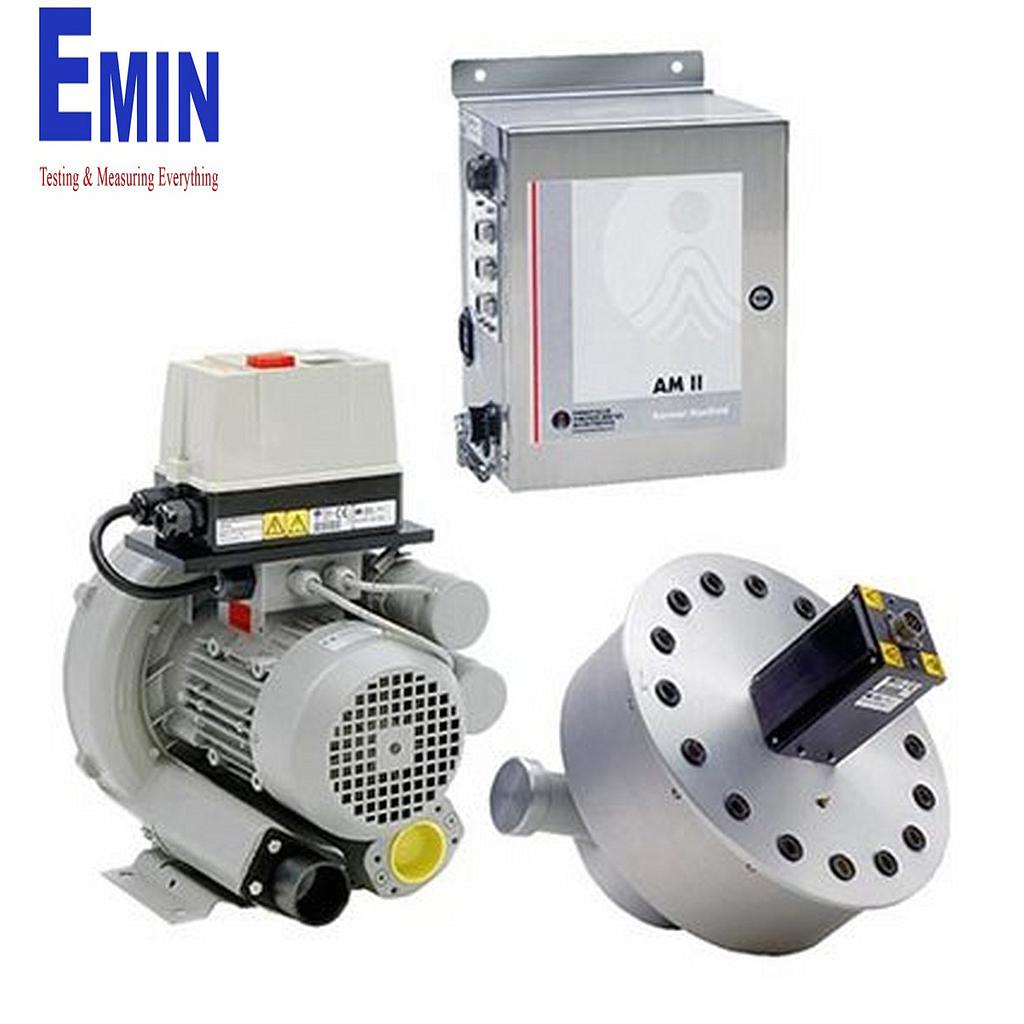
Where particle counters and dust monitors are used
These instruments are relevant anywhere airborne particulate levels can affect product quality, worker comfort, equipment reliability, or compliance procedures. Typical use cases include clean manufacturing areas, pharmaceutical and electronics environments, HVAC system verification, warehouse and production floor monitoring, and indoor environmental assessments.
They are also useful for maintenance teams investigating filter loading, airflow issues, or dust accumulation around sensitive equipment. When broader environmental parameters are part of the job, users may also compare results with complementary devices such as air quality sensors or fixed air and gas transmitters for continuous measurement strategies.
Understanding the difference between particle counting and dust monitoring
Although the terms are sometimes used interchangeably, they often serve different measurement goals. A particle counter typically counts airborne particles by size channel, such as 0.3 µm to 10 µm, making it useful for cleanroom checks, contamination control, and comparative particle analysis. A dust or aerosol monitor, by contrast, often reports mass concentration values such as PM1, PM2.5, PM10, respirable, or total particulate levels.
That distinction matters when selecting equipment. If the priority is size-resolved counts and contamination trending, a handheld particle counter is usually the better fit. If the goal is occupational or environmental particulate monitoring in mg/m³ or µg/m³, a dust monitor or particulate pollution meter may be more appropriate.
Typical instrument formats in this category
Handheld particle counters are commonly chosen for portable field use, room qualification, and routine inspection routes. Models such as the FLUKE FLUKE-985 Particle Counter (6 Chanels), EXTECH VPC260 6-Channel Particle Counter, and Beckman HHPC6+ Handheld Particle Counter illustrate the kind of compact instruments used for six-channel particle counting with internal pumps and onboard data storage.
For applications that need added documentation, the EXTECH VPC300 Video Particle Counter with built-in Camera combines particle measurement with image and video capture, which can be useful when recording conditions at the sampling point. On the dust monitoring side, the TSI 8533 Desktop Aerosol Monitor is more aligned with mass-based aerosol analysis, while the OMEGA HHTP21 Handheld particulate pollution meter targets PM2.5 checks along with temperature and humidity readings.
Some items in this category support the measurement workflow rather than acting as the primary meter. Examples include the EXTECH VPC-BATT Replacement Battery for VPC300, the KANOMAX 3888-70 Cradle For Handheld Particle Counters, and the KANOMAX 3887-03 Zero Filter, which play roles in charging, maintenance, or zero-check procedures.
Key selection criteria before you buy
Start with the measurement objective. If you need to verify contamination control in controlled spaces, look at particle size channels, counting modes, sampling flow rate, storage capacity, and communication options. Many handheld units in this category measure across six channels down to 0.3 µm, which is a common requirement for airborne particle assessment.
Next, consider whether you need count-based data or particulate mass data. The TSI 8533, for example, is oriented toward aerosol concentration and fraction display, while devices like the FLUKE-985 and EXTECH VPC series focus on particle counts across size bands. For PM-focused applications, the Aeroqual SHPM Particulate Matter Sensor and OMEGA HHTP21 are more relevant to particulate pollution screening than cleanroom-style counting.
Operational details are equally important: battery runtime, USB or Ethernet connectivity, alarm functions, logging interval, and portability all affect real-world usability. If your workflow involves documenting sampling conditions or correlating readings with ambient conditions, integrated temperature and humidity measurement can also be a useful advantage.
Accessories and supporting tools in the measurement workflow
Good results depend not only on the meter itself but also on the supporting accessories used around it. Charging cradles, replacement batteries, zero filters, and protective carrying solutions help maintain instrument readiness, especially for teams using portable counters across multiple inspection points or shifts.
Surface cleanliness assessment is another related area. Products such as the ELCOMETER E142----1 Dust Tape Test Kit and ELCOMETER 145 Dust Tape Roller are not airborne particle counters, but they are relevant where dust contamination on prepared surfaces must be evaluated using tape-based inspection methods. In this way, the category supports both airborne particulate measurement and practical dust assessment workflows.
Manufacturer options and product ecosystem
This category includes instruments from widely recognized suppliers used in testing, maintenance, and industrial measurement. Users comparing portable particle counters may naturally look at solutions from FLUKE, EXTECH, and Beckman for handheld applications, while aerosol and PM monitoring needs may lead toward TSI, OMEGA, or Aeroqual depending on the measurement format required.
For accessory and workflow support, KANOMAX and ELCOMETER also appear in this range with tools that complement field use, setup, and dust assessment tasks. The right choice depends less on brand preference alone and more on whether the instrument matches the intended sampling method, reporting format, and operating environment.
How to choose the right device for your application
If your team performs room checks, clean area verification, or filtration troubleshooting, a handheld unit with multiple particle size channels, onboard logging, and simple data transfer is often the most efficient starting point. If you need trending of PM fractions or aerosol mass concentration over time, a desktop or dedicated particulate monitor may provide better visibility into exposure or ambient dust behavior.
For integrated environmental checks, it can also be helpful to review related technologies such as aerosol generator equipment used in certain validation workflows. Where a project includes broader indoor environmental measurement, complementary instruments from the wider Aeroqual ecosystem may also support a more complete air monitoring setup.
In practice, the best selection comes from balancing portability, particle size coverage, logging requirements, communication interface, and the type of result your team actually needs to report. That approach helps avoid overbuying on one hand or ending up with a device that does not match the test method on the other.
Final considerations
Choosing between a particle counter and a dust monitor is ultimately a matter of measurement intent. Some applications demand size-specific particle counts for contamination control, while others need PM or aerosol concentration data for environmental evaluation and process visibility. This category brings those tools together so engineers, maintenance teams, and procurement buyers can compare options within the same practical workflow.
Whether you are building a portable inspection kit, adding accessories for an existing counter, or selecting a monitor for ongoing particulate tracking, focusing on the sampling method, data output, and operating conditions will lead to a more reliable fit for the job.
Types of Particle Counter, Dust Monitor (689)
- Aerosol Generators (4)
- Air Particle Counter (294)
- Dust monitor (186)
- Indoor Air Quality Meter (191)
- Particle counter (6)
-
-
-
-
-
-
-
-
-
-
-
-
-
-
-
-
-
-
-
-
-
-
-
-