


Emissions Gas Sampler
Reliable stack and process sampling starts with consistent sample collection. In industrial air monitoring, small errors in probe setup, filtration, flow stability, or sample handling can affect the quality of the final analysis. This is why choosing the right Emissions Gas Sampler setup is not only about the main instrument, but also about the supporting consumables and maintenance parts that keep the system operating correctly in the field.
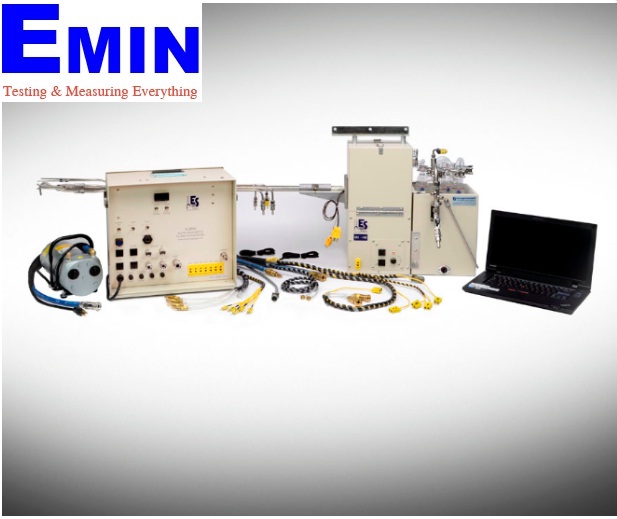
Where emissions gas samplers are used
Emissions gas samplers are commonly used in environmental monitoring, stack testing, combustion process checks, and flue gas investigation. Their role is to collect representative gas samples from ducts, chimneys, exhaust lines, or process streams so that pollutants or target compounds can be measured later by suitable analytical methods.
In practice, sampling conditions can vary widely. Temperature, moisture, particulate loading, and target contaminants all influence how the sampling train should be configured. For applications that also require continuous condition tracking around the process, related devices such as air and gas transmitters can complement the overall monitoring setup.
More than a pump: the full sampling train matters
A typical emissions sampling system may include a probe, tubing, filtration media, impingers or collection media, a pump, and calibration or verification accessories. Performance depends on how these elements work together under actual site conditions, especially when sampling hot, humid, or particle-laden gas streams.
Several products in this category illustrate that point clearly. The Kitagawa P-10FG Flue Gas Sampler is an example of a field-oriented sampling set built around a probe, pump, connection tube, heater, and thermometer for flue gas work. On the accessory side, items such as the Environmental PRL-P05 probe, glass fiber filters, O-rings, silica gel, and pump maintenance kits support the reliability of the sampling process rather than replacing the sampler itself.
Key components found in this category
This category includes both complete sampling equipment and the parts that help maintain sampling integrity over time. Understanding the role of each component makes it easier to select compatible items for routine monitoring, maintenance, or spare stock planning.
- Sampling probes help extract gas from the target point while withstanding process conditions.
- Filters and filter media such as glass fiber elements are used to capture particulate matter before it reaches downstream components.
- Sealing parts including silicone or Viton O-rings support leak-tight connections in impingers and other glassware assemblies.
- Drying media such as silica gel help reduce moisture interference in selected sampling configurations.
- Pump service items including oil and maintenance kits help preserve flow stability and equipment uptime.
Examples from the listed products include the Environmental GF3-107 glass fiber filter, Environmental DC-9802-5L silica gel, Environmental GP-108-S and GP-107-S O-rings, and the Environmental P-0523-MK maintenance kit with P-0523-OIL-8OZ pump oil. These are practical items for keeping a sampling system ready for repeatable use.
Choosing the right sampler for the application
The best selection process starts with the sampling objective. A flue gas task at elevated temperature will not have the same requirements as trace-level compound collection, personal air sampling, or laboratory-style preconcentration. Users should consider the target gas, expected concentration range, moisture load, particulate content, temperature, and whether the sample will be analyzed immediately or transported for later testing.
For example, the INFICON SPME Solid Phase Microextraction Sampling System is relevant when sample preparation and trace compound extraction are central to the workflow. The Staplex PFB-1 Detector Tube Personal Air Sampler and Staplex CT-6 charcoal tubes are more closely aligned with low-flow sampling and detector tube or sorbent-based collection tasks. These examples show that “gas sampling” can cover very different operating methods, so compatibility with the intended method is essential.
Why accessories and maintenance parts deserve attention
On many sites, sampling accuracy is affected less by the main instrument specification and more by wear, contamination, or leakage in the surrounding hardware. A degraded seal, saturated drying media, clogged filter, or poorly maintained pump can compromise sample representativeness long before a complete instrument failure is obvious.
That is why maintenance items should be treated as part of the core sampling solution. Replacing consumables at the right interval helps preserve flow stability, minimize contamination risk, and support more consistent data over repeated campaigns. For teams that manage broader environmental instrumentation, nearby categories such as air quality sensors may also be relevant when building a wider monitoring program.
Typical workflow in emissions gas sampling
A sound workflow usually begins with selecting a representative sampling point and confirming the target method. The operator then prepares the probe, checks seals and filtration elements, verifies the pump condition, and confirms that collection media are suitable for the gas stream and analytes of interest.
During sampling, stable flow and correct assembly are critical. After collection, the sample or collection media should be preserved and labeled appropriately before transport or analysis. In some projects, supporting tools such as an aerosol generator may also be useful in related testing or validation workflows, depending on the application environment.
Brands and product ecosystem in this category
This category includes products associated with manufacturers such as Environmental, INFICON, Kitagawa, and Staplex. Rather than serving one narrow use case, these brands represent different parts of the emissions and air sampling ecosystem, from field sampling assemblies to low-flow collection tools and replacement components.
Environmental products in the list are especially useful for illustrating the accessory side of the category: probes, O-rings, filters, silica gel, and pump maintenance items all support long-term sampler operation. Kitagawa contributes a dedicated flue gas sampler, while INFICON and Staplex highlight specialized sampling approaches for particular workflows. This mix is useful for buyers who need to source both primary equipment and supporting parts from one place.
Final considerations before ordering
When comparing emissions gas sampling products, it helps to think in terms of the complete application rather than a single part number. Check whether you are replacing a worn component, expanding an existing sampling train, or specifying a new setup for flue gas, ambient, or analytical sampling. Seal material, media type, probe format, pump upkeep, and method compatibility all matter.
A well-chosen emissions gas sampling configuration supports cleaner field operation, more dependable sample collection, and easier maintenance over time. Whether you need a complete flue gas sampler or the small but essential parts that keep a system sealed, filtered, and serviceable, this category is designed to support that workflow in a practical way.
-
-
-
-
-
-
-
-
-
-
-
-
-
-
-
-
-
-
-
-
-
-
-
-