


Electronic - Mechanical scales
Accurate weighing is a basic requirement in laboratories, production lines, quality control rooms, logistics areas, and many process industries. Choosing the right Electronic - Mechanical scales setup helps improve measurement consistency, reduce operator error, and match the real working conditions of each application, from milligram-level analysis to higher-capacity routine weighing.
In this category, users typically look for more than a simple weight display. They may need better readability, faster stabilization, internal or external calibration options, data output for records, or a weighing format suited to powder handling, sample preparation, moisture testing, paint mixing, or general industrial use.
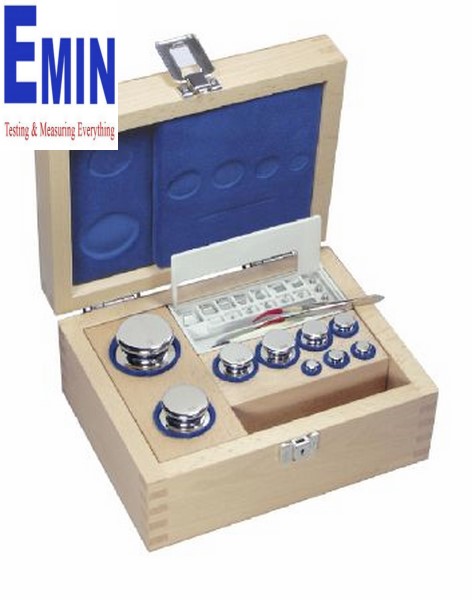
How electronic weighing systems are commonly used
Most modern weighing instruments work by converting a mechanical load into an electrical signal, which is then processed and shown as a readable value. In practical terms, this allows electronic balances and scales to deliver faster readings, finer resolution, and easier data handling than traditional purely mechanical devices in many working environments.
The performance of a scale depends not only on maximum capacity, but also on readability, repeatability, stabilization time, pan size, and resistance to environmental influences such as vibration or airflow. For precision tasks, these factors matter just as much as the nominal capacity printed on the label.
From analytical work to routine industrial weighing
This category covers a broad weighing range, which is why selection should begin with the actual use case. For example, analytical applications often require very fine display resolution and a stable measurement environment, while routine workshop or production weighing may prioritize speed, convenience, and adequate capacity over ultra-fine sensitivity.
Examples in this range include the Shimadzu ATX-224R Analytical Balance and Shimadzu ATY224R Analytical balance for laboratory-focused measurement, as well as the Sartorius Entris 822i - 1S Technical Scales and Sartorius BCE2202i-1S Laboratory Balances for technical and general laboratory workflows. For users working specifically with finer-capacity devices, the dedicated analytical balance range can be a useful next step.
Where higher flexibility is needed for general bench work, models such as the AND FZ-500i Precision Balance and AND GF-303A Precision Balance show how precision balances support weighing, counting, percentage work, and other routine measurement tasks. If your process is centered on this type of application, the precision scale category offers a more focused product view.
Key specifications that actually affect selection
One of the most common mistakes is choosing a scale based only on maximum load. In reality, capacity and readability must be considered together. A 2200 g balance with 0.01 g readability serves a different purpose from a 220 g analytical balance with 0.1 mg readability, even though both are used in controlled weighing tasks.
Pan size and physical format are also important. Larger pans can simplify routine use for containers or bulk samples, while enclosed or more compact weighing areas are often better for fine measurements where airflow and handling can influence the result. Connectivity may also matter if your process requires data transfer to a PC, printer, or record-keeping system.
Calibration options deserve attention as well. Some balances are designed with built-in calibration support, while others rely on external weights and periodic verification. In regulated environments or applications where traceability matters, the ability to check performance with suitable weighing accessories and reference weights can be just as important as the balance itself.
Moisture analysis as part of the weighing workflow
Not every weighing task ends with a mass value. In food processing, chemicals, pharmaceuticals, plastics, and raw material inspection, users often need to determine moisture content as part of acceptance testing or process control. That is where moisture analyzers become relevant within the wider weighing ecosystem.
Representative products in this category include the AND MX-50 Moisture Analyzers, Sartorius MA160-1 Moisture Analyzers, and Shimadzu MOC-63U Moisture Analyzer. These instruments combine weighing with controlled heating, allowing the sample to be dried and the result interpreted as moisture loss or dry content depending on the method used. For projects centered specifically on this task, the moisture analyzer section provides a more targeted starting point.
Matching scale type to the working environment
Laboratory users usually focus on resolution, repeatability, and stable measurement conditions. In contrast, industrial users may be more concerned with throughput, ease of cleaning, simple operation, or integration into a routine production workflow. The best choice is rarely the most sensitive instrument; it is the one that fits the process without creating unnecessary complexity.
For example, a paint formulation environment may require a dedicated mixing scale such as the Mettler Toledo RPA345 Paint mixing scale, where practical operation and process suitability matter more than analytical-level readability. In other cases, a standard technical or laboratory balance is the better fit for sample preparation, incoming inspection, or formulation work.
Accessories and interfaces can also influence day-to-day use. Items such as the AND FG-23 Serial interface show that connectivity is part of the weighing ecosystem, especially when results need to be transmitted, documented, or integrated into broader quality systems.
Major manufacturers in this category
Several well-known brands appear frequently in professional weighing applications, each with strengths across different segments. Sartorius is commonly associated with laboratory and moisture analysis solutions, while Shimadzu is widely recognized for analytical balances, precision balances, and moisture analyzers used in controlled measurement environments.
AND is also a familiar choice for precision balances, application-oriented weighing, and interface options, and Mettler Toledo appears in specialized process-focused solutions such as paint mixing scales. The right brand choice often depends less on brand popularity and more on whether the available model range aligns with your capacity, readability, calibration, and workflow requirements.
Practical buying considerations for B2B users
Before selecting a model, it helps to define the smallest meaningful weight change you need to detect, the heaviest load you expect to place on the pan, and the level of repeatability required by your process. This prevents over-specifying the instrument or, just as importantly, choosing a scale that cannot provide the confidence level your work demands.
You should also consider where the scale will be installed. Benchtop laboratory use, receiving inspection, moisture testing, formulation rooms, and industrial production areas all place different demands on stability, footprint, display visibility, and cleaning. If data handling is part of the workflow, check whether the instrument supports the communication method your team expects to use.
For many buyers, the most efficient approach is to begin with the application first and then narrow down by weighing range, readability, calibration method, and operating environment. This makes it easier to compare products such as the Sartorius Entris 822i - 1S, Shimadzu BL-2200H Electronic Balance, or AND FZ-500i Precision Balance in a way that reflects real process needs rather than specifications in isolation.
Choosing the right weighing solution
A well-selected weighing instrument supports reliable decisions in testing, production, formulation, and quality assurance. Whether you need an analytical balance for fine laboratory work, a precision balance for routine measurement, or a moisture analyzer for material evaluation, the main goal is to align the instrument with the application, environment, and expected level of control.
This category brings together a wide range of electronic and mechanical weighing solutions from established manufacturers, making it easier to compare equipment by purpose rather than by name alone. If you already know your working method and measurement range, you can narrow the options quickly and move toward a scale that fits your process with fewer compromises.
Types of Electronic - Mechanical scales (4,351)
- Analyzer Scale (688)
- Counting Scale (206)
- Crane scale (47)
- Floor Scale (99)
- Kern Floor Scale (149)
- Mechanical Scales (8)
- Moisture Analyzer (222)
- Newton Weights (51)
- Pocket Scale (10)
- Precision scale (1,475)
- Supermarket Scale (24)
- Table scale (81)
- Test weights E1 (111)
- Test weights E2 (170)
- Test weights F1 (233)
- Test weights F2 (159)
- Test weights M1 (345)
- Test weights M2 (35)
- Test weights M3 (34)
- Truck scale (5)
- Waterproof Scale (15)
- Weighing accessories (108)
- Weight Mass Comparator (76)
-
-
-
-
-
-
-
-
-
-
-
-
-
-
-
-
-
-
-
-
-
-
-
-