


Signal counter and Speed meter
Accurate pulse counting and speed feedback are essential in automated machines, packaging lines, flow systems, rotating equipment, and test benches. When a process depends on encoder pulses, proximity sensors, photoelectric sensors, or flow meter signals, choosing the right signal counter and speed meter helps operators track output, verify motion, and respond quickly to abnormal conditions.
This category brings together panel instruments designed for counting, totalizing, measuring RPM or frequency-related speed, and displaying process data clearly on the machine interface. It is especially relevant for OEM panels, retrofit projects, industrial monitoring, and production environments where reliable pulse-based measurement is part of daily operation.
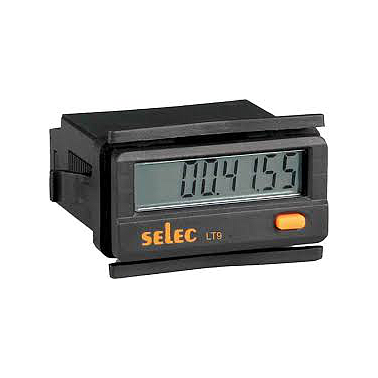
Where signal counters and speed meters are used
In industrial applications, pulse signals often represent real movement or process events. A counter can register parts, strokes, batches, or total output, while a speed meter converts incoming pulses into a usable display of RPM, line speed, or flow-related rate. These instruments are commonly installed in conveyor systems, winding machines, filling lines, cutting systems, motors, pumps, and rotating assemblies.
They also play an important role in broader control architectures. In systems that require higher-level monitoring, these devices may work alongside SCADA components to pass measured values upstream for supervision, logging, or alarm handling.
Typical device types in this category
This category covers several practical instrument types rather than a single device format. Some models are dedicated tachometers for RPM measurement, while others are multifunction counters that support totalizing, batch counting, position-related pulse tracking, or speed display from pulse input.
For example, the EXTECH 461950 Panel Mount Tachometer is suited to RPM display in panel applications, using sensor input to track rotating targets. For pulse counting and control tasks, models such as the Sansel DC 330 Digital Counter or Adtek CS2-CT and CS2-MC series are more appropriate when the application involves accumulated counts, encoder signals, or programmable relay logic.
There are also graphical or multifunction panel meters that fit process-oriented applications. The Watanabe WPMZ-6 Graphical Digital Panel Meter, for instance, is relevant where operators need a more visual display for variables such as flow rate and total flow, combining indication with communication and output options.
How the measurement principle affects selection
The right choice depends first on signal source. Some installations use simple contact signals, while others rely on NPN/PNP outputs, voltage pulse signals, proximity switches, photoelectric sensors, or A/B phase encoder inputs. If the instrument must read quadrature encoder signals for direction or position-related tasks, a basic single-input counter may not be enough.
Input frequency is another key point. Slow event counting and high-speed pulse measurement are very different applications, so the acceptable input rate should match the machine signal. In this category, you can find solutions for lower-speed display as well as multifunction devices that are designed for faster pulse handling and more advanced control logic.
Display format also matters. In some production lines, a simple numeric LED display is sufficient for count or speed. In other cases, a TFT or graphical display improves readability for operators who need to compare rate, totalized value, or alarm conditions at a glance.
Representative products and their practical roles
The product mix in this category supports different levels of complexity. The EXTECH 461950 is a panel-mount tachometer focused on RPM measurement, making it suitable where a machine builder needs a dedicated rotational speed display without unnecessary functions.
The Sansel DC 330 Digital Counter is a more straightforward counting instrument for applications that need visible pulse accumulation from common industrial sensors. This kind of device is useful for piece counting, batch indication, and general event tracking on compact control panels.
For more configurable systems, Adtek models such as the CS2-CT, CS2-MC, and CM1-RL offer broader functionality. These instruments are relevant for count control, speed or velocity indication, encoder-based measurement, relay output handling, and communication in machine automation.
Watanabe and Wayne Kerr appear in this category from a different angle. The Watanabe WPMZ-6 supports panel visualization for flow-related measurement, while Wayne Kerr impulse tester models illustrate how pulse and waveform-driven testing can be part of specialized industrial measurement workflows. In some projects, signal counting or timing functions coexist with data collection devices such as a data logger for automation systems for traceability and process review.
Features that matter in industrial panels
When evaluating a panel instrument, it is useful to look beyond the headline measurement range. Many buyers need a combination of display quality, relay outputs, communication options, power compatibility, and installation convenience. In OEM and retrofit environments, these details often determine whether the device integrates smoothly into the cabinet.
Common decision points include:
- Input compatibility with the installed sensor type or encoder output
- Support for total count, batch count, speed, rate, or position-related functions
- Relay, analog, or serial communication options for machine control and monitoring
- Panel size and mounting dimensions for new builds or replacement work
- Display readability in operator-facing applications
- Environmental suitability for plant-floor use
Where communication is required, models with RS-232C, RS-485, Modbus RTU, or similar interfaces can simplify integration into supervisory systems. In larger automation environments, that can be an advantage when values need to be shared with HMIs, controllers, or automation platforms used elsewhere in the facility.
Choosing by application instead of by model name
A practical way to select from this category is to begin with the application objective. If the goal is only to display rotational speed from a detected target, a tachometer-style panel meter is usually enough. If the machine must count parts, compare against preset values, trigger outputs, or communicate count data to another system, a multifunction counter is often the better fit.
For flow-related applications, it is important to distinguish between pulse totalizing and true process indication. Some systems simply count incoming pulses from a flow sensor, while others need a meter that can present both rate and total in a more operator-friendly format. In motion applications, the presence of encoder signals may point toward dual-channel or A/B phase capable instruments rather than a basic counter.
It is also worth considering future expansion. Even if a machine initially needs only local display, optional communication, analog output, or relay functions may become useful later for integration, alarms, batching, or remote monitoring.
Manufacturers commonly seen in this category
This category includes products from recognized instrument and automation-oriented brands such as EXTECH, Adtek, Watanabe, Wayne Kerr, JFM, and Sansel. Each serves a different use case profile, from compact panel tachometers and counters to configurable multifunction meters and specialized test equipment.
Rather than choosing by brand alone, industrial buyers typically compare the available input types, display style, control outputs, and intended application. That approach is especially important in pulse-based measurement, where the same panel cutout size can hide very different operating capabilities.
Final considerations before ordering
Signal counters and speed meters are small panel devices, but they have a direct impact on machine visibility, production tracking, and control accuracy. The best fit usually comes from matching the instrument to the actual signal source, expected pulse rate, display requirement, and any relay or communication needs.
If you are selecting for a new panel or replacing an existing unit, focus on how the device will be used in the real process: simple counting, RPM indication, encoder-based monitoring, batching, or flow-related display. A well-matched instrument improves both operator confidence and system integration without adding unnecessary complexity.
-
-
-
-
-
-
-
-
-
-
-
-
-
-
-
-
-
-
-
-
-
-
-
-