


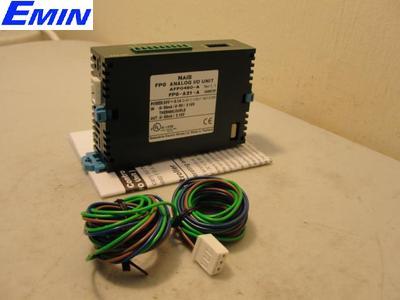
Panasonic module
Reliable control hardware is a practical starting point for any automation project, especially when uptime, wiring space, and maintainability all matter at the same time. In many industrial environments, engineers look for modular components that can be integrated into existing control cabinets without making future expansion more complicated.
Panasonic module products are commonly selected in these situations because modular architecture makes it easier to build, extend, or service an automation system step by step. Whether the application involves machine control, signal handling, or support functions inside a broader electrical system, this category helps buyers focus on components designed for structured industrial integration.
Where Panasonic modules fit in an automation system
In industrial control, a module is usually part of a larger platform rather than a standalone device. It may serve as an interface for inputs and outputs, support signal processing, or extend the capabilities of a controller-based system. That is why buyers often evaluate modules not only by the part itself, but also by how well it fits the surrounding cabinet layout, communication structure, and maintenance workflow.
Within a broader Panasonic automation portfolio, modular components are relevant for panel builders, machine manufacturers, and maintenance teams that need consistent architecture across different projects. A modular approach can simplify replacement planning and help standardize control designs across multiple lines or machines.
Why modular design matters in industrial applications
A modular control ecosystem gives engineering teams more flexibility than a fixed, closed arrangement. Instead of redesigning the whole panel when requirements change, it is often possible to adapt the system by adding or replacing a specific functional element. This is especially useful in production environments where processes evolve over time or where machine variants require slightly different control configurations.
Another benefit is scalability. Small systems may begin with only essential functions, while larger installations may require a more layered architecture. Modules support this growth pattern by allowing a system to develop in stages, which can help with space planning, service access, and long-term lifecycle management.
Typical use cases for Panasonic modules
These products are relevant in many types of industrial projects where compact and organized control design is important. Common scenarios include packaging machinery, assembly equipment, conveyor systems, utility panels, and general factory automation. In such environments, modular hardware supports cleaner system structure and can make troubleshooting easier for technicians working under time pressure.
Modules are also useful where signal expansion or function-specific integration is required. For example, a machine builder may need to adapt an existing control platform for additional sensors, actuators, or process requirements without changing the entire cabinet concept. In these cases, the value of the category lies in supporting a more flexible and serviceable system design.
How to choose the right module for your project
Selection should begin with the role the module needs to perform inside the control architecture. Buyers typically review system compatibility, installation constraints, expected operating conditions, and how the part will interact with the rest of the equipment. Even when the application appears simple, matching the module correctly to the intended platform is essential for reliable operation.
It is also useful to think beyond initial installation. A good choice should support future maintenance, possible system expansion, and practical spare-part planning. For B2B procurement teams, this means looking at modules not just as components to purchase, but as building blocks in a larger automation lifecycle.
Key evaluation points for technical buyers
When reviewing options in this category, technical teams often compare several practical factors rather than focusing on one feature alone. These may include mounting approach, panel space efficiency, connection method, integration with existing hardware, and the level of complexity acceptable for commissioning and service.
- Compatibility with the target control platform or system architecture
- Suitability for the panel layout and available installation space
- Ease of replacement during maintenance or fault recovery
- Ability to support system expansion without major redesign
- Fit with procurement and spare-part standardization goals
For projects that require a wider overview of related components, the full Panasonic module category can be used as a reference point for comparing modular solutions within the same product family.
Supporting panel builders, OEMs, and maintenance teams
Different buyers approach this category with different priorities. OEMs often focus on design consistency across machine series, while panel builders may place more emphasis on wiring efficiency and cabinet organization. Maintenance teams, on the other hand, are usually concerned with service accessibility, replacement speed, and minimizing disruption during repairs.
This makes application context especially important. The most suitable module is not always the one with the broadest capability, but the one that aligns with actual operating needs and the structure of the existing system. In B2B purchasing, a category page like this is most useful when it helps narrow down options according to real engineering priorities rather than generic product claims.
A practical category for structured automation sourcing
Choosing modular industrial components is often less about buying a single item and more about building a stable, maintainable control ecosystem. That is why this category is relevant for engineers and purchasing teams who need a clear path to system expansion, replacement planning, and consistent hardware selection.
If your project depends on organized control architecture and long-term serviceability, Panasonic module products are worth reviewing as part of that wider design process. A careful selection approach will help ensure the module fits not only the immediate application, but also the operational and maintenance needs that follow after installation.
-
-
-
-
-
-
-
-
-
-
-
-
-
-
-
-
-
-
-
-
-
-
-
-