


Other Capacitor
Many capacitor requirements do not fit neatly into a single standard family. In design, maintenance, calibration, and replacement work, engineers often need parts such as RC networks, capacitance standards, or specialized capacitor formats that serve a more specific electrical function than general-purpose discrete capacitors. This is where the Other Capacitor category becomes useful, bringing together products that support filtering, timing, suppression, reference measurement, and compact circuit integration.
Rather than treating these items as miscellaneous stock, it makes more sense to view them as a practical selection of components for applications where layout density, predictable electrical behavior, or test accuracy matters. The range shown here is relevant for OEM design, industrial electronics repair, laboratory work, and sourcing teams looking for capacitor-related products beyond the most common standard types.
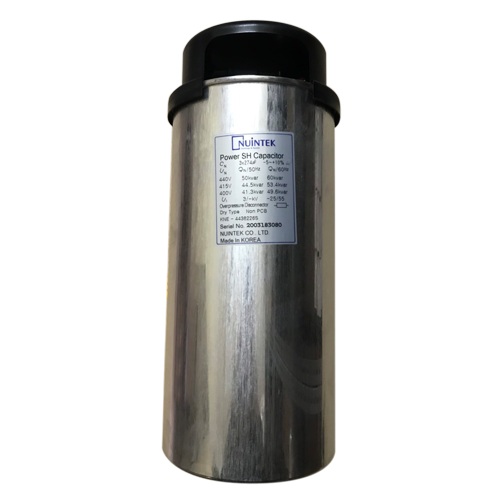
Where this category fits in capacitor sourcing
In many electronic assemblies, the required part is not simply a single capacitor with a given capacitance value. Some circuits benefit from integrated resistor-capacitor combinations, matched network structures, or stable reference components used in test environments. That makes this category especially relevant when a project needs application-specific capacitor solutions rather than only mainstream board-level parts.
For buyers comparing broader capacitor options, it can also help to review adjacent families such as ceramic capacitors when the requirement is a standard discrete MLCC, or aluminum electrolytic capacitors for bulk energy storage and smoothing. By contrast, the products in this section are often selected for circuit integration, suppression behavior, or measurement reference tasks.
Typical product types found in this range
A large share of the listed examples are capacitor RC networks. These components combine capacitive and resistive elements in one compact package, which can simplify PCB layout and help maintain more consistent network behavior across repeated channels. In practical terms, they are often considered when designers need noise filtering, waveform shaping, or compact timing and damping arrangements within space-constrained assemblies.
Examples include series from PANASONIC such as the EZADT12AAAJ, EZADLU01AAJ, EZADT23AAAJ, and EZADT52AAAJ, as well as YAGEO network parts like the CA0612KRNPO0BN101 and CA0612KRX7R9BB822. The category also includes specialized items such as the IET LABS SCA-1uF capacitance standard, which serves a very different purpose from production PCB components by supporting verification and calibration workflows.
Why RC networks are used in compact electronic designs
An RC network can reduce component count and make placement more efficient compared with building the same function from multiple individual parts. For repetitive circuits or multi-line designs, this may improve assembly consistency and simplify procurement by consolidating several passive elements into one package. It can also be useful in signal conditioning, transient suppression, or interface circuits where a predefined resistor-capacitor combination is desirable.
Products such as the Murata GNM214B31A105ME17D and Panasonic integrated RC network models illustrate how this type of component supports dense board design. Depending on the circuit, engineers may look at capacitance value, resistance value, package size, operating environment, and channel structure such as 4R/4C or related network arrangements. The goal is not just matching nominal values, but selecting a part that fits the electrical behavior and production constraints of the design.
Capacitance standards and precision measurement needs
Not every capacitor-related requirement is tied to end-product assembly. In calibration, metrology, and test labs, a stable reference capacitor can be important for checking instrument performance and maintaining traceable measurement processes. This is why a product like the IET LABS SCA-1uF stands out in this category: it is intended as a capacitance standard, not simply a board-mount passive component.
When a specification mentions adjustment tolerance, temperature coefficient, dissipation, calibration frequency, or long-term stability, the selection logic is very different from standard production purchasing. These parameters matter in environments where repeatability and known reference behavior are essential. For engineering teams that work with LCR meters, calibration benches, or quality verification procedures, this type of product belongs in a broader capacitor sourcing strategy.
How to choose the right product in this category
Selection starts with the actual function the part must perform. If the application needs a compact network for filtering or signal conditioning, the important factors are usually capacitance value, resistance value, network topology, package dimensions, and environmental suitability. If the product is intended for test use, stability and reference characteristics become more important than compact integration.
It is also worth checking whether a standard capacitor family may be sufficient for the design. In some cases, a discrete part from the aluminum polymer capacitors range or another conventional capacitor category may be the better fit. But when the requirement calls for integrated passive behavior or a dedicated reference component, this category helps narrow the search to more specialized solutions.
Representative manufacturers in this selection
Several well-known component makers appear in this range, including YAGEO, PANASONIC, Murata, IET LABS, and ITW Paktron. Each name is relevant in a slightly different way: some are commonly associated with compact passive components for electronic assembly, while others are more visible in precision or specialty electrical products. For buyers, that mix is useful because it supports both production-oriented and measurement-oriented sourcing needs.
The most practical approach is to compare manufacturers in relation to the application rather than by name alone. A compact RC network for a production PCB, for example, should be evaluated on package style, value combination, and integration benefits. A capacitance standard, on the other hand, should be assessed on measurement stability and calibration relevance.
Applications across industrial and electronic environments
Products in this category can support a wide range of use cases, from embedded electronics and control boards to maintenance replacement and laboratory support. RC networks may be used in signal lines, interface conditioning, noise suppression, or repeated passive structures where a compact integrated format saves board space. In servicing environments, they can also help when replacing specialized passive networks originally designed into industrial equipment.
Meanwhile, precision capacitance standards are more closely tied to quality systems, instrument verification, and technical service operations. This combination of production parts and precision reference items is what makes the category broader than a simple capacitor shelf. It addresses real-world sourcing situations where engineers need more than a generic capacitor type.
Choosing with the full circuit context in mind
The best results usually come from selecting these products as part of the complete electrical context: signal behavior, layout limitations, tolerance targets, maintenance expectations, and test requirements. A part with the right nominal capacitance may still be unsuitable if the network structure, size, or stability does not align with the application. That is especially true for integrated RC parts and reference-grade components.
For that reason, this category is most valuable when used as a focused source for specialized capacitor-related products. Whether you are comparing Panasonic and YAGEO RC networks for compact assembly, reviewing Murata options for integrated passive design, or considering an IET LABS capacitance standard for measurement work, the range here supports more targeted and technically informed selection.
When a standard capacitor category does not fully match the job, this collection helps bridge the gap between general component sourcing and application-specific needs. Reviewing electrical function first, then package and stability requirements, is usually the clearest path to choosing the right part for your circuit, equipment, or test setup.
-
-
-
-
-
-
-
-
-
-
-
-
-
-
-
-
-
-
-
-
-
-
-
-