


Niobium Oxide Capacitors
Stable power delivery is a recurring requirement in compact electronics, especially where designers need a balance between capacitance, size, thermal performance, and long-term reliability. Niobium Oxide Capacitors are often considered in these applications as part of the broader solid capacitor landscape, particularly for low-voltage filtering, decoupling, and power smoothing in space-constrained assemblies.
On this category page, buyers and engineers can explore niobium oxide capacitor options used in embedded electronics, industrial boards, and other high-density designs. The range here includes parts from Kyocera and KYOCERA AVX, with examples covering different capacitance values, voltage ratings, package sizes, and temperature capabilities.
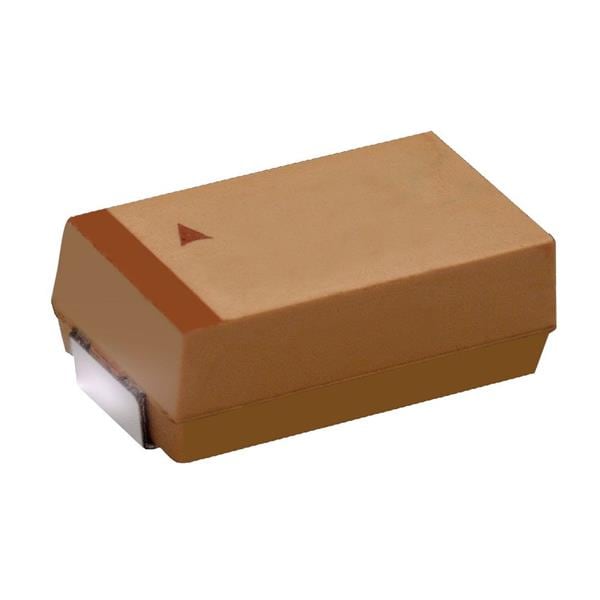
Where niobium oxide capacitors fit in electronic design
These components are typically selected for circuits that need solid capacitor technology in a compact SMD format. Common use cases include output filtering in power rails, local energy buffering near integrated circuits, and smoothing in digital or mixed-signal boards where board space is limited.
Compared with other capacitor families, niobium oxide devices are generally evaluated on practical design criteria such as capacitance per footprint, ESR behavior, operating temperature range, and voltage margin. In purchasing and engineering workflows, they are often reviewed alongside aluminum polymer capacitors or other technologies depending on the electrical profile of the application.
Typical selection criteria for this category
When narrowing down parts in this range, the first step is usually matching the required capacitance and rated voltage to the target rail. This category includes examples from 10uF up to several hundred microfarads, with common low-voltage ratings such as 1.8V, 4V, 6.3V, and 10V represented by listed products.
Package size is another key factor. Smaller parts may suit dense layouts and localized decoupling, while larger bodies can support higher capacitance values or lower impedance targets. Buyers also tend to check tolerance, leakage current, and maximum operating temperature to make sure the part aligns with both electrical and environmental conditions.
Representative products in this range
Several listed parts illustrate the spread of options available. For compact designs, the KYOCERA AVX NOJS106M004RWJ provides 10uF at 4V in a 3.2 x 1.6 x 1.2mm SMD format, making it relevant where board area is tight and moderate capacitance is sufficient.
For higher capacitance needs, parts such as the KYOCERA AVX NPVV477M004R0003 at 470uF, the Kyocera NOSD337M004R0100 at 330uF, and the KYOCERA AVX NOJD337M006 at 330uF with a 6.3V rating show how this category supports stronger bulk capacitance requirements in low-voltage rails. Other examples like Kyocera NOSC107M004R0070 and Kyocera NOSD107M006R0080 can be useful reference points when comparing 100uF class devices across different voltage and temperature needs.
Understanding performance trade-offs
Capacitor choice is rarely about capacitance alone. In real designs, engineers also look at ESR, leakage current, and temperature capability because these factors affect ripple handling, startup behavior, and long-term circuit stability. A part that works well on one rail may not be the right fit for another if transient response or thermal conditions differ.
For example, some products in this category are specified up to 105C, while others extend to 125C. That difference can matter in power modules, enclosed electronics, or industrial environments where internal temperatures rise during continuous operation. Likewise, low-voltage ratings such as 1.8V or 4V may be suitable for modern digital rails, but only when proper design margin is maintained.
Comparing niobium oxide capacitors with other capacitor families
Niobium oxide capacitors are often assessed as part of a broader capacitor strategy rather than in isolation. Depending on the design goal, engineers may compare them with ceramic capacitors for high-frequency decoupling or with aluminum electrolytic capacitors for bulk energy storage in larger form factors.
Each technology serves a different purpose in the same system. Ceramics are often chosen for very high-frequency behavior and small values, while electrolytics and polymer solutions may be preferred for certain bulk filtering roles. Niobium oxide capacitors can be a practical option where designers want a solid SMD solution within a specific capacitance, voltage, and size window.
Brands and sourcing considerations
This category is centered on parts from Kyocera and KYOCERA AVX, two names frequently associated with miniature passive components and board-level capacitor solutions. The listed portfolio includes multiple series and form factors, allowing sourcing teams to compare alternatives within a focused manufacturer ecosystem rather than mixing unrelated product lines.
For procurement, that can simplify cross-checking part dimensions, electrical ratings, and application fit during BOM evaluation. It also helps engineering teams standardize around familiar sourcing channels when selecting components such as Kyocera NOJA475M006RWJ, Kyocera NOJC107M004RWJ, or Kyocera NOJB226M006RWJ for ongoing production or maintenance requirements.
What to review before placing an order
Before ordering, it is worth confirming the full operating conditions of the target circuit: nominal rail voltage, surge behavior, ripple current expectations, ambient and hotspot temperature, and available PCB space. Even within the same category, a 150uF device like KYOCERA AVX NOJC157M004RWJ and a 220uF option like KYOCERA AVX NOSC227M001R0150 can be suited to very different design constraints.
It is also good practice to verify packaging style, assembly method, and any project-specific reliability requirements. For industrial and B2B purchasing, a category page like this works best as a starting point for shortlisting parts, after which teams can compare detailed product pages and application needs more closely.
Choosing the right niobium oxide capacitor for your application
The right part usually comes down to a clear match between electrical demand, thermal environment, and mechanical limits. By comparing capacitance, voltage rating, case size, and temperature range across the listed options, buyers can narrow the field quickly without losing sight of the actual circuit objective.
Whether the need is compact decoupling, low-voltage rail filtering, or general-purpose board-level energy buffering, this category provides a focused view of available niobium oxide capacitor options from established manufacturers. Reviewing the product details carefully will help identify the most suitable component for both prototype and production use.
-
-
-
-
-
-
-
-
-
-
-
-
-
-
-
-
-
-
-
-
-
-
-
-