


Telephone Networks Tester
When voice lines need to be checked quickly in the field, the right test tool helps technicians confirm wiring status, identify basic faults, and verify service conditions without unnecessary guesswork. In telecom maintenance, facility support, and legacy infrastructure work, Telephone Networks Tester devices remain practical for troubleshooting RJ11 lines, POTS circuits, and related telephone connections.
This category brings together handheld instruments used to verify line condition, polarity, ring voltage, continuity, and basic call functionality. Whether the task is confirming a live outlet, isolating reversed wiring, or performing simple line access checks, these tools support faster diagnostics and more efficient service work.
Where telephone line testers are used
Telephone network testing is still relevant in many environments where analog telephony, building communication systems, or hybrid legacy networks remain in operation. Maintenance teams, installers, and field technicians often need to test jacks, patch points, and subscriber lines during installation, repair, or routine inspection.
Typical use cases include checking office phone outlets, validating pair wiring after moves or renovations, verifying dial tone availability, and confirming whether a line is active or dead. In broader telecom workflows, these instruments are often used alongside equipment such as a signal analyzer or a signal generator when more advanced signal evaluation is required.
What a telephone networks tester typically helps you verify
A practical tester in this category is designed to answer the most common field questions quickly: is the line live, is the wiring correct, is ring voltage present, and can the technician access or monitor the line as expected? These are the basic checks that help narrow down whether the issue is related to the outlet, the cable path, or the service itself.
Depending on the device type, users may be able to confirm correct or reversed wiring, identify dead lines, test multiple line positions, or perform operational checks such as dial tone and dialing behavior. For teams working on analog and building telecom systems, this level of testing often covers the first stage of fault isolation before moving to more specialized measurement equipment.
Common device types in this category
Not every telephone tester is intended for the same task. Some tools are compact line testers for quick outlet checks, while others are butt sets or linemen's test sets designed for live line access and functional testing. Choosing the right style depends on whether the job focuses on pass/fail verification, installation checks, or hands-on troubleshooting in the field.
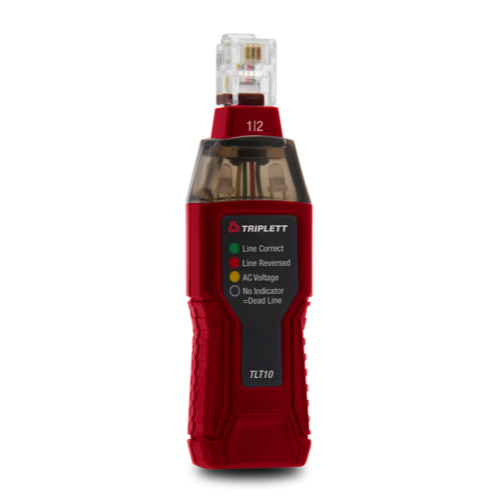
For example, the Triplett TLT10 Telephone Line Tester is suited to fast RJ11 jack checks, helping users identify outlet condition through simple visual indication. For more interactive field work, the Triplett BSX200 Basic Telephone Test Set / Butt Set supports functions such as dial tone confirmation, dial-out testing, and caller ID-related checks, making it useful for technicians who need direct line engagement rather than a quick visual status only.
Examples of test tools for field troubleshooting
Compact testers are especially useful when speed and portability matter. A model like the Triplett TLT10 is built for plug-in testing on modular phone jacks and can help verify line status on line 1 and line 2 without requiring a more involved setup. This makes it suitable for installers, maintenance staff, and service personnel who need straightforward feedback at the outlet.
For broader functional checks, the Triplett BSX200 Basic Telephone Test Set / Butt Set gives technicians a more hands-on way to confirm line behavior. In applications where analog and POTS systems intersect with additional test needs, the Triplett 3330 Linemen's Test Set can also fit into the workflow by supporting telephone line testing as part of a wider troubleshooting process. If your work extends beyond telephony into RF or cable verification, related tools such as a cable and antenna analyzer may be relevant in adjacent measurement tasks.
How to choose the right tester
The first selection factor is the job scope. If the main need is to confirm outlet status and wiring condition, a simple plug-in unit may be the most efficient choice. If technicians need to seize the line, check dial tone, place calls, or work more actively during installation and repair, a butt set or linemen's test set is usually more appropriate.
It is also worth considering the connector type, line access method, portability, and the type of feedback the device provides. Some users prefer LED-based indication for quick go/no-go checks, while others need a handset-style tool for more detailed operational testing. In field environments, durable housing and straightforward controls can also make a practical difference during repetitive service work.
Why these tools still matter in legacy and mixed telecom environments
Many sites continue to operate legacy phone systems alongside newer communication infrastructure. In these cases, having a dedicated telephone line tester helps technicians diagnose basic copper-line issues without relying on more complex instruments than the task requires. This can reduce time spent identifying simple wiring faults or inactive ports.
These testers are also useful because they support a logical troubleshooting sequence. A technician can begin with quick outlet or line verification, then escalate to broader measurement categories only if the problem extends beyond the local connection. For users comparing options within telecom test equipment, our telephone network testing tools category is a focused starting point for day-to-day field diagnostics.
Practical considerations before ordering
Before selecting a unit, it helps to define whether the work involves routine maintenance, installation verification, or active troubleshooting on live circuits. A compact tester can be sufficient for facilities teams and service contractors who mainly check jack condition, while telecom technicians may need a more capable handheld set for line interaction and function testing.
You may also want to review whether the tool will be used mainly on standard modular phone connections, whether line 1 and line 2 testing is needed, and how much emphasis to place on portability versus operational features. Matching the tool to the workflow is usually more important than choosing the most feature-rich option on paper.
Find the right fit for your testing workflow
Telephone testers are built to solve specific field problems efficiently, from quick outlet verification to more detailed line access and service checks. A well-matched instrument can help maintenance teams and telecom technicians reduce troubleshooting time, improve consistency, and approach legacy phone systems with the right level of testing.
Explore the available models in this category based on the type of line checks you perform most often, the environments you work in, and the level of interaction required during diagnosis. For straightforward jack testing or more involved butt set operation, choosing the right tool starts with understanding the actual service task in front of you.
-
-
-
-
-
-
-
-
-
-
-
-
-
-
-
-
-
-
-
-
-
-
-
-