


Signal Receiver
Reliable reception is a critical part of telecom monitoring, spectrum observation, RF research, and many other professional workflows. When weak transmissions, crowded frequency environments, or wideband monitoring requirements are involved, the right Signal Receiver helps users capture, filter, and process signals more effectively for analysis, recording, or downstream system integration.
In practical B2B environments, receiver selection is rarely just about frequency range. Engineers also evaluate tuning speed, selectivity, dynamic range, interface options, stability, and how well the device fits into a larger measurement or monitoring setup. This category brings together professional receiver solutions for applications ranging from general RF monitoring to high-frequency and wideband software-defined reception.
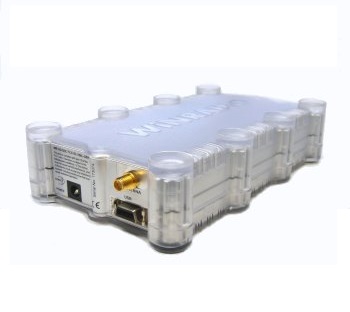
Where signal receivers are used
Signal receivers are commonly deployed wherever radio-frequency signals need to be monitored, identified, demodulated, or recorded. Typical use cases include telecom and broadcast supervision, interference hunting, lab testing, spectrum monitoring, field measurement, and specialized communication research.
In many projects, the receiver is not used alone. It often works alongside a signal analyzer for deeper spectral interpretation or with a signal generator for validation, calibration, and bench testing. This broader ecosystem matters when building a measurement chain that needs both reception and controlled RF stimulus.
Key characteristics that matter in receiver selection
A professional receiver should be matched to the signal environment and the purpose of use. Frequency coverage is usually the starting point, but it should be considered together with tuning resolution, bandwidth, phase noise, and signal handling capability. In dense or noisy environments, image rejection, spurious performance, and front-end attenuation can be just as important as nominal frequency range.
Interface and integration are also major decision factors in industrial and technical deployments. USB, RS-232C, PCI, or Ethernet connectivity can affect how easily the receiver fits into an existing monitoring station, test rack, or software-controlled workflow. For users who need reproducible measurements over time, frequency stability and reference options also deserve close attention.
Understanding the product landscape in this category
This category includes several types of receiver architectures rather than one single format. Some models are designed as integrated single-channel modules, while others function as tuner modules or reference oscillator and distribution modules intended for multi-channel or phase-coherent configurations. That distinction is important because not every item plays the same role in the system.
For example, the WinRADiO WR-G526e and WR-G527e families include both tuner-oriented modules and reference/distribution modules, which can support more advanced receiver assemblies. In contrast, models such as the WinRADiO WR-G33RSS and WR-G33WSM are easier to understand as standalone receiver solutions for monitoring and software-based signal handling. For broader capability, the WR-G69DDCe extends into wideband software-defined reception across low-frequency and microwave ranges.
Representative WinRADiO solutions for different needs
WinRADiO is the main featured manufacturer in this category, with products covering conventional RF reception, modular architectures, and software-defined receiver platforms. This makes the range relevant for both compact monitoring stations and more specialized technical systems that require distributed references, coherent channels, or wider tuning coverage.
The WR-G528e Receiver is a good example of a compact, wide-coverage design with separate input sections and a 70 MHz output, making it suitable for applications where intermediate-frequency handling is part of the system design. The WR-G526e and WR-G527e modular variants are more relevant where users need configurable architectures, channel coordination, or reference distribution rather than a simple standalone receiver.
For users focused on software-defined reception, the WR-G69DDCe Receiver stands out with direct sampling and superheterodyne operation across different ranges, plus digital I&Q output over USB or LAN. Meanwhile, the WR-G33RSS supports RSSI-based measurement workflows, and the WR-G33WSM is tailored to FM-oriented reception scenarios where software control and demodulation are central requirements.
How to choose the right model for your application
If the job centers on broad RF coverage, start by defining the actual bands you need to monitor instead of choosing the widest range by default. A receiver intended for HF through microwave work may be unnecessary for narrower VHF or UHF monitoring tasks, while highly specialized projects may benefit from modular designs that support reference synchronization or phase-coherent operation.
Signal environment should also guide the decision. In locations with strong adjacent signals or multiple emitters, performance factors such as attenuation control, image rejection, and dynamic range become essential. If your workflow includes recording, digital post-processing, or remote control, then software compatibility and data interface options may matter more than raw tuning range alone.
It is also useful to think in terms of deployment style. Bench testing, fixed installations, mobile monitoring, and embedded system integration can each favor different receiver formats. Compact external units, PCI-based implementations, and modular subsystems all solve different technical problems, even when they appear similar on a product list.
Related equipment that supports receiver performance
Receiver performance depends not only on the receiver itself but also on the condition of the RF path around it. Feedline quality, impedance matching, connector integrity, and antenna behavior all influence what reaches the input stage. In field and installation work, a cable and antenna analyzer can help verify the transmission path before signal quality issues are incorrectly attributed to the receiver.
For antenna system checks, especially in transmission and matching applications, a VSWR analyzer can also be relevant. These tools complement receiver-based diagnostics by helping technicians confirm whether a problem originates in the source, the propagation path, or the receiving chain.
What to review before purchasing
Before selecting a receiver for procurement, it is worth reviewing the full system requirement rather than the product page in isolation. Confirm the required frequency range, expected signal levels, preferred control interface, operating environment, and whether your project needs IF output, RSSI measurement, software demodulation, or synchronized multi-module operation.
It is equally important to separate core receiver functions from supporting modules. Some products in this category are intended to extend or stabilize a receiver platform rather than serve as the primary receiving device by themselves. A careful review of the role of each model will help ensure the chosen configuration matches the application, budget, and expansion path.
Conclusion
Choosing a signal receiver is ultimately about matching receiver architecture to the real-world RF task. Whether the requirement is wideband software-defined monitoring, modular frequency conversion, RSSI-based measurement, or compact VHF/UHF reception, this category provides options that support professional telecom and RF workflows.
By focusing on coverage, signal conditions, integration needs, and the surrounding measurement chain, buyers can narrow the selection to equipment that is technically appropriate and easier to deploy. A well-matched receiver not only improves signal capture, but also makes the entire monitoring or analysis process more dependable.
-
-
-
-
-
-
-
-
-
-
-
-
-
-
-
-
-
-
-
-
-
-
-
-