


GPS, GNSS Simulator
Accurate satellite and wireless test conditions are difficult to reproduce in the real world, especially when development teams need repeatable results across design validation, production, field troubleshooting, or regression testing. That is where GPS, GNSS simulators become valuable: they create controlled RF environments that let engineers test receivers, navigation modules, and integrated communication systems without relying on live sky conditions.
On this page, you can explore simulation platforms used for positioning, timing, constellation replay, and related telecom test workflows. These solutions are relevant for laboratories working with navigation devices, automotive electronics, embedded systems, aerospace applications, and wireless products that depend on stable satellite signal scenarios.
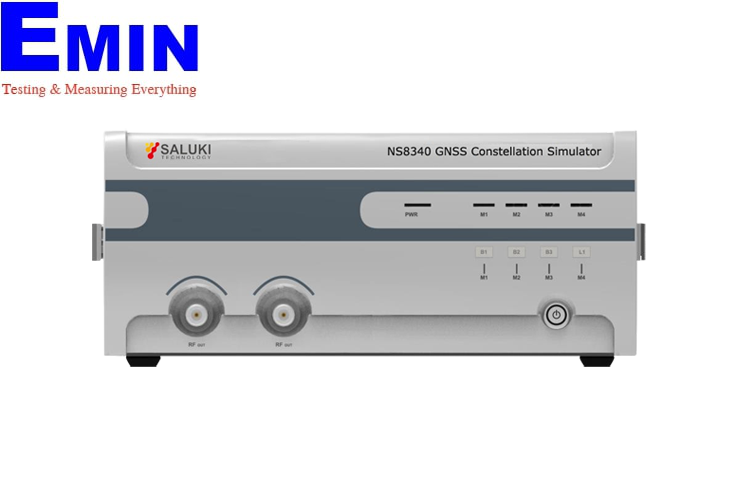
Why GNSS simulation matters in engineering and validation
Live GNSS signals are useful for field verification, but they are not ideal when a team needs repeatability. Signal availability, multipath, atmospheric conditions, motion profiles, and interference can all change from one test session to the next. A simulator helps remove that uncertainty by generating predictable satellite scenarios that can be replayed under the same conditions.
For B2B users, this is especially important when qualifying products before release or comparing firmware versions over time. A controlled simulation setup can shorten test cycles, support failure analysis, and make it easier to verify receiver behavior during cold start, signal degradation, trajectory changes, or multi-constellation operation.
Typical applications for GPS and GNSS simulators
These instruments are commonly used anywhere a receiver or navigation subsystem needs to be tested under defined conditions. Depending on the workflow, the goal may be to generate synthetic satellite signals, replay captured environments, or emulate motion and timing behavior in a lab setting.
- Receiver development and validation for GPS and multi-GNSS products
- Automotive and mobility testing for navigation modules and connected platforms
- Production and end-of-line testing where fast, repeatable pass/fail conditions are needed
- Record and replay analysis for troubleshooting real-world satellite environments
- Integrated telecom and IoT testing where GNSS interacts with LTE or network emulation tools
In broader RF workflows, teams may also combine these instruments with a signal generator or a signal analyzer to build a more complete validation bench.
Common product types in this category
The category covers more than one style of instrument. Some platforms focus on full constellation generation for advanced test scenarios, while others are designed for capture and replay, software-based scenario creation, or targeted GPS signal simulation for more specific use cases.
For example, the Spirent GSS7000 GNSS Constellation Simulator fits high-end applications where demanding motion dynamics, signal control, and precise scenario management are required. By contrast, the Adivic MP6220P Single & Multi-Channel GPS Simulator is more focused on GPS simulation with configurable channel options, which may suit labs looking for narrower-scope verification.
Record-and-replay workflows are well represented by the LABSAT range, including Labsat RT, Labsat RT+, Labsat 3, and Labsat 3 Wideband variants. These systems are useful when engineers want to capture real GNSS conditions and reproduce them consistently during debugging, regression testing, or integration work.
How to choose the right simulator
The best fit depends on the system under test and the stage of the project. Some buyers need a straightforward GPS simulation source, while others require support for multiple constellations such as GPS, Galileo, GLONASS, BeiDou, or NavIC. If your application involves modern receivers, multi-constellation support can be a practical requirement rather than an optional feature.
It is also worth checking whether you need record and replay, real-time scenario generation, or software-driven scenario creation. Products such as LABSAT SatGen software support scenario generation workflows, while hardware platforms in the Labsat family can be better suited when captured RF environments must be replayed directly into the DUT.
Another key point is RF architecture. Channel count, selectable center frequencies, attenuation control, data format, and oscillator stability all affect how closely the test environment matches the real operating conditions. For integrated telecom devices, teams may additionally evaluate how GNSS testing will be combined with network emulation or RF path verification using tools such as a cable and antenna analyzer.
Examples of equipment covered in this category
Several representative products help illustrate the range of solutions available. The Spirent GSS7000 is aimed at demanding constellation simulation tasks where relative velocity, acceleration, jerk, signal level control, and stability matter in advanced validation environments.
The Adivic MP6220P provides GPS simulation with single- and multi-channel configurations, making it relevant for targeted receiver checks and controlled satellite signal testing. For wireless device development that extends beyond positioning alone, Alifecom NE6000R, NE6000P, and NE6000-IOT show how network emulation may sit alongside GNSS-related validation in telecom and IoT labs.
Within the LABSAT ecosystem, Labsat RT and RT+ support compact GNSS simulation workflows, while Labsat 3 and Labsat 3 Wideband models add broader record/replay capability and support for more extensive multi-band or multi-constellation scenarios. This makes the category useful for both bench testing and mobile field-to-lab troubleshooting workflows.
Benefits for production, R&D, and field troubleshooting
For R&D teams, simulation supports repeatable verification from early design through firmware updates. Known trajectories, satellite visibility, and signal conditions can be recreated without waiting for specific field circumstances. That helps reduce debug time and improves confidence in comparison testing.
In production environments, a simulator can simplify standardized checks on GNSS-enabled assemblies. In service and troubleshooting use cases, record-and-replay platforms are valuable because they let engineers bring difficult field conditions back into the lab instead of attempting to reproduce them manually on-site.
This is particularly useful in systems where satellite reception is only one part of a larger RF chain. Depending on the issue, adjacent tools such as a VSWR analyzer may also be relevant for checking mismatch-related RF performance elsewhere in the test setup.
What B2B buyers usually compare before purchasing
Technical buyers typically look beyond headline features. They compare supported constellations, signal bandwidth, replay capability, software compatibility, RF output characteristics, environmental suitability, and how easily the instrument fits into existing automated test systems.
They also consider whether the platform matches the intended workload: lab development, field capture, production use, or mixed workflows. A compact replay-oriented unit may be ideal for troubleshooting, while a higher-end constellation simulator may be more suitable for intensive validation, motion simulation, or advanced receiver stress testing.
When selecting from this category, it helps to start with the test objective first: synthetic scenario generation, captured environment replay, GPS-only validation, or multi-GNSS system analysis. That usually leads to a much better equipment match than choosing only by price or by brand familiarity.
Final considerations
A well-chosen GPS, GNSS simulator can improve repeatability, reduce field dependency, and make navigation-related testing more efficient across development and production stages. Whether the requirement is advanced constellation simulation, compact replay equipment, software-based scenario creation, or support for broader telecom and IoT validation, this category covers a practical range of solutions.
Review the available products based on your receiver type, constellation requirements, test complexity, and workflow. If your team is building a larger RF test environment, it also makes sense to consider how GNSS simulation will integrate with the rest of your measurement and telecom test setup.
-
-
-
-
-
-
-
-
-
-
-
-
-
-
-
-
-
-
-
-
-
-
-
-