


Bulk cable
Reliable signal and power transmission often depends on choosing the right cable format, insulation, connector style, and length for the job. In industrial measurement, test benches, inspection stations, and device integration work, Bulk cable is an essential part of the system rather than a simple accessory. The right cable helps maintain stable communication, supports accurate data transfer, and reduces avoidable downtime caused by poor connections or unsuitable materials.
This category brings together cable options used across metrology, sensing, imaging, and instrumentation environments. Whether the requirement is an extension lead, a data cable for PC connectivity, or cable stock for temperature-related applications, selection usually comes down to the interface, installation environment, mechanical durability, and the role the cable plays in the wider equipment setup.
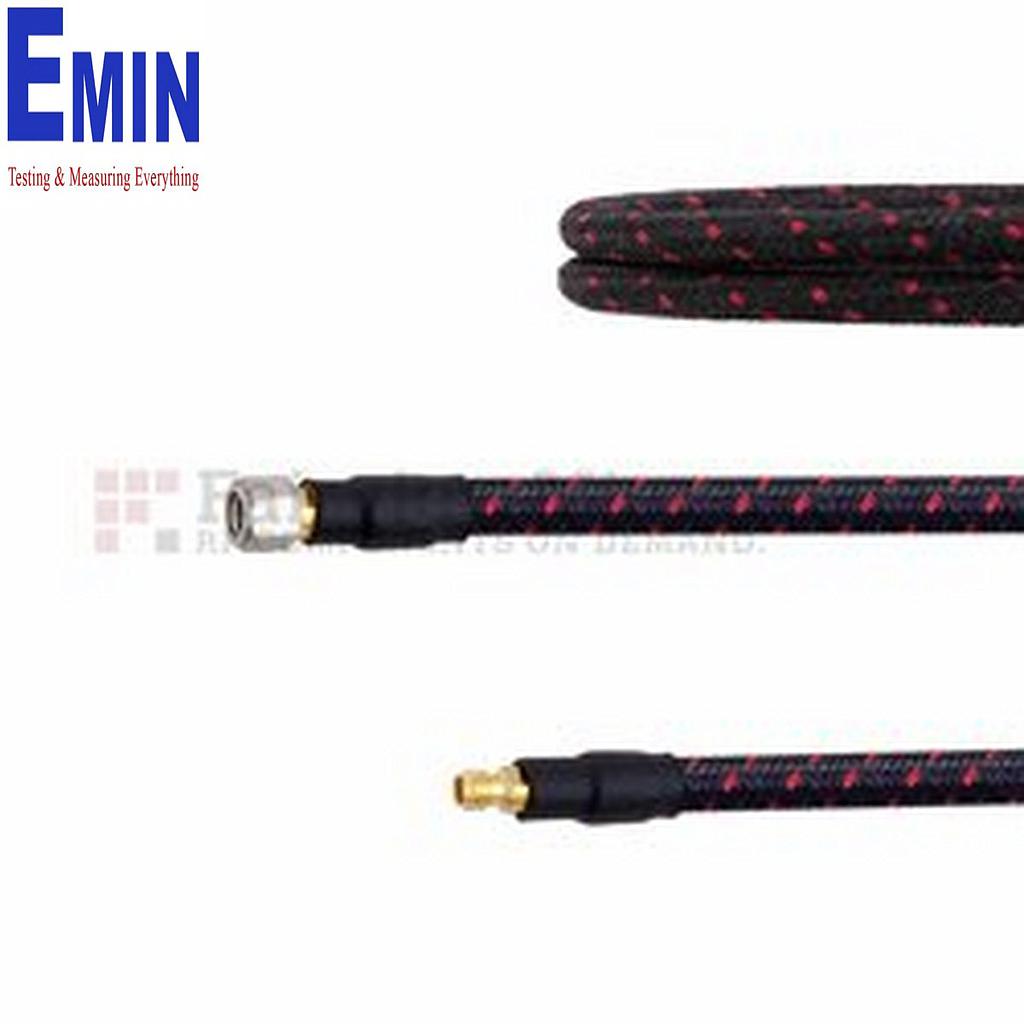
Where bulk cable is used in technical and industrial environments
In B2B settings, cable requirements vary widely depending on the device and workflow. Some applications focus on transferring measurement data from handheld instruments or bench equipment to a PC, while others need extension cables between sensors, connectors, and control points. In these cases, cable selection affects not only connectivity but also usability, routing flexibility, and long-term reliability.
Examples in this category reflect that range. The FLIR T198533 USB Cable supports connection within Ex-Series workflows, while the Mahr 4102357 MarConnect Data Cable is intended for data transfer to PC-based software environments through a virtual COM interface. For metrology and digital measurement systems, products such as the MITUTOYO 06AGQ001F Digimatic Cable and MITUTOYO 06AGL011 Digimatic Cable show how application-specific cables support direct instrument integration rather than acting as generic replacements.
Common cable types found in this category
This category covers more than one cable function. Data cables are used to move readings, status information, or measurement results between instruments and computers. USB, RS232, and proprietary data interfaces are common in test and inspection workflows where traceability and software connectivity matter.
Extension cables help bridge distance between connected devices without changing the core instrument setup. The Pepperl+Fuchs UDB-Cable-2M Extension Cable, for example, represents a connector-based extension format suited to sensor and automation contexts, while the SEKONIC HE06 Extension Cable 50m illustrates how longer cable runs may be required in field or distributed measurement arrangements.
There are also specialized cable options for thermal and sensor applications. Sterling Sensors 4-wire RTD cable variants are a good example of cable designed for temperature measurement circuits, where conductor construction and insulation capability matter. If your project involves thermal sensing or elevated operating temperatures, related options in temperature wire and cable may also be relevant.
How to choose the right bulk cable
The first step is to match the cable to the required interface and signal type. A cable intended for USB communication is not interchangeable with one designed for RS232 output or a proprietary metrology connection. Before ordering, confirm the connector format, communication protocol, and the device family it must support.
Next, consider installation distance and routing constraints. A short cable such as a 1 m or 1.8 m lead may be suitable for bench use, while longer runs are often needed for remote mounting, enclosed machinery, or distributed test setups. At the same time, longer cable lengths should be evaluated in the context of signal integrity, noise exposure, and the physical routing path through the machine or workstation.
Material and environmental resistance also matter. For instance, PUR cable jackets may be chosen where flexibility and abrasion resistance are important, while other constructions may be more suitable for temperature-related use. If the application requires cable stock for custom wiring inside equipment, it may also be useful to compare with hook-up wire for internal point-to-point connections.
Examples from leading manufacturers
Several established brands appear in this category, each aligned with different types of instrumentation and industrial workflows. FLIR is relevant where imaging and inspection accessories are needed, including USB connectivity for compatible devices. MITUTOYO is widely associated with dimensional metrology, where Digimatic cables support communication between measuring instruments and downstream systems.
Other examples add context for specialized applications. Pepperl+Fuchs supports automation and sensing use cases with connector-based extension cabling, while Mahr and Sylvac are closely tied to data output and measurement system integration. KERN and Mountz illustrate cable demand in weighing, torque, and instrument communication tasks, where the cable is part of a complete data workflow rather than a standalone commodity item.
Bulk cable in measurement, sensing, and data collection workflows
Many industrial buyers are not simply looking for “a cable,” but for a cable that fits into a broader process. That process may include capturing readings from gauges, transferring inspection data to software, connecting sensors in a machine, or extending a device interface to improve operator access. In these environments, cables directly support measurement continuity and system interoperability.
For example, a Sylvac data cable with RS232 output can help bridge legacy communication needs in quality control systems, while a POWER-USB cable may serve combined power and connectivity roles in compatible setups. In sensor environments, extension cables with defined connector types simplify installation while helping maintain orderly routing and predictable connections. When more application-specific constructions are needed, related options in specialized cables can help narrow the search.
Practical buying considerations for B2B procurement
For engineering, maintenance, and purchasing teams, cable selection should be based on compatibility first and convenience second. Product names may appear similar, but the intended device family, connector gender, number of pins, jacket material, and supported data pathway can differ significantly. That is especially important in instrumentation, where using the wrong cable can interrupt data collection or prevent communication altogether.
It is also worth considering whether the cable will be used as a replacement part, an extension, or part of a new installation. Replacement purchases usually require an exact match to the existing instrument interface. New installations may offer more flexibility, but should still account for operating environment, cable management, and future maintenance access. For better installation organization, some projects may also benefit from related accessories such as cable ties.
Finding the right fit for your application
A good cable choice supports the full path between instrument, sensor, controller, and software environment. That can mean selecting a compact USB lead for a thermal imaging device, a Digimatic cable for dimensional inspection, a connectorized extension for automation hardware, or RTD cable for temperature measurement circuits. The most suitable option depends on how the cable will be used in the actual process, not only on length or connector appearance.
Within this Bulk cable category, the available products cover a practical mix of communication, extension, and application-specific cable needs across industrial and laboratory settings. Reviewing interface type, device compatibility, material requirements, and routing distance will usually lead to a more reliable choice and a smoother installation outcome.
-
-
-
-
-
-
-
-
-
-
-
-
-
-
-
-
-
-
-
-
-
-
-
-