


Barcode Scanner
Fast and accurate data capture is a basic requirement in retail counters, warehouses, laboratories, healthcare workflows, and production lines. Choosing the right Barcode Scanner depends less on a single specification and more on how the device will be used: handheld scanning, presentation reading at a counter, fixed-mount decoding on a line, or mobile data collection in the field.
This category brings together scanning solutions for different operating environments, from compact USB readers to industrial fixed-mount systems and mobile computers with integrated scanning. Whether the priority is reading standard 1D labels, dense 2D codes, damaged symbols, or direct part marks, the goal is the same: reliable identification with minimal operator effort and stable integration into existing systems.
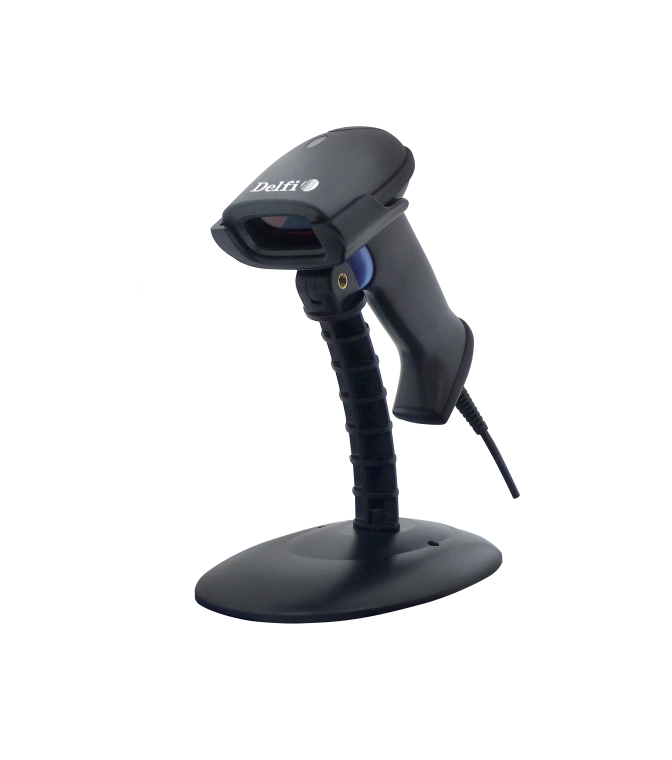
Where barcode scanners are used
Barcode readers are now part of a wider traceability ecosystem. In logistics and warehousing, they support receiving, picking, stock checks, and shipping confirmation. At retail or service counters, presentation scanners improve checkout speed, while in healthcare and laboratory settings they help identify samples, patient labels, and consumables with better consistency.
Industrial environments place different demands on the scanner. Codes may be printed on reflective labels, applied to curved packaging, or marked directly on components. In these cases, scan engine quality, illumination design, mounting flexibility, and resistance to dust or repeated drops can matter more than headline speed alone.
Main scanner types in this category
A practical way to evaluate this range is to think in terms of application. Handheld scanners are common for flexible point-and-shoot workstations, receiving docks, and general inventory tasks. Models such as the Zebra DS4608-HD BARCODE READERS are suited to close-range reading of small or dense codes, while devices like the Zebra LI4278-SR General Purpose Cordless Linear Imager are often chosen when cable-free mobility is more important for everyday 1D scanning.
Presentation scanners are designed for countertop use where items are brought to the reader. The Zebra DS9308 2D Corded Presentation Scanner and Zebra DS9908-HD Corded Hybrid Imager For Labs show how this format can support fast hands-free operation while still allowing manual scanning when needed. This is especially useful in checkout, reception, or sample handling workflows.
For line integration, fixed-mount scanners are the better fit. The Cognex DataMan family represented here by the Cognex DMR-80X-112E, DMR-80X-112U, and DMR-80X-154U-P is aimed at automated identification tasks where stable mounting, image-based decoding, and repeatable performance are required.
Important selection criteria before you buy
The first factor is the barcode type. Not every project needs the same decoding capability. Some operations still work mainly with 1D symbologies, while others require 2D formats such as QR Code, Data Matrix, or PDF417. If labels may be small, low contrast, blurred, or printed on challenging surfaces, image-based readers with stronger decoding algorithms are generally the safer choice.
The second factor is the operating environment. On a warehouse floor, drop resistance and sealing can be important. At a service desk, compact size and ease of presentation reading may matter more. In regulated or cleanliness-sensitive settings, dedicated healthcare-oriented models such as the Zebra DS4608-HC Healthcare Scanner or Zebra DS8178-HC Healthcare Scanner can be more appropriate than a general-purpose office reader.
Connectivity should also be reviewed early. USB remains common for workstation deployment, but many installations also require RS232, keyboard wedge, Ethernet, or wireless operation. If your process combines identification with on-device applications, a scanner may not be enough on its own, and a handheld terminal may be the more efficient option.
Examples of devices for different workflows
For dense labels and close-range work, Zebra offers several strong examples in this category. The Zebra DS4608-HD BARCODE READERS is positioned for high-density code capture, while the DS9308 and DS9908-HD support counter-based or lab-style workflows where fast presentation scanning improves throughput. The DS9908-HD is particularly relevant where users alternate between hands-free and handheld operation during the same shift.
For automated stations and machine integration, the fixed-mount Cognex models provide a different value proposition. The DMR-80X series combines image-based reading with industrial mounting suitability, making it relevant for packaging lines, assembly verification points, and traceability checkpoints. When the reading task is part of a larger inspection or automation process, users may also compare needs with adjacent technologies such as optical scanning systems for non-contact dimensional capture.
For mobile workflows, the Zebra TC53e-RFID Mobile Computer extends beyond basic scanning by combining computing, wireless communication, and integrated data capture in one platform. This kind of device is suitable when the operator needs to scan, view work instructions, confirm transactions, and stay connected without moving back to a fixed PC.
Barcode scanners and label printing go together
A scanner performs best when the label itself is readable and consistent. That is why barcode deployment is often linked to printing quality, media choice, and print method. A desktop label printer such as the TSC TTP-244CE Advanced 4-Inch Printer can support internal label generation for shipping, inventory, and product identification workflows where stable output quality directly affects read performance.
If your project includes both code generation and verification at the point of use, it is worth reviewing related solutions in label printing equipment. Matching print resolution, media type, and barcode format to the scanner environment can reduce read errors and unnecessary rescans.
Brands commonly considered in this segment
This category includes products from recognized suppliers used across industrial and commercial environments. Zebra is widely represented here with handheld, presentation, healthcare, and mobile computer options. Cognex is especially relevant for fixed-mount and automated identification tasks where image-based decoding is integrated into production or inspection workflows.
Other manufacturers listed in this segment, including DATALOGIC, Honeywell, OMRON, KERN, TSC, Cab, Unitech, and ZEBEX, help broaden the range for different budget, integration, and application needs. The right brand choice usually depends on deployment scale, interface requirements, environmental conditions, and the type of support your operation expects over the product lifecycle.
How to narrow down the right model
Start with the code itself: 1D only, mixed 1D/2D, or difficult marks such as very small, low-contrast, or damaged symbols. Then define the scanning pattern: occasional point-and-shoot use, continuous presentation use, automated in-line reading, or mobile task execution. This immediately reduces the field and helps avoid overbuying features that will not be used.
Next, map the scanner to the workspace. Consider mounting position, cable routing, host interface, operator distance, ambient lighting, and whether the device will be exposed to dust, vibration, or repeated impact. For many buyers, the best result comes from treating the scanner as one part of a broader identification workflow that may also include printers, terminals, and software integration rather than selecting by scanner type alone.
Final considerations
A well-chosen barcode scanner improves traceability, speeds up routine transactions, and lowers the risk of manual entry errors. The best option is usually the one that fits your code type, workflow, interface, and environment without adding unnecessary complexity.
Use this category to compare handheld, presentation, fixed-mount, and mobile scanning solutions side by side. If you already know how and where the device will be deployed, it becomes much easier to shortlist the right reader for reliable day-to-day operation.
Types of Barcode Scanner (477)
-
-
-
-
-
-
-
-
-
-
-
-
-
-
-
-
-
-
-
-
-
-
-
-