


Stamp, Label Printer
Clear, durable identification is a small detail that has a big impact on daily operations. In offices, warehouses, labs, electrical cabinets, and production areas, the right printing equipment helps teams create readable labels for assets, shelves, cables, folders, packaging, and process control points. This is where Stamp, Label Printer solutions become especially practical: they support fast on-demand marking without relying on outsourced printing or handwritten tags.
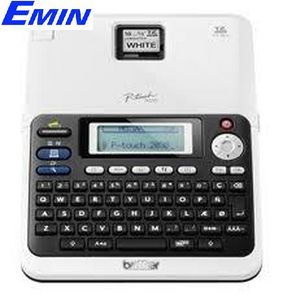
This category focuses on equipment and consumables used for everyday labeling tasks, from compact desktop units to portable devices and label tapes for different environments. For buyers comparing options, the key is not only print quality, but also tape compatibility, mobility, connectivity, and how the system fits into the actual workflow.
Where stamp and label printers are commonly used
Label printing is relevant anywhere information needs to remain visible and consistent over time. Typical use cases include file and document organization, shelf location labels, cable and wire identification, equipment tagging, barcode printing, and product or logistics marking. In technical environments, labels also help improve traceability, maintenance efficiency, and workplace organization.
Some users need a compact machine for administrative tasks, while others need a printer that can handle repeated industrial labeling jobs or network-based printing in shared workspaces. If your application is more focused on shipping or item tracking, it can also be useful to compare dedicated barcode printer options alongside standard label makers.
Printer types found in this category
This product group generally includes both portable label printers and desktop units. Portable models are suitable for technicians, installers, and maintenance teams who need to print labels directly at the point of work. Desktop models are often chosen for office use, production support, or centralized labeling stations where users need a larger media range or easier PC integration.
There are also differences in media ecosystems. Some printers are designed for laminated TZe tapes commonly used in general identification work, while others support DK or direct thermal label formats better suited to shipping, visitor badges, or broader-format labels. For applications centered on heat-based print output and high-volume ticketing or paper media, related thermal printer solutions may offer a closer fit.
Representative BROTHER solutions in this range
Among the products highlighted here, BROTHER is a prominent option for users looking for an accessible labeling ecosystem with printers and compatible tapes. Models such as the BROTHER PT-D460BT and BROTHER PT-D610BT are suitable for users who want a QWERTY-style workflow, clear display-based operation, and support for multiple tape widths. These devices are practical for office administration, facility labeling, and light technical identification tasks.
For mobile or app-based use, the BROTHER PT-P300BT P-touch Cube is an example of a compact label printer that works well when smartphone connectivity is preferred. In environments where wider-format labels and broader connectivity matter, the BROTHER QL-1110NWB provides a different approach with wired and wireless networking features. The Brother TD-2020 P-touch Label Maker is another example for users evaluating desktop printing setups that require higher output speed and integration with template-based workflows.
The role of label tapes and consumables
A label printer is only part of the solution; the media selection has a direct effect on readability and service life. This category includes tape options such as BROTHER TZE-211, TZE-241, TZE-641, TZe-651, and TZe-661, covering different widths and background colors for visual coding. Color contrast can be important in panel labeling, inventory organization, and safety-related identification where quick recognition matters.
Specialized tapes also help match the label to the installation surface. For example, BROTHER TZE-FX231 and TZE-FX631 are relevant when users need flexible ID tape for curved surfaces or cable marking. In many real-world projects, choosing the correct tape type is just as important as choosing the printer itself, especially where labels may face abrasion, moisture, chemicals, temperature variation, or frequent handling.
How to choose the right system
The best selection process starts with the actual labeling task. Consider the required tape width, whether labels are mainly for flat surfaces or cables, how much text or barcode content must fit on the label, and whether printing happens occasionally or throughout the day. A compact handheld or desktop unit may be enough for office organization, while shared workgroups may benefit from a network-capable printer with easier software integration.
It is also worth checking connectivity and workflow. Some users prefer standalone operation with a built-in keyboard and display, while others want USB, Bluetooth, or network printing from a PC or mobile device. If your process involves invoices, transaction slips, or front-desk output rather than adhesive labels, a dedicated receipt printer may be more suitable than a label-focused device.
What matters in technical and industrial environments
In B2B settings, the label has to remain legible after installation, transport, cleaning, or repeated contact. That is why buyers often look beyond basic print resolution and focus on media durability, adhesive behavior, resistance to environmental exposure, and ease of replacement. A labeling setup that works well in a clean office may not be ideal for cable trays, warehouse racks, or machine identification points.
Another practical factor is standardization. Using the same family of printer and tape across departments can simplify purchasing, training, and consumable management. This matters when multiple teams need consistent label formats for assets, storage bins, maintenance records, and internal logistics. In these situations, label compatibility and repeatability are often more valuable than having the widest possible feature list.
Why this category supports broader identification workflows
Stamp and label printing often sits between office printing and industrial marking. It supports everyday identification tasks, but it also contributes to lean organization, visual management, and traceability. For many businesses, it is a practical category because it combines printers, tapes, and related labeling formats in one place, making comparison easier for both operational buyers and technical users.
Depending on the application, users may move from basic name and shelf labels to cable wraps, barcode labels, shipping identification, or wider-format logistics labeling. This makes the category useful not only for replacement purchases, but also for organizations that are building a more structured in-house labeling process.
Final considerations before purchasing
When comparing options in this category, focus on the real operating conditions: media type, label width, mobility, connection method, and the volume of labels produced each day. A well-matched printer and tape combination can reduce labeling errors, improve readability, and make routine identification tasks much faster.
Whether the goal is office organization, cable marking, asset labeling, or networked label output, this category provides a practical starting point for selecting a reliable labeling system. Reviewing the printer format together with the compatible consumables will usually lead to a better long-term choice than evaluating the device alone.
-
-
-
-
-
-
-
-
-
-
-
-
-
-
-
-
-
-
-
-
-
-
-
-