


3D printer
Shorter development cycles, faster design validation, and more flexible small-batch production have made 3D printers a practical tool for engineering teams, R&D departments, educational labs, and manufacturing environments. Instead of waiting for conventional machining or mold-based samples, users can move from CAD data to a physical part much more quickly, which helps reduce iteration time and improve decision-making during product development.
On this page, the focus is not only on equipment itself, but on how different printing platforms fit real technical needs. Depending on the required part size, material type, surface quality, and workflow, businesses may choose between filament-based systems for functional prototypes or resin-based systems for detailed parts and presentation-quality models.
Why 3D printing is widely used in technical workflows
Additive manufacturing allows parts to be built layer by layer directly from digital files. This approach is especially useful when engineers need to evaluate dimensions, assembly fit, ergonomics, or design revisions before moving into tooling or production.
In practice, 3D printing supports rapid prototyping, fixture development, concept verification, and low-volume manufacturing support. For many teams, the value is not limited to printing a model quickly; it also comes from improving communication between design, testing, and production by making ideas tangible at an early stage.
Common 3D printing approaches in this category
One of the most common approaches is filament-based printing, often used for functional parts, larger prototypes, and routine engineering work. Systems such as the RAISE3D E2 Desktop 3D Printer or the CUBICON Styte NEO A31C Industrial 3D Printer illustrate how this format can serve prototyping needs where material flexibility and practical build volume are important.
Resin-based printing is another key option when fine detail and surface quality matter more. A platform such as the FORMLABS F4-PRINTER Form 4 3D Printer is typically relevant for applications that require smooth surfaces, precise features, and consistent repeatability. For users comparing different equipment types on the same site, it can also be useful to explore related printing systems such as thermal printers or label-focused devices in adjacent workflows.
How to choose the right 3D printer for your application
The first selection factor is usually application intent. A printer used for visual prototypes may not be the best choice for functional testing, while a machine intended for larger components must be assessed differently from one used for compact, high-detail parts. Build volume, print technology, compatible materials, and post-processing requirements should be considered together rather than separately.
It is also important to evaluate operating workflow. Some teams need network connectivity, easy file handling, and stable day-to-day operation for office or lab environments. Others prioritize temperature capability, enclosed build chambers, or material compatibility for engineering-grade thermoplastics and production support tasks.
For example, the Modix Big-60 V4 3D Printer is relevant when oversized parts are part of the requirement, while the RAISE3D E2 may fit dual-material or dual-extrusion workflows in a more compact footprint. On the resin side, Formlabs systems are often considered where detail, finish quality, and repeatable post-processing are central to the process.
Materials, consumables, and the broader print ecosystem
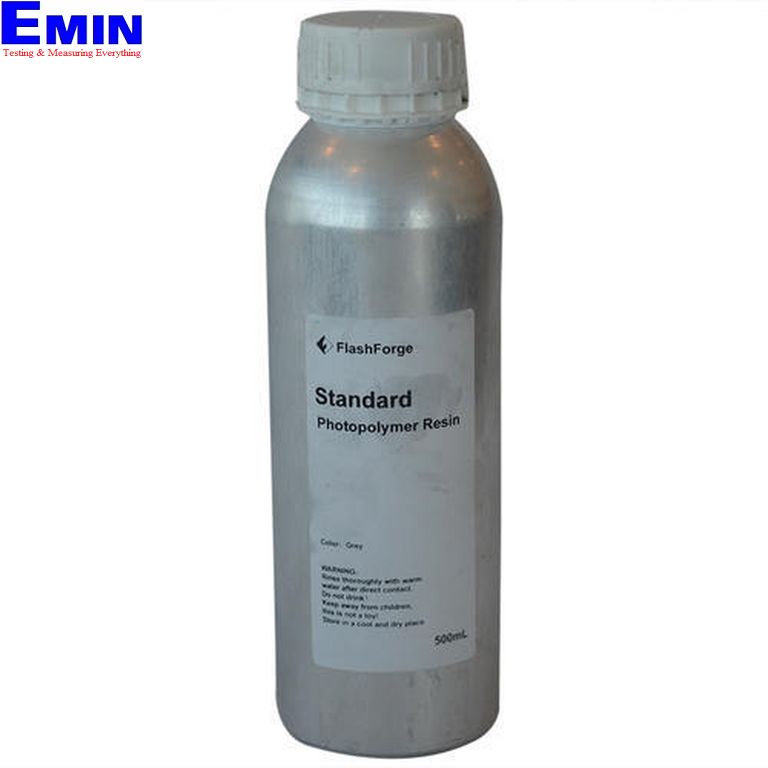
A reliable 3D printing setup depends on more than the printer alone. Materials and consumables directly affect part performance, surface finish, dimensional consistency, and process stability. In filament printing, material choice influences strength, flexibility, temperature resistance, and printability. In resin printing, the selected resin determines visual appearance and functional behavior.
Examples in this category include FORMLABS Tough 2000 Resin for Form 3 and Form 4 platforms, as well as FORMLABS Clear Resin V4 and White Resin V4 for Form 3. These products show how the same printer family can support different prototyping goals, from rigid functional models to clear or presentation-oriented parts. Post-processing equipment also matters, and the FORMLABS FH-WA-02 Form Wash is a good example of how washing becomes part of a complete resin workflow rather than an optional accessory.
Representative systems for different use cases
Desktop and benchtop systems are often selected for design offices, labs, and development teams that need fast access to physical models without a large production footprint. The FORMLABS Form 4 and RAISE3D E2 are strong examples of platforms aligned with this type of environment, each serving different priorities in terms of detail, materials, and print process.
When larger parts or more industrial-style throughput are needed, machines such as the CUBICON Styte NEO A31C Industrial 3D Printer and Modix Big-60 V4 move the conversation toward print area, enclosure design, and machine capacity. If your broader workflow also includes identification or logistics output, nearby categories like barcode printers may be relevant for packaging, part tracking, or warehouse integration.
Where 3D printers add value in industry and education
In manufacturing, 3D printers are commonly used to create prototype housings, jigs, fixtures, assembly aids, and demonstration samples. This helps reduce dependence on outsourced prototype fabrication and gives engineering teams more direct control over design reviews and trial builds.
In education and research environments, the ability to move from a digital model to a physical object supports practical learning in mechanical design, electronics, automation, and product development. The same principle applies in innovation teams and technical centers, where iterative testing is often more valuable than a one-time perfect output.
For users comparing brands or planning a broader equipment portfolio, visiting the FORMLABS manufacturer page can also help clarify the available resin-printing ecosystem, from printers to wash and material options.
What to evaluate before investing
Before purchasing, it is worth reviewing not only the machine specification but also the total workflow: software compatibility, material availability, maintenance needs, operator skill level, and the expected frequency of use. A technically capable printer may still be the wrong fit if the surrounding process is too complex for the intended team or workload.
Another useful consideration is future scalability. Some users begin with prototyping and later expand into fixture production, specialized materials, or multiple machine deployment. Choosing a platform with a clear ecosystem of materials and accessories can make that transition much smoother.
Final thoughts
Choosing a 3D printer is ultimately about matching printing technology to the real demands of design, testing, and production support. Whether the priority is large-format filament printing, detailed resin output, or a balanced prototyping platform for daily engineering use, the right system should support faster iteration and more confident technical decisions.
By comparing printer type, material ecosystem, workflow requirements, and application goals, buyers can narrow the category to solutions that are practical for their environment rather than simply impressive on paper. That makes this category a useful starting point for teams building a more capable and responsive prototyping process.
-
-
-
-
-
-
-
-
-
-
-
-
-
-
-
-
-
-
-
-
-
-
-
-