


LED Digital Clock
Clear visual information is essential in workshops, production lines, warehouses, and control rooms where operators need to read values at a glance. In many of these environments, LED digital clock products are used not only to show time, but also to support counting, productivity tracking, status display, and process visibility across the factory floor.
This category brings together display-oriented devices that fit industrial and technical applications, including LED counters, productivity monitoring panels, indicator displays, and related sensing components that help generate or transmit the signals shown on the screen. For B2B buyers, the key consideration is usually not just the display itself, but how it integrates with sensors, PLCs, pulse signals, and existing control systems.
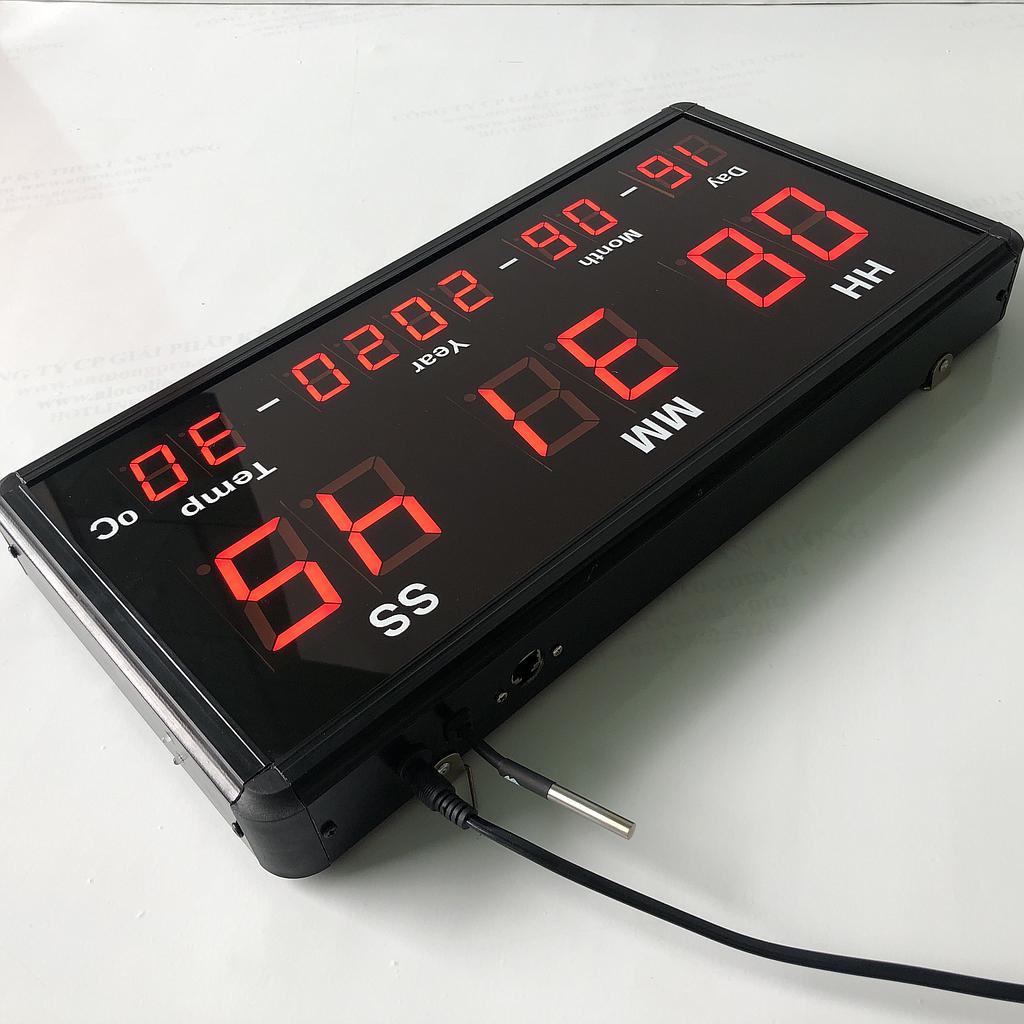
Where LED digital display devices are used in industry
In an industrial setting, digital LED displays are commonly installed where information must remain visible from a distance and under changing ambient conditions. Typical use cases include production quantity display, shift counters, target-versus-actual monitoring, machine status indication, and centralized visual communication for operators and supervisors.
Some applications are straightforward, such as showing a running count from a sensor input. Others are more integrated, where the display becomes part of a larger automation workflow with PLC communication, relay outputs, or remote setup. This is why buyers often evaluate not only display size and readability, but also input type, power supply, environmental fit, and communication method.
Typical products found in this category
The range represented here includes more than simple clocks. For example, the ATPRO PMP62X45 Productivity Monitoring Panel is suited to environments where production targets and actual values need to be shown in a large, easy-to-read format. In practical terms, this kind of panel supports visual management on the shop floor and helps teams react quickly to delays or output deviations.
For counting applications, models such as the Sansel DC 370 Set Point Counter are relevant when a process requires a programmable count threshold and relay-based response. Larger remote-reading formats are also represented by the Sansel BW 16D Jumbo Display Counter series, available in multiple display sizes for different viewing distances.
There are also indicator-style products such as the EMIN AT2L-30-55-5 LED indicator, which can be connected to control systems for clear numerical display. In broader display ecosystems, related devices from ATPRO, Sansel, and EMIN may be selected depending on panel format, signal handling, and installation requirements.
The role of sensors in LED display and counting systems
Many industrial LED displays do not work alone. They depend on a trigger source such as a proximity sensor, photoelectric sensor, encoder, or dry contact. That is why this category also relates naturally to signal-generating devices used upstream of the display.
For metal object detection, a product like the Fotek PL-05N Proximity sensor or Fotek PS-10N Proximity sensor may be appropriate where short-range, DC-powered sensing is needed before a count is sent to a display or controller. For longer optical detection tasks, the Fotek CDR-30X Optical sensors illustrate how non-contact sensing can support display and counting applications in conveyors or automated handling systems.
When system wiring is part of the selection process, supporting hardware such as connectors and suitable signal accessories can be just as important as the display unit itself. Stable connections help reduce missed pulses, signal noise, and downtime during operation.
How to choose the right LED digital clock or display
A practical selection process starts with the display purpose. If the goal is to show time or a simple value locally, a basic LED indicator may be enough. If the system must count products, compare actual output against target, or trigger outputs at preset counts, you will need a more functional counter or monitoring panel.
The next factor is visibility distance. Large 7-segment displays are useful where information must be seen from several meters away, while compact counters are better suited to panel mounting or local operator stations. Display size should match the physical layout of the machine, line, or room rather than being chosen on appearance alone.
It is also important to confirm input compatibility. Some devices are designed to accept pulse signals from proximity sensors, photoelectric sensors, encoders, or limit switches. Others may interface with PLC cabinets through communication methods such as RS485 or support direct pulse counting from the machine output. In electrically noisy environments, buyers should pay close attention to signal stability and cabinet-level integration.
Integration with automation and control systems
In many factories, LED display devices are part of a broader automation architecture rather than standalone products. A programmer or control unit such as the EMIN DVP14SS211T Programmer unit can be relevant in systems where counting logic, reset functions, or signal conditioning must be handled before the value is shown on an external display.
This becomes especially useful on production lines with motors, conveyors, or older equipment where electrical noise may affect pulse signals. In those situations, proper control design, shielding, and component selection help maintain accurate counting and clear operator feedback. Related supporting categories such as circuit protection can also be important when building a more reliable installation.
Where temperature or multi-zone status display is needed, display-oriented products such as the EMIN KT: 39cmx45cmx5cm electronic temperature display panel show that the category can also serve facility monitoring tasks beyond counting alone. This makes LED display solutions relevant across production, storage, and utilities applications.
Key technical points to review before ordering
Before selecting a product, buyers should review several technical details in context. These include supply voltage, input signal range, display format, count range, mounting style, and whether the unit is intended for panel installation or large-area visual display. For counting systems, the expected pulse rate and the type of sensor output should be verified early in the project.
Another useful checkpoint is the operating environment. Indoor production areas, machine cabinets, warehouse zones, and utility rooms do not place the same demands on a display. Readability, enclosure considerations, wiring route, and service access can all influence which product is the better fit.
Finally, think about future maintenance. A well-chosen LED display should be easy to wire, easy to interpret, and compatible with available spare parts or support components. If your setup also requires installation materials or supporting accessories, it can be helpful to review nearby categories such as kits and tools during project planning.
Choosing for your application, not just the screen size
Although large digits often get the most attention, the right choice depends on the full signal chain: what generates the data, how the display receives it, and who needs to read it. A counting display in packaging, a productivity board in assembly, and a temperature display in storage may all look similar from a distance, but their functional requirements are different.
This category is therefore best approached as part of an industrial display system. By comparing display type, sensor compatibility, control method, and installation conditions, buyers can narrow down a solution that fits both current operations and future expansion. If you are specifying equipment for a line upgrade or a new monitoring point, starting from the application requirement will usually lead to a better result than choosing by appearance alone.
-
-
-
-
-
-
-
-
-
-
-
-
-
-
-
-
-
-
-
-
-
-
-
-