


Battery Welding Machine
In battery pack assembly and cell interconnection, consistent weld quality matters just as much as electrical performance. A poor weld can increase resistance, reduce mechanical stability, and create rework in production, while the right equipment helps maintain repeatability from prototyping to batch manufacturing. Battery welding machines are used for joining tabs, nickel strips, and related conductive materials in applications ranging from small repair work to automated battery pack production.
This category brings together equipment for different welding tasks, including manual spot welding, battery tab welding, AC pulse welding, capacitive discharge welding, and automated systems for cylindrical cells. Whether the requirement is compact bench use, portable field work, or higher-throughput production, the selection here is intended to support a practical range of battery manufacturing and battery pack assembly workflows.
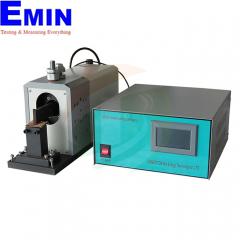
Where battery welding machines fit in the battery production workflow
These machines are typically used where a stable electrical and mechanical bond is needed without introducing excessive heat into the cell. In many battery applications, spot welding is preferred for connecting nickel tabs or strips to cylindrical cells because it concentrates energy at the weld point and helps limit damage to surrounding material.
They are commonly used for 18650, 26650, and 32650 cell pack assembly, battery tab connection, and related lab or workshop processes. After welding, many users also add verification steps with battery monitoring equipment to check pack behavior under operating conditions and to identify imbalance or connection issues early in the process.
Main equipment types in this category
The category includes both manual and automatic welding solutions. Manual and semi-manual models are often chosen for maintenance, small-batch production, process development, or flexible workstations where operators need direct control over pressure, timing, and placement. Examples from this range include the TOB TOB-W728 DC Spot Welding Machine, TOB TOB-HDP-3000S Manual Spot Welding Machine, and TOB TOB-PS250 Cylindrical Battery Spot Welding Machine.
For higher output and better repeatability, automated systems such as the TOB TOB-DH-10000 Automatic Spot Welding 18650 Cells Single Side Spot Welding Machine and the TOB TOB-850B-8000A Automatic Double-Side Cylindrical Batteries Pack Spot Welding Machine are more suitable. These models are aligned with production environments where fixture consistency, travel accuracy, and cycle efficiency are important.
There are also more specialized options for certain joining tasks. The TOB TOB-PM118K Capacitive Discharge Spot Welder For Battery Tab is relevant where controlled discharge welding is preferred, while the TOB TOB-BR320 Inverter Welding Machine For Cylindrical Cell And Super Capacitor extends the application scope to cylindrical cells and super capacitor-related work.
How to choose the right machine for your application
A practical selection process starts with the material and welding thickness. Different models in this category are suited to different tab materials and thickness ranges, so the first step is to match the machine to the actual strip or tab being welded rather than choosing by power alone. Welding current, pulse control, pressure method, and mechanical stability all affect the final result.
The second factor is the production environment. A portable unit such as the FNIRSI SWM-10 Portable Intelligent Color Screen Spot Welding Machine can be useful for compact, mobile, or lighter-duty tasks, especially where portability and quick setup are priorities. By contrast, larger TOB systems are more appropriate for bench-mounted or production-line use where throughput and repeatability take priority over mobility.
It is also worth considering the surrounding test setup. In development labs, welding equipment is often used alongside a battery simulating DC power supply or a DC power supply for battery test to validate pack behavior before and after assembly.
Key parameters that affect weld quality
Even when the machine is correctly sized, process settings remain critical. The most important variables usually include welding current, pulse duration or welding time, electrode pressure, and workpiece contact condition. These settings influence heat concentration, nugget formation, and the balance between adequate bonding and surface damage.
For thicker or more demanding joints, operators usually need to optimize current and pulse timing together rather than changing a single parameter in isolation. Machines such as the TOB TOB-W728 DC Spot Welding Machine and TOB TOB-HDP-3000S Manual Spot Welding Machine provide adjustable control that supports this type of tuning for workshop and process-development use.
Electrode condition also has a major impact on consistency. Tip geometry, wear, alignment, and contact cleanliness can all influence the stability of each weld point. In production environments, repeatable fixturing and regular maintenance are often just as important as the nominal current rating of the welder.
Portable, bench-top, and automated options
Not every user needs the same equipment format. Portable welding machines are useful for compact service tasks, quick repairs, or flexible workstation setups. The FNIRSI SWM-10, with its built-in battery-powered format and support for thin sheet welding applications, represents this more mobile end of the category.
Bench-top and foot-switch controlled units are often preferred in technical workshops because they provide a stable working position and straightforward operator control. Models such as the TOB TOB-HT-012 Ni Tab Spot Welder For Batteries, TOB TOB-HT-015 Battery Tab Welding Machine, and TOB TOB-HT-328 AC Pulse Spot Welder For PCB Welding are more aligned with controlled workbench use.
At the higher-capacity end, automated machines support repetitive welding patterns and more scalable output. If the workflow involves cylindrical cell packs in volume, the broader range from TOB battery manufacturing equipment is particularly relevant because it includes both single-side and double-side automatic spot welding systems for pack assembly.
Typical applications across battery and electronics work
This category is most closely associated with lithium battery pack assembly, nickel tab welding, cylindrical cell pack production, and related electronics manufacturing tasks. Depending on the model, the equipment may also be used in battery R&D, pilot production, educational labs, repair benches, and test fixture preparation.
Some products are designed for battery tab and nickel connection work, while others are intended for specific use cases such as PCB welding or cylindrical cell and super capacitor assembly. That variety is useful because users can select a machine based on the actual joining task rather than trying to force one welding method into every application.
After assembly, weld integrity is often evaluated indirectly through electrical testing. Tools such as a battery impedance tester can help assess connection-related issues in the wider battery test workflow, especially where low-resistance joints are important to pack performance.
What to check before ordering
Before choosing a model, confirm the cell format, tab material, expected thickness, power supply conditions, air supply requirements if applicable, and the required level of automation. It is also useful to consider whether the process is for prototyping, operator-assisted production, or continuous manufacturing, since this affects the ideal balance between flexibility and output.
Users should also look at practical factors such as workstation size, machine footprint, maintenance needs, operator interface, and file or parameter storage when automation is involved. These details often determine how easy the machine will be to integrate into an existing production or test environment.
For businesses working across multiple battery validation stages, the best results usually come from viewing welding as part of a wider process that includes assembly, power supply simulation, and electrical verification. That broader perspective helps reduce defects and improves consistency across the final pack.
Conclusion
Choosing the right battery welding equipment is less about selecting the highest current on paper and more about matching the machine to the material, workflow, and production target. This category covers a useful range of solutions, from portable spot welders to manual bench units and automated systems for cylindrical battery packs.
If your process involves battery tab joining, nickel strip connection, or cell pack assembly, reviewing the machine type, control method, and intended application will help narrow the right option. A well-matched battery welding machine can support cleaner welds, better repeatability, and a more reliable battery assembly process overall.
-
-
-
-
-
-
-
-
-
-
-
-
-
-
-
-
-
-
-
-
-
-
-
-