


Battery Forming And Grading Machine
In battery production and cell evaluation, consistency matters as much as capacity itself. Before cells move into pack assembly, storage, or shipment, they often need to be sorted, matched, and checked so that voltage and internal resistance stay within the required window for the intended application. This is where Battery Forming And Grading Machine solutions become relevant for labs, pilot lines, and battery manufacturing environments.
This category focuses on equipment used to support cell grading, sorting, and related handling steps in battery workflows. For buyers comparing systems for cylindrical cells or looking to streamline pre-assembly inspection, the right machine setup can help reduce mismatch, improve throughput, and support more stable downstream testing and production.
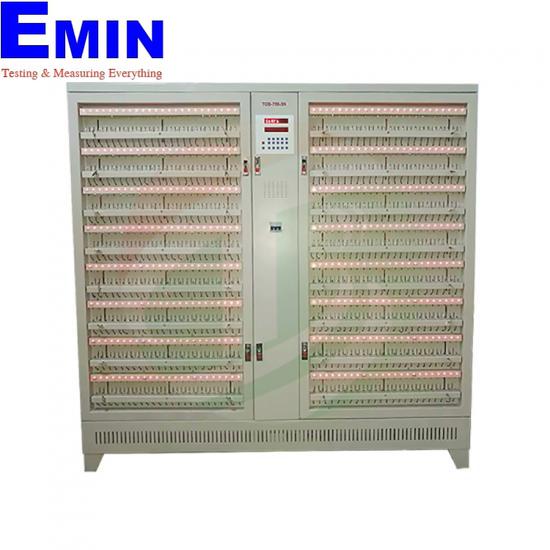
Where forming and grading equipment fits in the battery workflow
Although the exact process varies by chemistry and production stage, grading equipment is commonly used after key cell preparation steps to separate batteries based on measurable electrical characteristics. In practical terms, this helps manufacturers group cells with similar voltage or internal resistance before module or pack-level assembly.
On this page, the category includes machines that support sorting and classification rather than only one narrow device type. For example, automatic battery sorters and voltage-based testers can be part of a broader battery screening workflow, especially when production teams need repeatable matching criteria and faster handling than manual methods can provide.
Typical equipment in this category
A common requirement is automatic sorting for cylindrical cells such as 18650 formats. Equipment such as the TOB TOB-BT-1810B Battery Sorter Automatic Sorting Machine and TOB-FX-05 Battery Automatic Sorter Machine illustrate how automated systems can classify cells into multiple receiving channels according to preset voltage and internal resistance thresholds.
For lower-volume work, bench-level verification can also be useful before or alongside automated sorting. The TOB-0918 Battery Voltage Sorter Tester is an example of a compact instrument used for quick voltage checks, which can support incoming inspection, spot verification, or supplementary screening where a full automatic line is not required.
In many production environments, buyers evaluate not just the sorter itself, but also how it integrates with testers, feed methods, and the overall line layout. Features such as hopper feeding, channel count, display interface, and measurement range can all affect whether a machine is better suited for R&D, pilot manufacturing, or higher-throughput cell handling.
Key selection factors for buyers
When comparing a battery forming and grading machine, start with the cell type and the grading criteria you actually need to control. Some applications focus primarily on voltage matching, while others also require internal resistance sorting to reduce variation in assembled packs. If your process depends on tighter electrical grouping, the measurement capability and sorting logic become more important than simple mechanical throughput alone.
Channel configuration is another practical consideration. A machine with more sorting channels may provide finer classification and more flexible grouping, while a simpler configuration may be enough for basic pass/fail separation or smaller production batches. The TOB-BT-1810B and TOB-FX-05, for instance, reflect different sorting channel arrangements, which can influence how precisely cells are divided during processing.
It is also worth checking operating requirements such as power supply, compressed air, user interface, and production capacity. In real factory conditions, ease of setup, maintenance access, and compatibility with upstream or downstream handling equipment can have a direct impact on uptime and labor efficiency.
Manual testing vs. automatic sorting
Not every operation needs a fully automated sorter. For research teams, sample inspection, or low-volume battery handling, a compact tester may be enough to confirm voltage values before cells are moved to the next stage. This can be a practical option when flexibility matters more than throughput.
Automatic sorting machines become more attractive when repeatability and volume increase. They can help standardize classification rules, reduce operator dependency, and support faster movement of cells into matched groups. If your process also requires broader electrical verification, related tools such as a battery impedance tester may be relevant for deeper condition analysis beyond basic sorting.
Applications across battery manufacturing and evaluation
Battery grading equipment is used in several contexts, including cell production, incoming inspection, pack assembly preparation, and quality control. In assembly-focused workflows, matching cells with similar electrical behavior can help reduce imbalance at the module level. In testing environments, the same equipment can support data-driven decisions about whether cells should be grouped, rechecked, or rejected.
For teams working on battery performance evaluation, forming and grading does not exist in isolation. It often sits alongside monitoring and simulation equipment used to observe behavior under load or over time. Depending on the workflow, users may also review solutions in battery monitoring equipment or a battery simulating DC power supply category to build a more complete test setup.
Why sorting accuracy and consistency matter
In battery systems, small differences between cells can become more significant once those cells are connected together. Sorting by voltage and internal resistance helps create more uniform groups, which can support more predictable behavior in later charging, discharging, and balancing stages. That does not eliminate every performance variable, but it can improve process control.
Consistency is especially important when operations scale up from lab work to pilot or production use. A grading machine that applies the same rules to every cell can help reduce manual variation, improve traceability within the process, and make it easier to define acceptable quality windows. For many buyers, this is one of the main reasons to move from occasional handheld checks to a dedicated sorting platform.
Choosing the right solution for your process
The best fit depends on how your team handles cells today and how much automation you need tomorrow. A simple voltage tester may suit small-batch inspection, while a multi-channel automatic sorter may be the better choice for continuous classification and matching of cylindrical cells. It is also useful to think ahead about expansion, especially if the equipment may later connect to additional test or handling stations.
This category brings together practical options for buyers who need battery grading equipment that supports clearer sorting logic, more stable workflows, and better preparation for downstream battery testing or assembly. If you are comparing configurations, start with cell format, measurement criteria, channel count, and integration needs, then narrow the choice to the machine that matches your actual throughput and quality goals.
-
-
-
-
-
-
-
-
-
-
-
-
-
-
-
-
-
-
-
-
-
-
-
-